Ammar Sabilarrohman
 Ali Ikhwan
 Dwi Wanna
 Neng Nana
 Siti Muinah
 Sagoh
Sagoh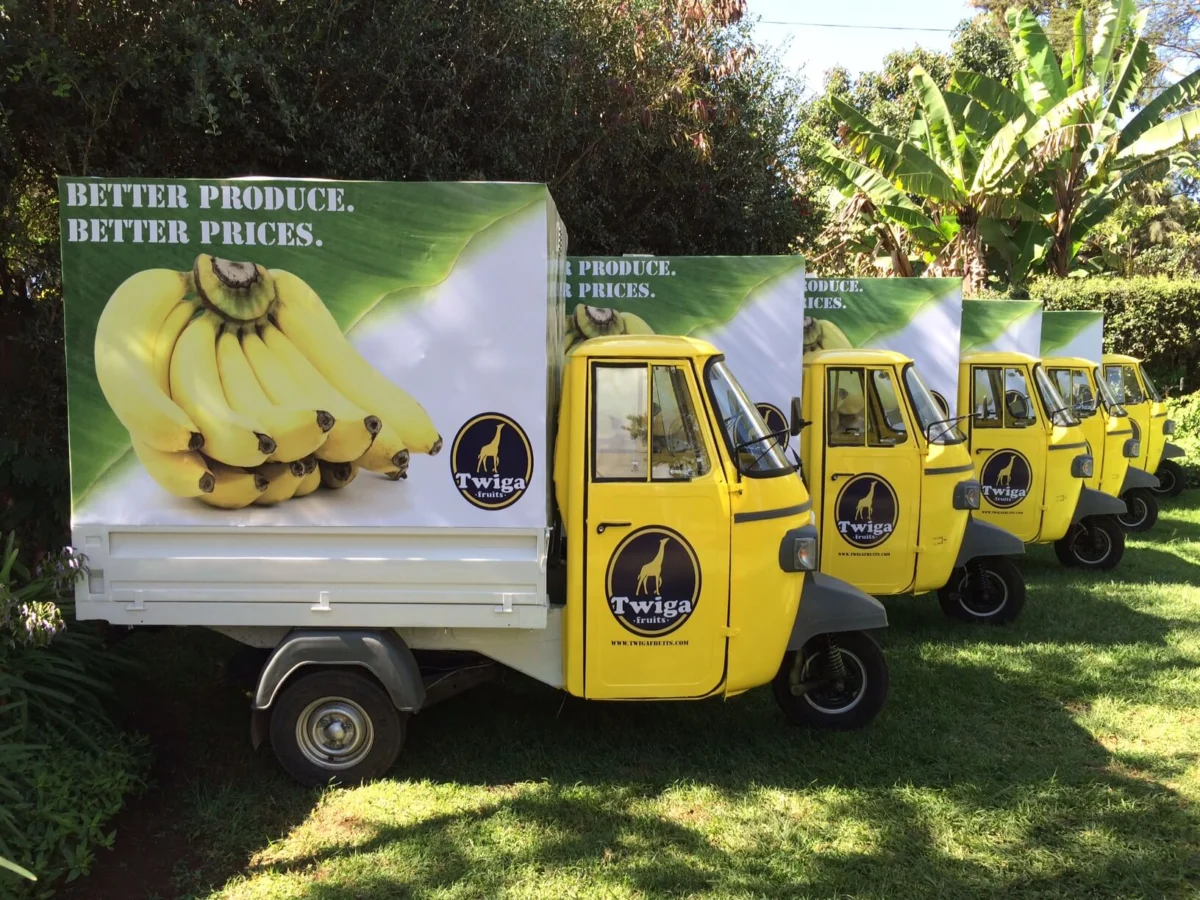
The recent entry of Twiga Foods into administration marks a somber, definitive conclusion for one of the most ambitious experiments in African technology. For over a decade, the Kenya-based ag-marketplace was the poster child for "disruptive innovation" in a sector notoriously difficult to crack: the fragmented, informal food supply chains of East Africa. As the company slides into a restructuring process, the broader African tech ecosystem is left to reckon with a painful, $185-million lesson regarding the collision between high-growth venture capital expectations and the uncompromising realities of physical infrastructure.
However, industry experts are quick to point out that this is not the death knell for B2B food distribution in the region. Rather, it is a necessary—if expensive—changing of the guard, signaling a shift away from the "growth-at-all-costs" era toward a more disciplined, infrastructure-heavy, and patient-capital model.
A Chronicle of Ambition and Overreach
Launched in 2013, Twiga’s premise was elegant: it aimed to bridge the gap between thousands of smallholder farmers and the informal kiosks that serve the vast majority of Nairobi’s population. By digitizing the supply chain through an app, the company promised to lower food prices for consumers while ensuring predictable, fair pricing for farmers.
The Rise
Backed by a "who’s who" of international investors, including Goldman Sachs, the International Finance Corporation (IFC), and Creadev, Twiga raised roughly $185 million. The funding rounds were celebrated as landmark achievements for African agrifoodtech. Between 2019 and 2021, as the company moved from a niche banana delivery service to a broad-spectrum distributor of packaged goods and vegetables, the capital influx allowed for massive investment in warehouses, a proprietary delivery fleet, and a high-profile distribution hub at Tatu City.
The Stagnation
The cracks began to appear in 2022. As the global venture capital environment tightened, the expected Series D round failed to materialize. The company’s model—which relied on heavy capital expenditure to maintain physical control over the supply chain—proved vulnerable to high fixed costs. By late 2023, reports surfaced of delayed supplier payments, high-profile debt disputes, and significant job cuts.
The Collapse
The final act began in early 2026. After a failed $35 million bridge round and a series of leadership shuffles—including the departure of co-founder and CEO Peter Njonjo—the company entered administration in August 2026. The operating company, GT Flow Ltd, and its parent entity, Templar Field Ltd, are now undergoing formal wind-down proceedings.
The Collision of Investor Appetite and Physical Economics
The central critique of Twiga, articulated by impact investors and industry analysts alike, is that the company was treated as an "asset-light" software play, despite being an "asset-heavy" logistics firm.
"Technology can lower transaction and information costs; it cannot eliminate the physical economics of a tomato, banana, or onion moving through a fragmented market," observes Nairobi-based ag-advisor Daniel Ochanda.
The "unit economics" of fresh produce are inherently thin. To make the model work, Twiga had to internalize the cost of spoilage, last-mile logistics, and working capital. Meanwhile, they were competing against informal brokers who operate with near-zero overhead and deep-rooted, hyper-local social networks. When the cost of fuel spiked due to the fallout of the Russia-Ukraine war and the Kenyan shilling depreciated by nearly 30% against the dollar, the company’s dollar-denominated debts became a noose.
The "Post-Mortem" and Structural Lessons
Luni Libes, in a widely circulated post-mortem, argued that Twiga represents a cautionary tale for investors. The core issue, according to Sewu-Steve Tawia of Asime Partners, was that the company’s survival was tied more to the founders’ ability to raise subsequent rounds of capital than to the ability to navigate a challenging, low-margin operational environment.
The "Asset-Light" Fallacy
The assumption that digital platforms could magically "fix" agriculture failed to account for the physical requirements of the trade. The $185 million burned was, in many ways, an attempt to bypass the lack of existing public infrastructure by building a private, internal one. This created a rigid cost structure that could not survive a macroeconomic downturn.
Macroeconomic Tailwinds Turned Headwinds
Twiga’s decline was not just an operational failure; it was a victim of timing. The era of "free money" in venture capital allowed the company to scale rapidly without first achieving a sustainable margin baseline. By the time investors began demanding profitability, the company was already too deeply committed to its high-burn infrastructure.
Official Responses and Strategic Pivots
While the company’s leadership and board have largely remained silent regarding the final collapse, the transition to administration has been handled by insolvency practitioners focused on maximizing recovery for creditors.
The shift to a "franchise" model, initiated shortly before the administration, was a last-ditch effort to leverage existing distribution networks rather than owning the entire chain. By acquiring firms like Jumra and Sojpar, the leadership hoped to pivot to an asset-light model. However, these moves came too late to offset the legacy debts and the mounting pressure from financiers.
Implications for the Future: A New Asset Class
If Twiga’s demise marks the end of one chapter, the rise of East Africa Foods (EAF) marks the beginning of another. EAF recently secured $40 million in a mix of equity and debt, supported by the Private Infrastructure Development Group (PIDG) and Oikocredit.
The strategy employed by EAF stands in stark contrast to the Twiga model:
- Patient Capital: The focus is on long-term DFI (Development Finance Institution) backing rather than volatile venture capital.
- Infrastructure-First: EAF is investing in physical assets—warehouses, transport, and processing—with a clear eye on regional food security rather than just "disruption."
- Revenue Diversity: By controlling its own brands (e.g., Onja, Golden Banana), EAF is capturing more value along the chain.
"A third of what our farmers grow never reaches anyone’s table," says EAF founder Elia Timotheo. "That is not a farming problem; it is an infrastructure problem."
Toward a New Financing Model
The industry is collectively moving toward a realization that venture capital, as currently structured, is ill-suited for African SMEs. The timeline for maturity in African agriculture is rarely five years; it is often seven to ten.
"We need to create a new asset class," says Tawia. "We are seeing a move toward dividend-based financing, revenue-sharing, and milestone-linked debt that recognizes the realities of the market."
Conclusion: The "Un-sexy" Reality
The fall of Twiga Foods is a watershed moment. It serves as a reminder that in the developing world, technology is an enabler, not a replacement for the unglamorous, heavy lifting of infrastructure. The next generation of agrifoodtech in Africa will likely be defined by "boring" businesses—those that focus on margins, logistics, and long-term sustainability rather than rapid user acquisition.
The "giraffe" has fallen, but the forest is already regrowing. The investors who survive this period will be those who stop looking for "tech-enabled" quick fixes and start backing the patient, physical work of building food systems that can withstand the test of time, currency volatility, and the realities of the farm-to-table journey. The era of the "unicorn" may be over for African ag-tech; the era of the "reliable operator" has just begun.


 Evan Lee Salim