

 Ammar Sabilarrohman
 Ali Ikhwan
 Dwi Wanna
 Neng Nana
 Siti Muinah
RIYADH, Saudi Arabia – As the global humanitarian landscape grows increasingly fragile under the weight of protracted conflicts, climate-induced emergencies, and resurgent infectious diseases, the Riyadh International Humanitarian Forum (RIHF) held on February 24-25, 2025, served as a critical nexus for international cooperation. Marking the 10th anniversary of the King Salman Humanitarian Aid and Relief Centre (KSRelief), the event did more than commemorate a decade of service; it acted as a launchpad for multi-million-dollar health interventions aimed at the world’s most vulnerable populations.
The forum, which convened global leaders, policymakers, and representatives from the World Health Organization (WHO), UNICEF, and various NGOs, focused on the intersection of health diplomacy, the sanctity of humanitarian space, and the urgent need to protect aid workers operating in high-risk zones.
The Core Mandate: Advocacy, Diplomacy, and Protection
At the heart of the 2025 Riyadh forum was an unwavering commitment to the dignity and survival of those trapped in crisis zones. In an era where humanitarian law is frequently challenged, the forum emphasized "health diplomacy"—a strategy designed to use health interventions as a bridge for peace and a catalyst for stability in fractured regions.
The discourse centered on three pillars:
- The Protection of Humanitarian Actors: Discussions highlighted the alarming trend of violence against aid workers and the need for stronger international accountability mechanisms.
- Resilience in Crisis: Moving beyond temporary relief, the forum advocated for sustainable health infrastructure that can withstand the shocks of war and systemic collapse.
- Equitable Access: Ensuring that the most marginalized, including refugees and children in conflict zones, receive life-saving vaccines and medical care regardless of political borders.
Chronology of Commitments: A Strategic Roadmap
The forum was characterized by rapid-fire diplomatic progress. Throughout the two-day event, a series of high-level agreements were finalized, marking a transition from policy debate to direct, funded action.
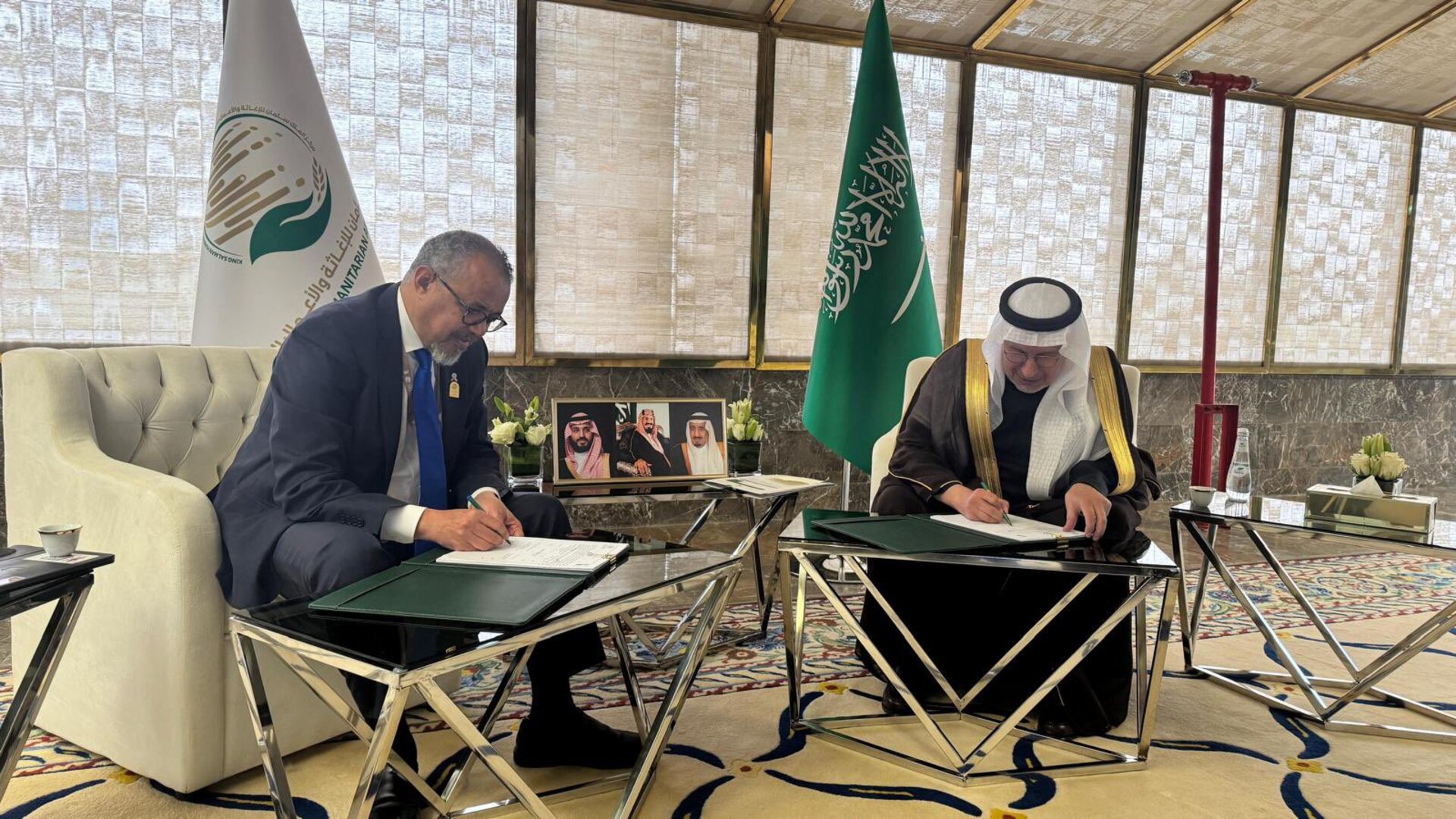
- Day 1: Addressing Regional Epidemics: The opening session saw the formalization of health response agreements between the WHO and KSRelief. These agreements targeted the immediate, dire needs in Yemen—a nation suffering from the compounded effects of prolonged conflict and the resurgence of preventable diseases.
- Day 2: Global Eradication Goals: The second day shifted focus to long-term systemic health threats. The spotlight fell on the Global Polio Eradication Initiative (GPEI), with the formal signing of a historic $500 million pledge, cementing Saudi Arabia’s role as a lead donor in the fight against polio.
- Parallel Sessions: Throughout both days, technical working groups met to discuss the "Humanitarian-Development-Peace Nexus," exploring how to integrate long-term economic development with short-term emergency medical aid.
Supporting Data: Impact in Numbers
The scale of the agreements signed in Riyadh is significant, representing a substantial infusion of capital into global health systems.
The Yemen Health Response
In Yemen, where healthcare infrastructure has been decimated, KSRelief and the WHO have initiated a two-pronged strategy:

- Malaria Control: A $12 million allocation aimed at scaling up diagnostic capabilities and distributing preventative treatments to combat the rising incidence of the disease.
- Cholera Mitigation: A $2.1 million injection to expand cholera treatment centers. Given the rapid transmission of cholera in crowded, conflict-ridden environments, this funding is expected to bolster the capacity of local clinics to handle surges in cases.
The Refugee Crisis in Egypt
The conflict in Sudan has forced millions to flee, with many seeking refuge in neighboring Egypt. The burden on Egypt’s healthcare system has been immense. To mitigate this, a $3.6 million agreement was signed between KSRelief and the WHO Egypt Country Office. This funding is specifically earmarked for the provision of dialysis treatments—a life-sustaining procedure that is often unavailable or prohibitively expensive for refugees.
The Global Polio Eradication Initiative (GPEI)
The headline of the forum was the confirmation of a $500 million pledge—originally announced in April 2024—divided into two strategic funding envelopes:
- $300 million to the World Health Organization.
- $200 million to UNICEF.
This funding is projected to facilitate the vaccination of approximately 370 million children annually. The initiative specifically targets "hotspots" where polio has seen a resurgence, including Gaza, Afghanistan, and Pakistan. By securing this funding, the GPEI can now plan long-term vaccination campaigns in regions where access has historically been restricted by conflict.
Official Responses and Strategic Perspectives
The presence of global health leadership underscored the importance of the partnership between KSRelief and international bodies.
Dr. Tedros Adhanom Ghebreyesus, WHO Director-General, remarked on the critical nature of the collaboration, noting that the agreements signed in Riyadh represent a "lifeline for millions." He emphasized that the partnership with KSRelief has evolved from traditional aid into a sophisticated model of health diplomacy that addresses both the symptoms and the root causes of humanitarian crises.
Abdullah Al Rabeeah, Supervisor-General of KSRelief, noted that the 10th anniversary of the center serves as a "call to action." He stated, "Our mission has never been just about providing aid; it is about restoring hope and ensuring that the most vulnerable among us are not forgotten. The agreements signed here today are a testament to our commitment to global health security and our belief that health is a fundamental human right, regardless of geography."
Catherine Russell, UNICEF Executive Director, speaking on the GPEI agreement, highlighted the transformative power of the funding: "With this support, we are moving closer to a world where no child suffers from the paralyzing effects of polio. This investment is not just about vaccines; it is about building the health infrastructure necessary to protect every child, everywhere."
Implications: A New Era for Humanitarian Aid
The Riyadh International Humanitarian Forum has set a new benchmark for how donor nations and international agencies should coordinate.
1. Reaffirming Saudi Arabia’s Global Role
Saudi Arabia’s consistent, large-scale financial commitments position the Kingdom as a central pillar of the international humanitarian architecture. By prioritizing polio eradication and refugee healthcare, the Kingdom is moving toward a more proactive role in global health security, beyond its traditional focus on regional crisis response.
2. The Shift to Integrated Health Systems
The agreements suggest a move away from "siloed" aid. By funding specific treatments (malaria, cholera, dialysis) while simultaneously contributing to massive global initiatives (GPEI), the forum demonstrated a dual-track strategy: addressing the immediate, localized fires while investing in the global "fire prevention" of infectious disease control.
3. Addressing the "Polio Resurgence"
The resurgence of polio in conflict zones is one of the most alarming trends in modern global health. The Riyadh commitments are particularly vital because they address the hardest-to-reach populations. The inclusion of Gaza in the target areas for the GPEI funding is a clear indication that the international community is attempting to use established health channels to provide relief in one of the most contentious and difficult-to-access environments on the planet.
4. Sustainability and Accountability
As the humanitarian sector faces increased scrutiny regarding efficiency, the structure of these agreements—which utilize the operational expertise of the WHO and UNICEF—provides a model for transparency. By leveraging the logistical networks of these UN agencies, KSRelief ensures that funds are tied to specific, measurable health outcomes rather than general budgetary support.
Conclusion
The 2025 Riyadh International Humanitarian Forum concluded with a clear consensus: the scale of today’s humanitarian crises demands a commensurate scale of financial and diplomatic commitment. Through its landmark funding agreements and its focus on health as a mechanism for stability, the forum has reaffirmed the vital importance of international partnerships. As KSRelief enters its second decade, it remains poised to play a defining role in the global effort to eradicate disease, support the displaced, and ensure that health remains a protected human right even in the most challenging of circumstances. The commitments made in Riyadh are not merely financial transactions; they are a promise to the millions of children, refugees, and civilians whose lives depend on the global community’s ability to act with urgency and compassion.


 Laily UPN