

 Ammar Sabilarrohman
 Ali Ikhwan
 Dwi Wanna
 Neng Nana
 Siti Muinah
 Iffa Jayyana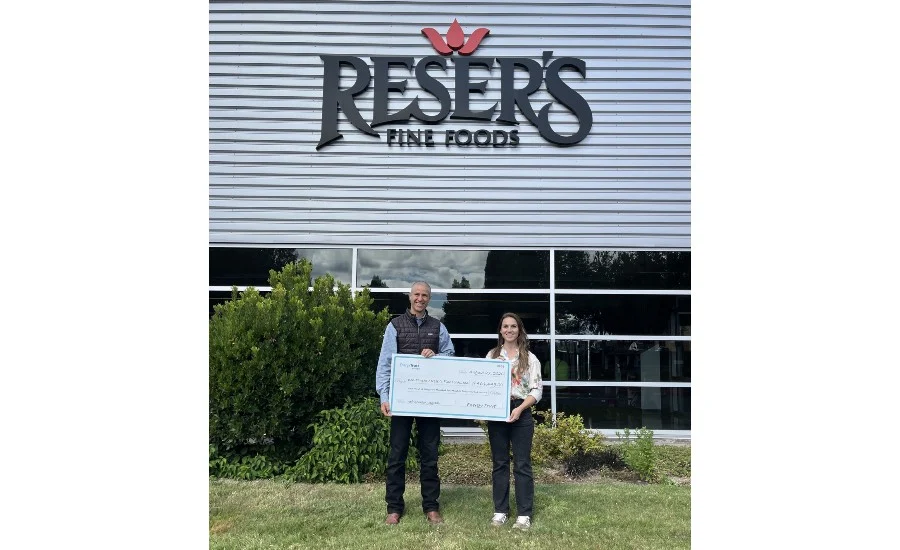
In the competitive landscape of food manufacturing, the balance between increasing production capacity and minimizing environmental impact has become a critical operational imperative. Reser’s Fine Foods, a leader in refrigerated deli products, has recently demonstrated how large-scale industrial expansion can coexist with aggressive sustainability goals. By integrating cutting-edge refrigeration and compressed air technology into its new Don Pancho West facility in Salem, Oregon, Reser’s has not only optimized its operational footprint but has also set a new benchmark for energy-conscious food production.
The completion of two major energy efficiency projects—undertaken in collaboration with the Energy Trust of Oregon—is expected to slash the 300,000-square-foot facility’s electricity consumption by more than 20% annually. This translates to a reduction of nearly 1.9 million kilowatt-hours (kWh) per year, while simultaneously lowering the facility’s carbon emissions by 8%.
The Strategic Shift: A New Chapter for Don Pancho
The relocation of Don Pancho’s operations to the expansive 300,000-sq.-ft. facility in September 2025 was more than just a move; it was a strategic overhaul. As demand for its signature tortilla and salsa products grew, Reser’s required a facility that could offer both increased throughput and the infrastructure to support long-term sustainability.
Planning the move provided the Reser’s capital projects team with a rare "blank slate" opportunity. Rather than retrofitting an existing building, the company chose to bake energy efficiency into the very foundation of the new site. By involving the Energy Trust of Oregon early in the design phase, Reser’s ensured that equipment procurement and system integration were optimized for performance long before the first production line was switched on.
Chronology of Collaboration
The partnership between Reser’s Fine Foods and the Energy Trust of Oregon is not a recent development, but rather the culmination of a two-decade-long commitment to industrial efficiency.
- 2003: The initial relationship between the two organizations begins, marking the start of a series of energy-saving retrofits across multiple Reser’s manufacturing sites.
- 2024 (Planning Phase): As blueprints for the Don Pancho West facility take shape, Energy Trust provides technical expertise and no-cost energy studies to model the facility’s potential energy footprint.
- 2025 (September): The facility officially commences operations, featuring newly installed, high-efficiency refrigeration and compressed air systems.
- 2025–2026 (Performance Validation): Following installation, Energy Trust conducts rigorous post-installation performance analysis, utilizing real-world data to verify that the energy-saving projections met the expected engineering benchmarks.
Data-Driven Infrastructure: The Core Upgrades
The transformation of the facility’s energy profile rests on two primary pillars: a modernized, centralized refrigeration system and a highly responsive compressed air network.
Revolutionizing Refrigeration
Perhaps the most significant achievement at Don Pancho West is the transition to a centralized refrigeration system utilizing carbon dioxide (CO2) as the primary refrigerant. This move replaces six disparate systems that previously relied on high-global-warming-potential (GWP) refrigerants.
By adopting CO2, a natural refrigerant, Reser’s has positioned itself as an early adopter in the food manufacturing sector. The benefits are dual-layered:
- Energy Efficiency: The new system is modeled to consume 41% less electricity than standard baseline refrigeration systems.
- Operational Performance: The system provides significantly more consistent temperature control, a critical factor in maintaining food safety and product quality standards. Furthermore, it delivers a 114% increase in total refrigeration capacity compared to the previous setup, ensuring the plant can scale production without risking thermal fluctuations.
Optimizing Compressed Air
Compressed air is often the "hidden" energy consumer in manufacturing plants, frequently suffering from leaks and inefficient distribution. To combat this, Reser’s installed a variable speed compressor paired with an energy-efficient heated-blower dryer.
Unlike traditional fixed-speed compressors that run at full capacity regardless of actual demand, the variable speed unit adjusts its output in real-time to match the facility’s specific needs. Combined with the reduction of air losses throughout the system, this project is projected to use 44% less electricity than the modeled baseline, further contributing to the facility’s overall 20% reduction in total power consumption.
Official Perspectives: The Value of Partnership
For the teams at Reser’s and Energy Trust, the project represents a triumph of technical planning and long-term vision.
Rusty Corriell, Director of Capital Projects at Reser’s Fine Foods, emphasizes that the collaboration was essential to the project’s success. "Energy efficiency was an important consideration as we planned and built this facility," says Corriell. "Energy Trust brought valuable technical expertise to the process and helped us evaluate solutions that support efficient, reliable operations. These projects will help Don Pancho West operate efficiently and thrive for years to come."
From the utility perspective, the partnership serves as a model for how industrial facilities can maximize return on investment through smart design. Laura Schaefer, Senior Program Manager at Energy Trust, notes that the success of the Don Pancho project stems from the timing of the intervention. "Considering energy performance early and verifying results after installation creates lasting environmental and operational benefits," she states. "Energy Trust is proud to support Reser’s in incorporating energy efficiency into the new Don Pancho facility."
Implications for the Food Manufacturing Industry
The success of the Don Pancho West facility carries significant implications for the broader food and beverage manufacturing sector. As energy costs remain volatile and regulatory pressures regarding emissions mount, the "Reser’s model" provides a repeatable blueprint for success.
1. The Financial Case for Sustainability
While the initial capital expenditure for high-efficiency equipment—such as the CO2 refrigeration system—may be higher than traditional alternatives, the long-term operational savings are profound. By reducing electricity usage by 1.9 million kWh, the facility significantly lowers its recurring utility costs, shortening the payback period for the initial investment.
2. Regulatory Readiness and ESG Goals
As food manufacturers face increasing scrutiny regarding their environmental, social, and governance (ESG) disclosures, the ability to demonstrate an 8% reduction in emissions through direct infrastructure changes provides a tangible win. Companies that proactively switch to natural refrigerants like CO2 are also better positioned to stay ahead of evolving environmental regulations that seek to phase out synthetic refrigerants with high global warming potential.
3. Reliability and Quality Assurance
Often, energy efficiency and product quality are viewed as competing interests. However, the Don Pancho project proves that the two can be synergistic. The new refrigeration system not only uses less power but also provides more consistent cooling, which directly correlates to fewer product spoilage incidents and higher quality control standards—a non-negotiable aspect of food production.
4. The Power of "Early Engagement"
Perhaps the most critical takeaway for the industry is the value of the technical study phase. By engaging with energy efficiency experts before the facility was constructed, Reser’s avoided the need for costly retrofits later. This proactive strategy is arguably the most significant factor in the facility’s ability to achieve such high efficiency from day one.
Conclusion: A Blueprint for the Future
The Don Pancho West facility stands as a testament to the fact that industrial growth does not have to come at the expense of the environment. Through meticulous planning, the adoption of sustainable technologies like CO2 refrigeration, and a long-standing commitment to energy optimization, Reser’s Fine Foods has successfully built a facility that is as resilient as it is efficient.
As the industry moves toward a future defined by leaner, cleaner, and more responsive manufacturing, the lessons learned in Salem, Oregon, will likely serve as a guide for other food processors aiming to reconcile the demands of modern production with the necessity of a lower carbon footprint. By investing in the intersection of operational excellence and energy stewardship, Reser’s has secured not just a new facility, but a sustainable future for its business.


 Evan Lee Salim
 Sagoh
Sagoh
