

 Dwi Wanna
 Nana Wu
 Muslim
 Reynand Wu
 Ammar Sabilarrohman
 Siti Muinah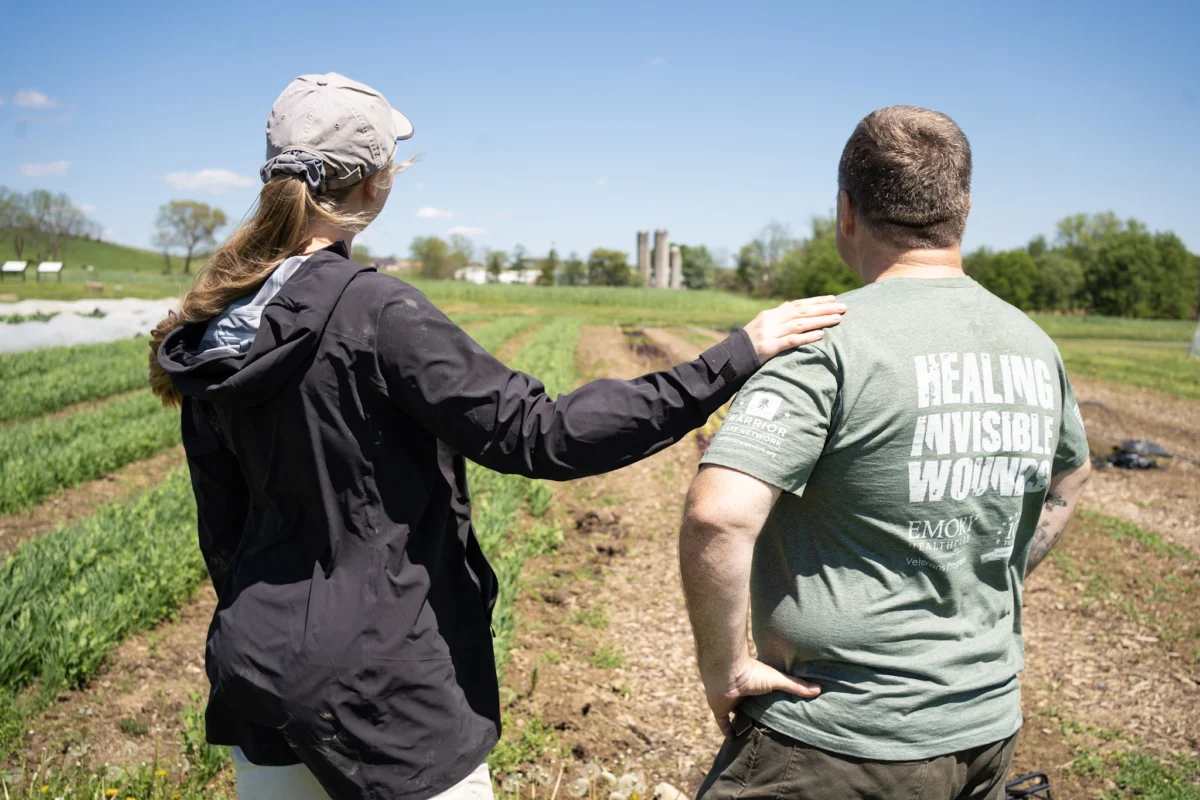
Farmers are the bedrock of global civilization. They steward the land, manage complex ecosystems, and provide the essential caloric intake for a growing global population. Yet, a silent crisis is unfolding in the fields. While public discourse surrounding agricultural labor has historically prioritized tangible metrics—wages, healthcare access, and physical labor protections—a critical, often overlooked dimension of farmworker well-being remains in the shadows: the psychological toll of the profession.
As agriculture faces increasing volatility, the industry is reaching a breaking point. With research from the USDA National Agricultural Statistics Service indicating that agricultural professionals experience some of the highest rates of anxiety, depression, and suicide of any occupational group in the United States, the status quo is no longer sustainable. To achieve true fairness in agriculture, the industry must pivot from a model of pure technical production to one that prioritizes human development and mental resilience.
The Reality of the Modern Field: A Crisis of Uncertainty
The contemporary agricultural landscape is defined by a trifecta of stressors: unpredictable weather patterns driven by climate change, erratic market pressures, and the physical exhaustion inherent in the work. Beyond these external variables, farmers often contend with profound social isolation and the crushing emotional weight of stewarding land within economic systems that frequently undervalue both the labor and the product.
For decades, the standard for agricultural education has been narrow. Farmer training programs, apprenticeships, and university extensions have focused almost exclusively on technical mastery: soil chemistry, tractor maintenance, pest management, and crop yields. While these skills are non-negotiable for commercial viability, they leave the next generation of growers ill-equipped to handle the psychological demands of the trade.
This educational gap represents a systemic failure. By treating the farmer as a biological machine rather than a whole human being, the current pedagogical framework inadvertently contributes to the high rates of burnout and mental health struggles that characterize the industry today.
Rethinking Fairness: From Wages to Well-Being
If we are to achieve a truly equitable food system, the definition of "fairness" must be expanded. Fair wages and safe working conditions are the floor, not the ceiling. A comprehensive approach to fairness must encompass proactive mental health support, the intentional cultivation of community, and an educational philosophy that prepares individuals for the emotional reality of agricultural life.
This paradigm shift is currently being explored at the Rodale Institute. Their Farmer Training (RIFT) program has launched a groundbreaking research initiative that seeks to answer a pivotal question: How might intentionally designed, nature-based learning environments influence the resilience of future farmers?
The Framework: Ecological and Transformational Theory
The RIFT program’s research is built upon two distinct yet complementary pedagogical frameworks:
- Ecological Design Theory: This theory posits that the physical, social, and cultural environments we create serve as a "third teacher." By manipulating the landscape and the social structure of the farm, educators can directly influence the cognitive and emotional states of their students.
- Transformational Learning Theory: This focuses on how individuals make sense of their lived experiences. By engaging in structured reflection, learners can shift their professional identities, moving from a role of "laborer" to "steward" and "resilient practitioner."
By merging these theories, the Rodale Institute is moving beyond the idea that mental health is a "soft skill." Instead, they are positioning resilience, self-awareness, and stress management as core capacities that can be developed through specific, intentional learning environments.
Research Methodology: A Mixed-Methods Approach
To understand how these environments affect the human psyche, the research team is utilizing a robust, mixed-methods approach. The study does not seek to impose a "correct" way to feel, but rather to observe how immersion in a nature-based, supportive educational environment interacts with the human nervous system.
The study tracks adult learners over a nine-month immersive cycle. The data collection is comprehensive:
- Qualitative Data: Researchers conduct in-depth interviews, lead focus groups, and analyze reflective journals to understand the "meaning-making" process of the students.
- Quantitative/Biometric Data: Participants utilize wearable technology to track physiological markers, including heart rate variability (HRV), sleep quality, and physical activity levels.
By pairing the subjective experience of the farmer with objective biological markers, the research aims to uncover the specific elements—such as communal meals, structured reflection periods, or the cadence of seasonal farm work—that contribute to or detract from a student’s ability to regulate stress.
Challenging the "Rugged Individual" Narrative
One of the greatest barriers to addressing agricultural mental health is a deeply entrenched cultural narrative. Farming has long been romanticized through the lens of "rugged individualism"—the idea that the farmer must be an stoic figure, capable of enduring immense hardship without complaint.
While this resilience is a testament to the character of the agricultural community, it is a double-edged sword. This cultural pressure to "tough it out" creates a stigma around vulnerability, making it difficult for farmers to acknowledge struggle or seek the support they need.
The research at Rodale seeks to reframe this narrative. By modeling self-awareness as a tool of professional excellence rather than a sign of weakness, the program encourages a culture shift. It suggests that a more sustainable path forward is one where reflection and emotional intelligence are treated as essential tools, just as critical as a plow or a seed drill.
Implications for the Future of Agriculture
The implications of this research extend far beyond the borders of a single institute. If successful, this model could redefine how agricultural education is delivered on a national scale.
Policy and Institutional Responsibility
Educational institutions and agricultural extension services have a moral obligation to prepare their students for the full spectrum of their careers. This means integrating mental health resources into curricula, offering counseling, and creating institutional spaces for peer-to-peer support.
Economic Sustainability
Mental health is an economic issue. Burnout leads to early exits from the industry, a loss of institutional knowledge, and increased operational costs. By fostering resilience in new farmers, the industry may be able to retain talent longer and produce more consistent, stable food systems.
A Holistic Definition of Dignity
At its core, farmworker fairness is about dignity. It is a recognition that the people who sustain our lives are individuals navigating a deeply challenging, complex, and vital vocation. Dignity is not granted through a paycheck alone; it is supported by the environments we build to sustain the people who build our food systems.
Conclusion: An Invitation to Design for the Whole Human
The shift toward a more sustainable agricultural future requires more than better technology or higher subsidies; it requires a commitment to human development. As we look toward the next generation of growers, we must ask ourselves: are we designing for the technical role they will fill, or for the human being they are becoming?
This research is an invitation to educators, policy makers, and community leaders to broaden their scope. By integrating the rhythms of nature, the power of community, and the practice of reflective thought into the very soil of our training programs, we can cultivate a new generation of farmers who are as resilient as the land they steward.
The work of feeding the world is arguably the most demanding task a human can undertake. It is time that our support systems match the magnitude of that effort. Only by acknowledging the full, complex humanity of the farmer can we ensure that the future of agriculture is not only productive, but truly, fundamentally fair.

 Sagoh
Sagoh
