
 Suro Senen
 Nila Kartika Wati
 Asro
Asro
 Layla Zulfa
 Evan Lee Salim
 Neng Nana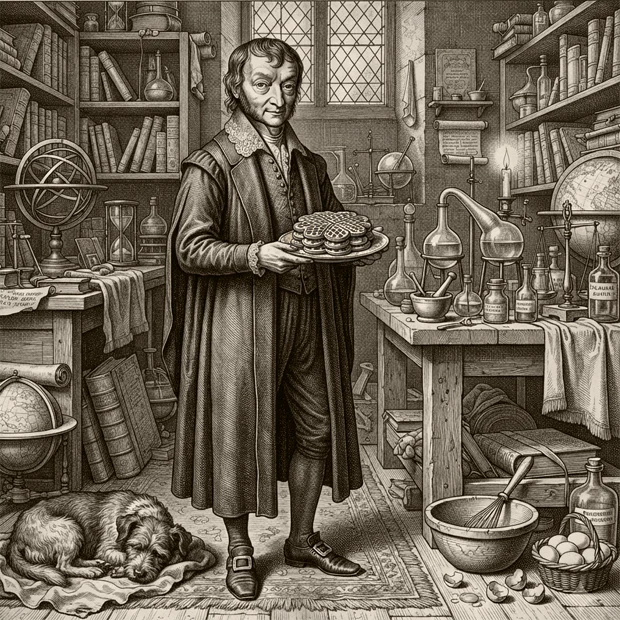
On August 9, 2026, the scientific and culinary worlds converged in a singular, buttery celebration. Marking the 250th anniversary of the birth of Amedeo Avogadro—the Italian scientist whose 1811 hypothesis revolutionized our understanding of molecular behavior—a new digital project has emerged that bridges the gap between pure chemistry and the breakfast table. Titled "Avogadro," this parametric waffle recipe generator promises to quantify the "tacit knowledge" of traditional baking, offering users the ability to engineer their perfect waffle through a complex, data-driven interface.
The Genesis of an Idea: From Spreadsheet to Software
The project, hosted on the long-standing culinary science platform Khymos, represents a decade-long labor of love. The concept first took root in 2014, when the creator began sketching rudimentary UI mockups and constructing a basic Excel model to define the mathematical boundaries of a "workable" waffle batter.
"It’s been quiet here for a while," the developer notes, reflecting on the project’s incubation period. "But luckily, there’s a project that has been simmering for a very long time. I got the idea back in 2014… but it never moved on from there. Until now."
For years, the project remained a theoretical exercise, a collection of sketches and formulas relegated to the background of other culinary research. The decision to launch on August 9, 2026, was deliberate, serving as a homage to the 250th birthday of Amedeo Avogadro. By naming the tool after the man who famously defined the mole—a unit of measurement that allows chemists to count atoms and molecules in bulk—the project highlights the inherent chemistry of cooking.
Defining the Waffle: The Anatomy of a Batter
At the heart of the Avogadro tool is a fundamental question that has haunted home bakers for generations: What exactly makes a batter a "waffle" batter, and at what point does it cease to be one?
Traditional recipes often rely on vague instructions such as "add flour until the consistency is right." This reliance on "tacit knowledge"—information gained through experience rather than explicit instruction—has historically made standardizing waffle quality difficult. The developer sought to strip away this ambiguity by analyzing a corpus of nearly 1,000 unique waffle recipes, primarily drawn from the rich Nordic tradition of heart-shaped waffles.
The resulting tool is not a static recipe database. It does not store or retrieve pre-written files. Instead, it acts as a real-time computation engine. Users interact with a series of variables:
- Ingredient Selection: Users choose their base components from categories including liquid, dairy, fat, egg, starch, and sweeteners.
- Slider-Driven Parametrics: Users adjust sliders for properties like richness, sweetness, and tanginess.
- Live Feedback: A "waffle heart quality indicator" provides instant visual data, informing the user if their current batter configuration is scientifically viable or if it drifts into the realm of the "fringe."
Interestingly, the developer notes that "fringe doesn’t mean bad." By testing the tool against commercial mixes, it was discovered that many beloved, high-performance batters sit far outside the traditional, expected center-point of the data set.

The Mathematics of Breakfast: 10²⁷ Combinations
The sheer scale of the Avogadro project is staggering. By combining the vast array of ingredient choices with the granular control of the sliders, the tool allows for approximately 10²⁷ distinct control settings.
To put this in perspective, this number rivals Avogadro’s constant itself (6.022 × 10²³), which defines the number of particles in a mole. The developer calculates that the tool is capable of generating roughly 1,660 moles’ worth of potential waffle batters. While the developer is quick to issue an honest caveat—acknowledging that rounding, trace ingredients, and "unworkable" configurations mean that not every one of these 10²⁷ settings results in a unique, edible masterpiece—the sheer combinatorial potential ensures that users are likely to encounter recipes that have never been seen in the history of human cooking.
"There is a high chance that once you have played around with the settings for a while, you see a recipe no one has ever seen before," the developer explains. This democratization of culinary invention is the project’s most radical implication.
Expert vs. Standard: Bridging the Gap
Recognizing that the complexity of the generator might be overwhelming for the casual cook, the platform offers two distinct modes:
1. The Standard Mode
Designed for those who want a reliable result without the analytical overhead. This mode limits the ingredient list and provides a "safety net," ensuring that any combination generated is guaranteed to result in a workable batter. It serves as an entry point for those intimidated by the chemistry of cooking.
2. The Expert Mode
Intended for the seasoned Khymos reader and the experimentalist, this mode unlocks the full, raw power of the generator. It provides access to all eight sliders, the complete library of ingredients, and advanced presets. In this mode, the tool acts as an open-ended laboratory, allowing users to "go where no cookbook has ever gone before."
Implications for Culinary Science
The launch of the Avogadro generator represents a significant shift in how we approach recipe development. Historically, the culinary world has moved from oral tradition to written cookbooks, and later to digital archives. Avogadro represents the next step: the algorithmic recipe.
The Role of User Feedback
Because the developer has not personally tested all 10²⁷ theoretical batters, the success of the tool relies heavily on crowdsourced validation. Users are encouraged to report "absurd" results or combinations that the model mishandles. This feedback loop is considered more valuable than simple praise, as it allows the "well-read guess" of the algorithm to be refined into a more accurate representation of reality.

If a user discovers a particularly successful batter, they are encouraged to share it via direct URL, fostering a global community of amateur food scientists who are effectively "debugging" the chemistry of the waffle.
A Cultural Tribute to Amedeo Avogadro
The project is more than just a tool; it is a cultural tribute. By juxtaposing the high-science legacy of Amedeo Avogadro with the humble, everyday waffle, the project serves to demystify chemistry. It reminds the public that every time we whisk eggs, sift flour, or heat a waffle iron, we are participating in a chemical experiment.
The inclusion of an imaginary, AI-generated engraving showing Avogadro in his Turin study, surrounded by stacks of Norwegian heart waffles, further underscores the playful spirit of the project. It reminds us that while the science of the mole is serious, the application of that science should be as delightful as the breakfast it produces.
Looking Forward: How to Participate
As the anniversary celebration continues, the invitation to the public is simple: "Design the batter of your dreams and bake a waffle."
The project stands as a testament to the idea that innovation doesn’t always require a multi-million dollar laboratory. Sometimes, it requires a passion for history, a deep curiosity about the mechanics of food, and the persistence to turn a 2014 Excel sheet into a functioning, worldwide digital resource.
For those looking to engage with the tool, the Khymos website provides the interface, the documentation, and a space for users to share their discoveries. Whether you are an expert in food chemistry or someone who simply enjoys a crisp, golden-brown waffle, the Avogadro generator invites you to step into the role of the creator—and perhaps, in the process, find a recipe that is truly your own.

 Raul Delapena Setiawan
 Azzam Bilal Chamdy