

 Reynand Wu
 Sagoh
Sagoh
 Basiran
 Evan Lee Salim
 Jia Lissa
 Suro Senen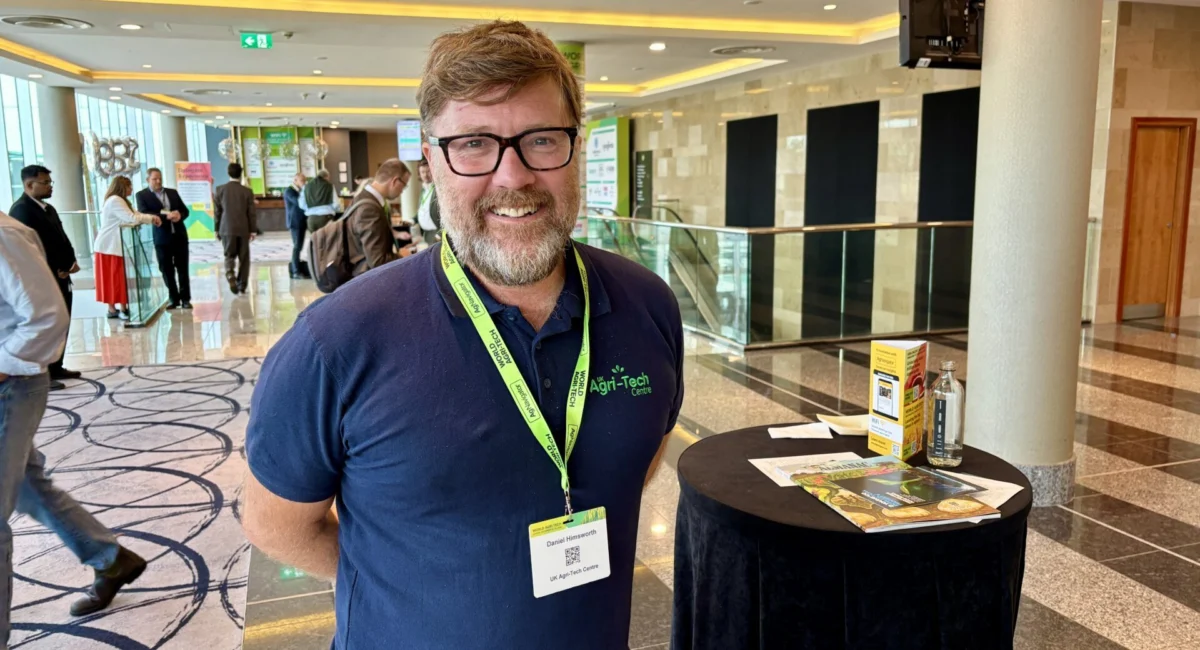
The UK Agri-Tech Centre (UKATC), a cornerstone of the nation’s agricultural research and innovation ecosystem, has announced a sweeping organizational transformation. Following an extensive consultation process, the Centre is set to reduce its workforce by 60%, cutting staff numbers from 130 to 50. While the scale of the redundancy is significant, leadership at the UKATC characterizes the move not as a cost-cutting measure, but as a fundamental "strategic pivot" designed to transition the organization from a direct service provider to a high-level industry matchmaker and facilitator.
This shift, expected to be fully operational by 2027, marks a departure from the Centre’s historical model of owning and operating specialized research facilities. Instead, the UKATC will pivot toward acting as the "connective tissue" within the UK’s agrifood sector, bridging the gap between startups, academics, corporate giants, and policymakers.
The Chronology of Change: From Merger to Modernization
The current UKATC was formed in 2024, the result of a complex merger between three distinct, government-backed agtech organizations that previously specialized in precision agriculture, crop protection, and livestock management. The ambition was to create a centralized powerhouse capable of addressing the multifaceted challenges of the food supply chain.
However, the reality of managing 43 disparate facilities—spanning robotics, aquaculture, and AI—proved to be an operational challenge. Since its inception, the Centre has navigated a hybrid funding model, relying on core support from Innovate UK alongside revenues generated from commercial testing services and public grants.
By early 2026, under the leadership of CEO Steve McLean, who joined the organization in January, it became clear that the existing structure was struggling with inefficiencies. The consultation process, which concluded recently, served as a diagnostic phase to determine how the Centre could better serve the UK’s innovation landscape. The resulting decision to "de-operationalize" its internal testing capabilities represents the most significant structural change since the merger.
Supporting Data and The "Connector" Model
The UKATC’s portfolio includes 43 specialized facilities. Under the new mandate, these assets will not be sold off. Instead, the Centre plans to transition management of these sites to established partner organizations.
Daniel Himsworth, Chief Engagement Officer at the UK Agri-Tech Centre, emphasized the necessity of this shift in an interview with AgFunderNews. "We’ve got R&D partners that we both compete with and partner with for research contracts," Himsworth noted. "This reorganization is about us being able to work with these facilities and remove duplication. We want to connect agri-tech businesses and food producers with the right research facilities, rather than competing for work with them."
The "connector" model relies on the premise that the UK’s existing research infrastructure is robust, but fragmented. By removing itself as a competitor, the UKATC aims to:
- Centralize Intelligence: Acting as a "glue" for shared insights, ensuring that innovators are not tackling redundant problems.
- Remove Silos: Facilitating partnerships between, for instance, a robotics startup and a university-run greenhouse, without the friction of the Centre acting as an intermediary service provider.
- Market Alignment: Ensuring that R&D efforts are driven by tangible commercial needs, such as labor shortages, drought resilience, and disease prevention, rather than academic curiosity alone.
Official Responses and Strategic Rationale
The leadership team has been transparent about the human cost of this restructuring. In an official statement, CEO Steve McLean acknowledged the profound impact on staff. "We recognize that these changes have a significant impact on our organization and particularly on colleagues whose roles are affected," he said. "Our immediate priority is to support our people through the process while we build the new direction for the business."
From a governmental perspective, the move has the backing of both Innovate UK and the Department for Environment, Food and Rural Affairs (DEFRA). The rationale is that the UK government is better served by an entity that acts as an ecosystem architect rather than a laboratory operator.
David Farquhar, president of TechTour, echoed this sentiment, arguing that the pivot allows the UKATC to focus on the "adoption" phase of technology. "Early-stage R&D is something many other organizations are well-equipped to support," Farquhar explained. "The real bottleneck is moving from a prototype to a commercial, scalable solution that a farmer can actually use in the field. By focusing on adoption, the UKATC can ensure investment is relevant to the needs of commercial farming."
Implications: A New Era for UK Agtech
The implications of this shift are profound for the UK’s startup community. The feedback from entrepreneurs has been, at best, a mix of cautious optimism and sharp critique.
The Value of Specialized Support
For some startups, the UKATC has been an indispensable partner. Executives at firms that have leveraged the Centre’s facilities describe them as "supportive" and "instrumental" in helping navigate the early, capital-intensive phases of business growth. These stakeholders are concerned about the potential loss of institutional knowledge as the 60% staff reduction takes effect. They emphasize that while the model may be inefficient, the people within the organization have been high-value assets.
The Critique of "Middlemen"
Conversely, other entrepreneurs have expressed frustration with the previous "consultative" approach. One startup founder noted, "We had multiple meetings but didn’t feel they really added any value. They said they could put us in touch with [a leading research institute], but I don’t need someone to do that—I can contact them directly."
This sentiment underscores a potential risk for the UKATC: as it moves into a purely "matchmaking" role, it must prove that it provides value beyond a simple directory of contacts. If the Centre is to remain relevant, it must offer C-suite level expertise, regulatory guidance, and strategic business development advice that founders cannot easily source on their own.
The Future of Facilities
The transition of the 43 facilities is perhaps the most critical logistical hurdle. The "mixed ownership model" implies that the UKATC will be entering into a series of complex legal agreements to transfer operational control to its partners. If managed correctly, this could create a more integrated, high-performing network of regional hubs. If managed poorly, it risks creating a vacuum of support for startups that rely on these specific sites for testing and validation.
Looking Ahead: The 2027 Horizon
As the UK Agri-Tech Centre prepares for its 2027 launch as a streamlined, agile entity, the agtech industry will be watching closely. The shift represents a bold experiment in public-private coordination.
The primary test will be whether the UKATC can successfully shift its culture from one of service delivery to one of ecosystem enablement. This requires a high degree of emotional intelligence and industry insight. The Centre must become a trusted advisor that understands the granular needs of a farm or a food retailer just as well as it understands the technical specifications of a new sensor or AI algorithm.
For the UK to maintain its position as a global leader in agricultural innovation, it requires a robust pipeline that carries ideas from the laboratory to the field. By clearing the "clutter" of direct operations, the UKATC is betting that its greatest contribution to the food system will not be the tests it conducts, but the relationships it fosters.
In the final analysis, the success of this restructuring will not be measured by the number of staff retained or the efficiency of the new administrative structure. It will be measured by the rate of adoption of new technologies on UK farms and the ability of British startups to scale effectively in a global market. For the UK Agri-Tech Centre, the next eighteen months will be a period of intense transition—one that will ultimately define the future of the nation’s agricultural technology landscape.


 Nila Kartika Wati
 Nana
Nana
