Rifan Muazin

 Lina Irawan
 Laily UPN
 Reynand Wu

 Ali Ikhwan
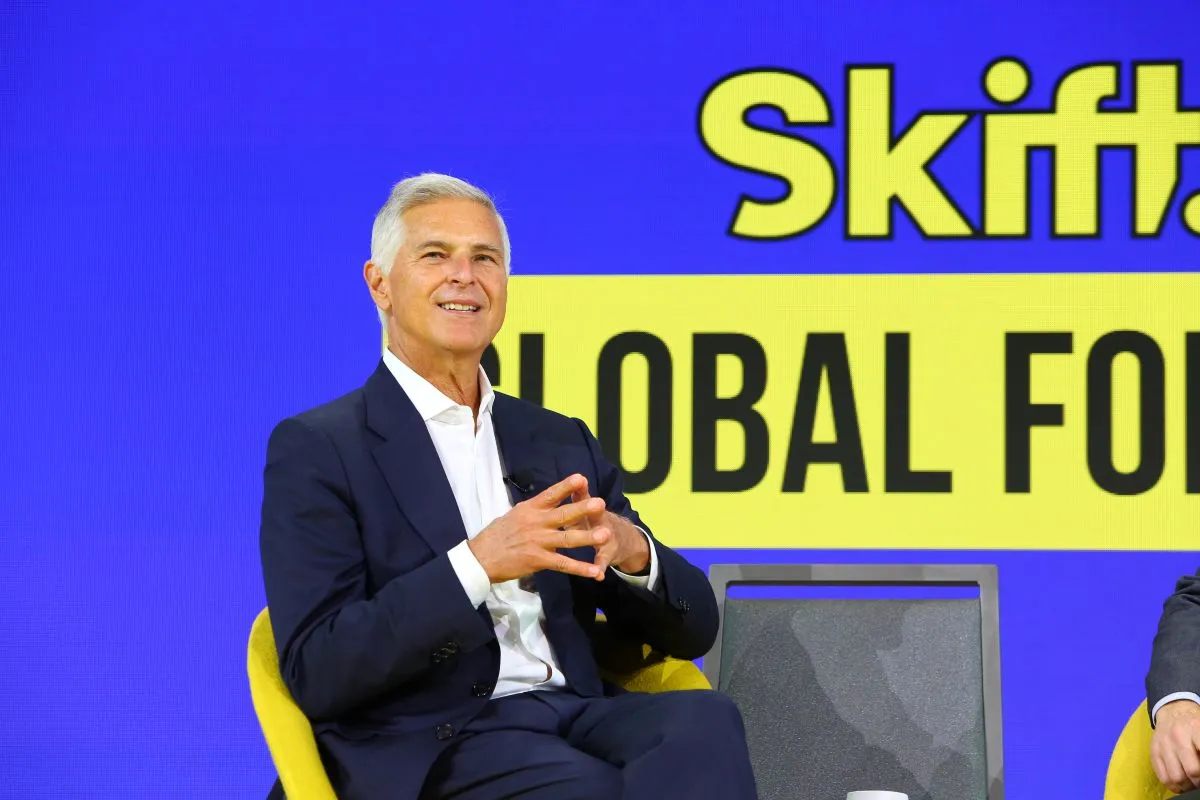
By Luke Martin, Skift Hospitality Reporter
October 27, 2026
In the rapidly evolving landscape of global hospitality, the line between a hotel company and a technology firm is blurring. Hilton Worldwide Holdings, under the steady hand of President and CEO Christopher Nassetta, is no longer content being categorized solely by its room count or property portfolio. Instead, the company is signaling a fundamental shift in identity. Nassetta has distilled this new vision into a four-word manifesto: “People-led, tech-powered.”
This strategic evolution reached a fever pitch in October 2026. Within a single month, the hospitality giant executed a series of high-profile maneuvers—including a major executive hire from the ride-sharing sector, a symbolic move of its stock exchange listing, and a bold assertion regarding its integration into the emerging AI agent ecosystem. For investors and industry analysts, the message is clear: Hilton is positioning itself not just to survive the digital disruption of the travel sector, but to lead it.
The Strategic Shift: A New Marketplace for a New Era
The most visible sign of Hilton’s transformation is its decision to move its stock listing from the New York Stock Exchange to the Nasdaq. While the company was quick to clarify that the move would have no immediate impact on its day-to-day operations or the guest experience, the symbolic weight of the decision is significant.
On Tuesday’s third-quarter earnings call, Christopher Nassetta leaned heavily into the rationale behind the switch. By listing on the Nasdaq, Hilton joins the ranks of the world’s most prominent tech giants—companies like Apple, Microsoft, and Nvidia.
“The Nasdaq is the home of the world’s most innovative companies,” Nassetta noted. “Our move there reflects our intent to be viewed not just as a traditional lodging company, but as a leader in travel technology.”
For Hilton, the Nasdaq is more than an exchange; it is a signal to the capital markets. By aligning itself with the tech sector, Hilton is attempting to shift its valuation multiples. Investors have historically priced hotel stocks based on real estate cycles and travel demand; by emphasizing its digital infrastructure, Hilton hopes to capture the premium valuations usually reserved for platform-based technology companies.
Chronology of a Tech-Forward Transformation
Hilton’s push toward a "tech-powered" future did not happen overnight. It is the culmination of a multi-year strategy to modernize the company’s internal architecture.
- Early 2026: Hilton begins an internal audit of its digital touchpoints, aiming to streamline guest interactions from booking to checkout.
- September 2026: At the Skift Global Forum in New York City, Christopher Nassetta emphasizes the role of artificial intelligence in shaping the future of guest personalization.
- October 2026 (Early): Hilton announces a leadership shakeup, signaling a commitment to deep-tech expertise rather than just traditional hospitality management.
- October 2026 (Mid-Month): The company confirms its transition to the Nasdaq, citing an alignment with innovation-focused markets.
- October 2026 (Late): During the Q3 earnings call, leadership reaffirms that the company is now fully integrated into the growing ecosystem of AI travel agents, marking a transition from static booking engines to dynamic, conversational commerce.
Supporting Data: The Case for a Tech-Powered Hotelier
The urgency behind Hilton’s tech pivot is driven by cold, hard data. As digital travel agents and AI-powered concierge services become the norm, the traditional booking funnel is being disrupted.
According to internal projections discussed during the latest earnings report, Hilton is currently plugged into "each and every one" of the significant AI agents currently emerging in the travel space. This is a crucial defensive and offensive maneuver. If a consumer asks a generative AI agent to "plan a luxury trip to Tokyo and book a reliable hotel," Hilton wants its properties to be the default response. By ensuring its inventory and dynamic pricing data are natively integrated into these AI models, Hilton is bypassing the need for traditional third-party intermediaries.

Furthermore, the company’s focus on the "people-led" half of its mantra remains a hedge against the coldness of automation. Hilton’s data suggests that while guests want high-tech efficiency in booking and check-in, they still place a premium on human interaction once they are on-property. The tech is designed to automate the friction, allowing staff to focus on the high-touch hospitality that defines the brand’s luxury and upper-upscale segments.
Official Responses: “Giving Tech More Oxygen”
The most concrete evidence of this pivot is the appointment of Jeff Moore as Chief Technology Officer. Moore’s arrival from Uber is a masterstroke in signaling intent. At Uber, Moore managed a global engineering organization of 2,500 people, handling the complex, real-time logistics of a multi-billion dollar platform.
"Bringing in someone with Jeff’s background is about giving our tech department more oxygen," said a senior Hilton spokesperson following the announcement. "We don’t need a traditional IT director; we need someone who understands scale, real-time data processing, and user-interface design at a level that rivals the biggest Silicon Valley firms."
Moore’s mandate is clear: overhaul the legacy systems that still plague much of the hotel industry and replace them with agile, cloud-native solutions. During the earnings call, Nassetta emphasized that Moore would be tasked with "accelerating the velocity" of product development. The goal is to move from quarterly updates to a culture of continuous deployment, where features are rolled out to the Hilton Honors app as quickly as they are tested.
Implications: The Future of the Hospitality Sector
What does this mean for the rest of the hospitality sector? Hilton’s move is likely to trigger a "digital arms race." Competitors like Marriott, IHG, and Hyatt are now under increased pressure to demonstrate their own tech credentials. If Hilton successfully captures a larger share of direct bookings through AI integration and superior app functionality, it will squeeze the margins of Online Travel Agencies (OTAs) and force other hotel chains to accelerate their own digital transformations.
1. The Death of the Static Booking Engine
The era of the static website where a customer enters dates and hits "search" is coming to an end. Hilton’s strategy suggests that the future is "Conversational Hospitality." In this future, a guest doesn’t browse a website; they interact with a digital agent that knows their preferences, loyalty history, and budget, resulting in a curated offer rather than a list of search results.
2. Talent Wars
By poaching executive talent from companies like Uber, Hilton is signaling that the best tech talent is no longer looking only at SaaS or Social Media companies. The complexity of global travel—with its fluctuating inventory, dynamic pricing, and multi-cultural consumer base—is becoming a prime playground for engineers and data scientists.
3. Investor Re-evaluation
If Hilton succeeds in its Nasdaq transition and proves that its tech investments are driving higher RevPAR (Revenue Per Available Room) and lower Customer Acquisition Costs (CAC), the stock market will have to re-rate the hospitality sector. We may see a future where hotel stocks are no longer strictly correlated to GDP growth, but rather to the effectiveness of their digital ecosystems.
Conclusion: A New Standard for Hospitality
As the industry moves into 2027, the "people-led, tech-powered" mantra will be the benchmark by which Hilton’s success is measured. The company has made its bet: it believes that the future of hospitality is not found in the physical assets alone, but in the digital bridge between the guest’s desire and the hotelier’s service.
Christopher Nassetta has successfully steered Hilton through the turbulence of the post-pandemic era. Now, with a new CTO, a new stock exchange home, and a clear AI-first strategy, he is positioning the company for a future where the guest’s journey is as seamless as a ride-share and as personal as a private concierge. For Hilton, the future isn’t just coming—it’s already checked in.

 Ammar Sabilarrohman