Lina Irawan

 Laily UPN

 Reynand Wu
 Ali Ikhwan

 Nila Kartika Wati
[Listen to This Article: (Implicitly removed for journalistic tone)]
In the hallowed halls of classical French cooking, the five mother sauces stand as immutable pillars, each a foundational base from which an intricate tapestry of flavors can be woven. Yet, it is within the dynamic realm of their derivatives – the so-called "daughter sauces" – that the true artistry and expansive versatility of this culinary family truly come to life. By skillfully enriching, reducing, or infusing these foundational preparations with new, vibrant flavors, chefs unlock a universe of variations, perfectly tailored to complement everything from the most delicate pan-seared fish to a robust, perfectly cooked steak.
This article delves into the fascinating world of daughter sauces, exploring their definition, historical roots, and the profound impact they have on modern culinary practice. We will journey through some of the most pivotal daughter sauces, dissecting their construction and illuminating their classic applications in the kitchen, offering a glimpse into the systematic brilliance that underpins French gastronomy.
What Exactly Defines a Daughter Sauce?
At its core, a daughter sauce is a secondary or derivative creation, born from one of the five venerable French mother sauces: Béchamel, Hollandaise, Velouté, Espagnole, or Sauce Tomate. Also frequently referred to as a "small sauce" or a "compound sauce," a daughter sauce meticulously builds upon its established base through the precise addition of new ingredients, nuanced seasonings, strategic reductions, or refined finishing techniques. This hierarchical system allows for a remarkable degree of complexity and adaptability, transforming a single foundational sauce into an array of distinct flavor profiles and textures.
A Legacy of Culinary Innovation: The Origins of the Sauce System
The sophisticated system of mother and daughter sauces has deep roots in the rich history of classical French cuisine, a tradition celebrated globally for its meticulous techniques and profound understanding of flavor. Its conceptual framework began to coalesce in the 19th century, largely thanks to the pioneering efforts of Chef Marie-Antoine Carême. Often regarded as one of the first celebrity chefs and a true architect of haute cuisine, Carême meticulously organized the vast array of sauces into coherent families. His vision was to bring order and logic to the chaotic culinary landscape of his time, providing a clear, systematic approach to sauce making that could be taught, understood, and replicated.
This groundbreaking classification was further refined and solidified by Auguste Escoffier, a figure whose influence on modern French cooking is almost unparalleled. Escoffier, whose philosophy emphasized simplicity, efficiency, and elegant presentation, streamlined Carême’s extensive list, establishing the definitive five mother sauces we recognize today. His work, detailed in his seminal guide Le Guide Culinaire, provided professional cooks with an invaluable practical framework: master a handful of essential, versatile sauces, and from them, one could confidently create dozens, if not hundreds, of additional preparations. This hierarchical structure not only simplified learning but also fostered an unprecedented level of standardization and creativity within the professional kitchen, allowing chefs to communicate and innovate with a shared, precise vocabulary.
Mastering the Fundamentals: Why Daughter Sauces are Indispensable for Chefs
Learning to prepare daughter sauces transcends mere recipe memorization; it is an immersive education in foundational culinary principles. This systematic approach cultivates a deep understanding of essential techniques rather than a fragmented collection of isolated instructions. By grasping how a relatively small number of core techniques can yield an expansive repertoire, aspiring professionals are trained to think critically about vital elements in the kitchen, including the delicate balance of flavors, the desired consistency, the art of reduction, the science of emulsification, the richness of enrichment, and the precision of seasoning.
This structured learning environment equips culinary students with the classical vocabulary and practical skills they will inevitably encounter in both culinary school and demanding professional kitchens. As Jackson Hussey, an Escoffier Boulder Graduate now working at La Marmotte, attests: "They could just say, ‘I need you to make this sauce,’ and I immediately had an idea of the base. It helped me work a lot faster, not having to ask them to give me a recipe. I knew where to start, and I could just ask them how they want me to adjust it to their liking. That was a huge help to me and to the restaurant." This insight underscores the profound efficiency and adaptability that comes from internalizing the mother and daughter sauce system. It empowers chefs to innovate on the fly, tailoring classic preparations to suit specific ingredients, palates, or modern culinary trends, all while maintaining a consistent standard of excellence.
The Family Tree of Flavor: Exploring the Mother Sauce Lineages
As one embarks on the journey of building classical cooking skills, the immediate memorization of every single daughter sauce is not the primary objective. Instead, the focus should be on recognizing the foundational mother sauce, identifying the specific culinary change that transforms it into a daughter sauce, and understanding the types of dishes where it traditionally excels. This systematic recognition forms the bedrock of true culinary mastery, revealing how each branch of the family tree blossoms into unique and delicious variations. It is also worth noting that the family lineage doesn’t always end with the first generation of daughter sauces; some derivatives, such as demi-glace, can themselves become the foundational base for further sauces, creating a complex and ever-expanding culinary genealogy.

Béchamel Daughter Sauces
Béchamel, a creamy, mild white sauce crafted from milk thickened with a white roux, serves as a versatile foundation in dishes like creamed spinach or lasagna. Its inherently neutral profile allows for remarkable transformations into daughter sauces that offer either pronounced richness or subtle sweetness. Other notable members of the Béchamel family include Nantua, Crème, and Mustard Sauce.
Mornay Sauce
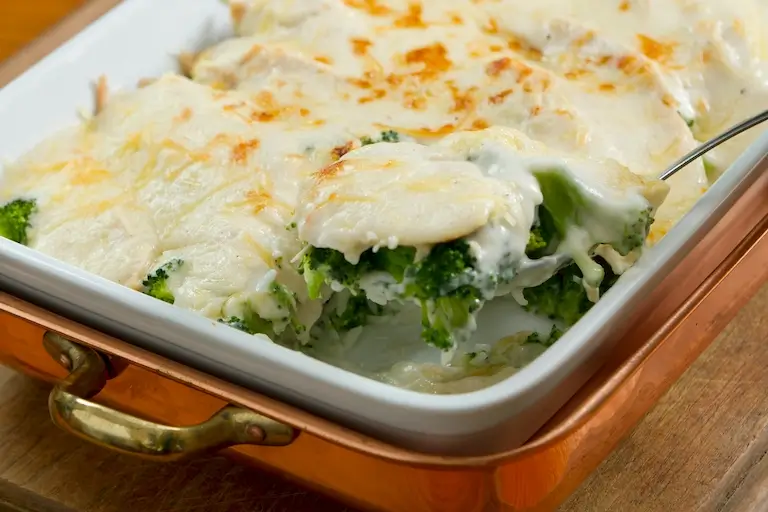
For aficionados of the luscious, cheesy coating on baked macaroni and cheese, Mornay sauce is an familiar delight. This classic daughter sauce elevates Béchamel by enriching it with finely grated cheese, traditionally Gruyère, Parmesan, or a harmonious blend of the two. The cheese is carefully incorporated into the Béchamel off direct heat, added gradually to ensure a smooth, emulsified texture, preventing any graininess or separation. A common starting point involves 1 to 2 ounces of cheese per cup of Béchamel, adjusted to achieve the desired flavor intensity and thickness for a given dish. Mornay is celebrated as the essential base for various gratins—from cauliflower to potato to seafood—and frequently enhances baked vegetable dishes, elegant egg preparations like poached eggs Florentine, and the iconic croque monsieur, where a generous layer of Mornay is broiled to create its signature rich, bubbly, golden-brown crust.
Soubise Sauce
For those who savor the mellow sweetness of onions gently cooked in butter, Soubise sauce offers a refined translation of that flavor into a smooth, creamy preparation. This Béchamel daughter sauce expertly combines the classic white sauce with tender onions, slowly cooked without browning to preserve their pale color and delicate taste. The preparation involves thinly slicing onions and gently sautéing them in butter under a cartouche (a circle of parchment paper placed directly over the onions). This technique helps retain moisture, allowing the onions to soften to a meltingly tender consistency over 20 to 30 minutes without caramelizing. The cooked onions are then puréed or passed through a fine sieve before being combined with the Béchamel. Some classical recipes further enrich the sauce with a finishing touch of cream and butter, enhancing its luxurious texture. Soubise is perhaps most famously associated with Veal Prince Orloff, an elaborate dish layering the sauce with roast veal and mushroom duxelles, then coated in Mornay. However, its mellow onion notes also beautifully complement more accessible dishes such as lamb chops, roast chicken, or roasted vegetables.

Hollandaise Daughter Sauces
Hollandaise, a rich, buttery, and delicately acidic warm emulsion of egg yolks and clarified butter, typically brightened with lemon juice, is a paragon of French sauce making. By subtly altering its acidic components or introducing aromatic herbs, citrus, or cream, chefs can guide this exquisite sauce in myriad new directions. Beyond the three classic variations detailed below—Béarnaise, Mousseline, and Maltaise—the Hollandaise family also includes Choron (Hollandaise with tomato purée), Foyot (Béarnaise with meat glaze), Paloise (Béarnaise with mint), and Dijon (Hollandaise with Dijon mustard).
Béarnaise Sauce
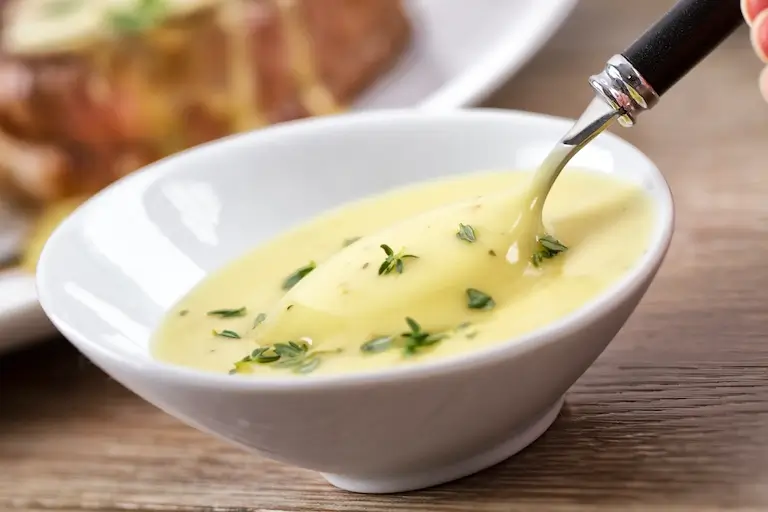
A quintessential accompaniment to steak frites in any authentic French bistro, Béarnaise sauce transforms Hollandaise with its distinctive herbaceous and tangy profile. While employing the same warm emulsion of egg yolks and clarified butter, Béarnaise derives its characteristic acidity and robust flavor from a reduction of vinegar, white wine, finely minced shallots, crushed peppercorns, and fresh tarragon. To craft this reduction, the liquids and aromatics are gently simmered until intensely concentrated, then strained. This flavorful reduction is whisked with the egg yolks before the clarified butter is gradually incorporated. A final addition of fresh tarragon and, traditionally, chervil, imbues the finished sauce with its signature savory, aromatic bouquet. Béarnaise is a revered partner for steak and other grilled meats, but its rich, piquant notes also elevate fish, eggs, and springtime vegetables such like asparagus.
Mousseline Sauce
While Hollandaise is celebrated for its opulent, velvety texture, the addition of unsweetened whipped cream transforms it into Mousseline, or Sauce Chantilly, imparting a surprisingly light and ethereal finish. This daughter sauce preserves Hollandaise’s iconic buttery flavor and delicate acidity while bestowing upon it a softer, more delicate consistency. The unsweetened cream is whipped to soft peaks and meticulously folded into warm Hollandaise just before serving. This gentle folding technique is crucial for retaining the air bubbles in the cream, resulting in a sauce that feels remarkably lighter on the palate despite its inherent richness. Mousseline is classically paired with poached sole, where its airy texture beautifully complements the delicate fish. It also frequently appears with poached salmon, asparagus, and even as an elegant alternative to traditional Hollandaise for eggs Benedict, as well as with lobster, scallops, and other gently cooked seafood. (Note: Mousseline sauce is a savory Hollandaise variation; Crème mousseline is a pastry cream enriched with butter).
Maltaise Sauce
For those who appreciate Hollandaise with asparagus, Maltaise offers a brighter, fruitier, and visually captivating variation. This exquisite daughter sauce infuses Hollandaise with the vibrant juice and fragrant zest of blood oranges, contributing a gentle sweetness, an alluring citrus aroma, and a subtle rosy hue. The blood orange juice is carefully stirred into the finished Hollandaise, while finely grated or julienned zest intensifies the orange essence. In classical preparations, the zest may be blanched briefly to soften its texture and temper any potential bitterness. The resulting sauce maintains the luxurious richness of Hollandaise while allowing the clear, bright notes of the citrus to shine through. Maltaise is most famously known as the star of asparagus à la Maltaise, where it is generously spooned over perfectly cooked asparagus. It also harmonizes beautifully with artichokes, broccoli, cauliflower, and delicate fish or shellfish.
Velouté Daughter Sauces
Velouté, one of the most versatile mother sauces, originates from a simple yet elegant pairing: a light stock (traditionally chicken, veal, or fish) thickened with a blond roux. The specific type of stock chosen profoundly influences the character of the sauce and the range of daughter sauces it can yield. Chicken Velouté can evolve into Suprême, Veal Velouté forms the base for Allemande, and Fish Velouté transforms into Normande. Other distinguished members of the Velouté family include Bercy, Vin Blanc, Poulette, and Ravigote.
Suprême Sauce
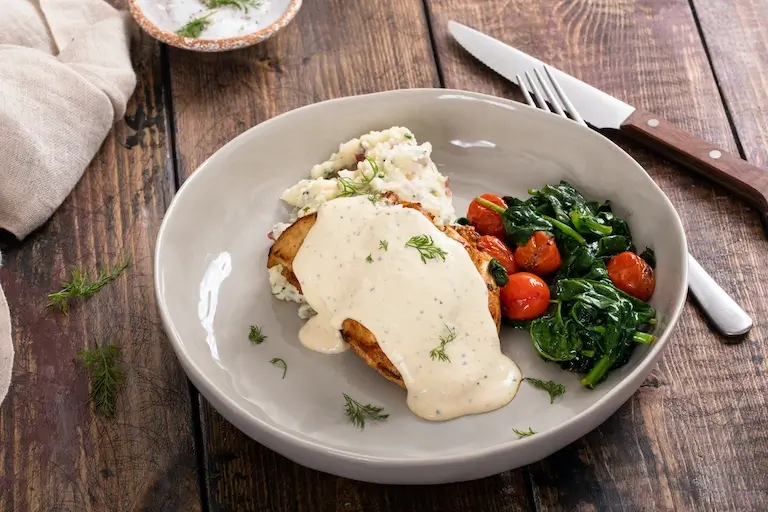
A well-executed chicken Velouté is inherently smooth and savory, yet with the addition of cream and meticulous reduction, it ascends to the aptly named Suprême sauce. This classic daughter sauce begins with a chicken Velouté, which is gently simmered to intensely concentrate its poultry flavor before being luxuriously enriched with warm heavy cream. As the sauce reduces, excess water evaporates, intensifying its inherent flavors and developing a fuller, more substantial consistency. The cream adds a profound richness and mellows the savory notes of the stock. Suprême is often strained for an exceptionally smooth finish, then delicately balanced with a touch of lemon juice and, in some preparations, a final swirl of butter. Suprême sauce is a classical accompaniment for poached or roasted chicken, particularly chicken breasts or suprêmes de volaille. It also complements turkey, veal, and poultry-filled preparations such as vol-au-vent.
Allemande Sauce
Allemande takes Velouté in a distinctly silky direction. Traditionally prepared with veal Velouté, this sauce is sumptuously enriched with a liaison of egg yolk and cream, then brightened with a hint of lemon juice to perfectly balance its inherent richness. In classical cooking, a liaison is a crucial mixture used to thicken and enrich a preparation. While Allemande requires a slightly more technical approach than some other daughter sauces, the key lies in precise temperature control. The egg yolk and cream are whisked together, and the liaison is then tempered by gradually incorporating a small amount of hot Velouté into the mixture. This warmed liaison is then slowly whisked into the remaining sauce, which is gently heated without allowing it to boil, a crucial step to prevent the egg yolk from curdling. Allemande is classically paired with poached chicken, veal, eggs, and various vegetables. Its flavors and finishing technique are also prominent in dishes like blanquette de veau, where a pale veal sauce is enriched with egg yolk and cream and balanced with lemon.
Normande Sauce
Named for Normandy, a region celebrated for its abundant seafood and rich dairy products, Normande sauce masterfully brings these elements together in a single, luxurious preparation. It begins with a fish Velouté, which is then enriched with cream and egg yolks. Classical versions gain additional depth and complexity from the concentrated cooking liquids (often referred to as "liquors") derived from mushrooms and shellfish. These flavorful juices, left after cooking ingredients such as mussels or oysters, are simmered with the Velouté to concentrate their savory essence. A liaison of egg yolks and cream then provides the sauce with its smooth, rich finish. As with Allemande, the liaison must be carefully tempered and heated gently to prevent curdling. Normande is perhaps best known as a key component of sole à la Normande, an elaborate seafood presentation that may feature sole alongside mussels, oysters, shrimp, or mushrooms, all enveloped in the finished sauce. It also perfectly complements poached sole, turbot, scallops, and other delicately cooked fish or shellfish.
Espagnole Daughter Sauces
Unlike its counterparts, Espagnole is rarely served directly as a finished sauce. Crafted from brown stock, a dark brown roux, aromatic vegetables, and tomato, this deeply savory mother sauce is typically subjected to further reduction and refinement, serving as the powerful foundation for a multitude of other preparations. Two of the most important sauces that emerge from this robust base are demi-glace and, a further step along the family tree, Bordelaise. Other significant sauces within the Espagnole family include Chasseur, Madeira, Robert, and Marchand de Vin.
Demi-Glace
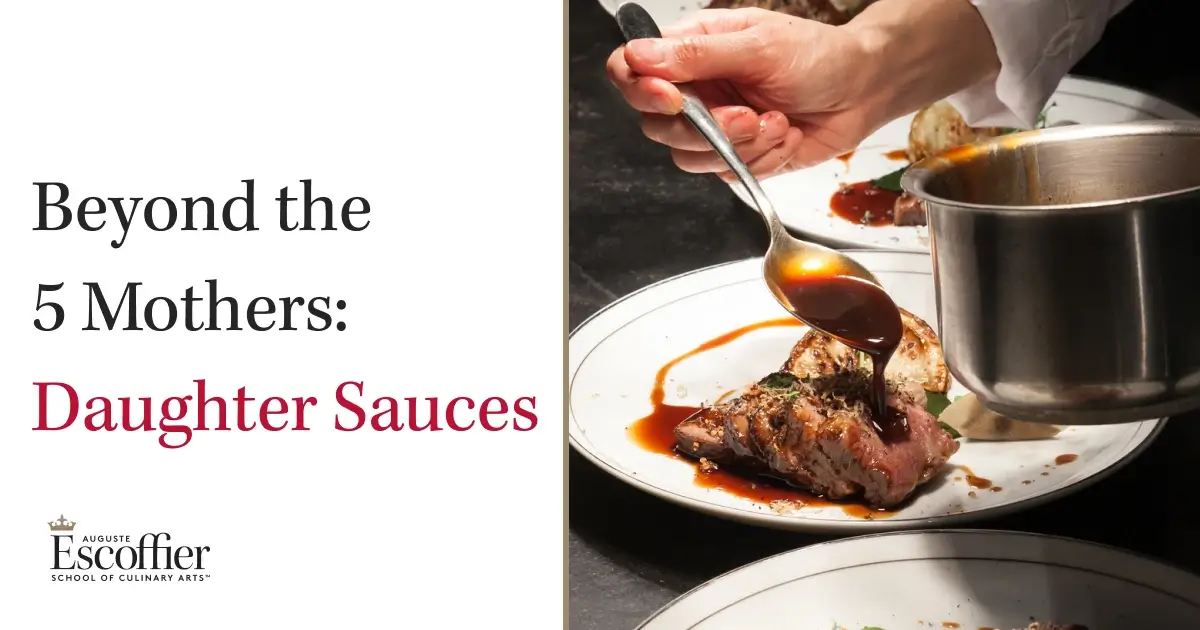
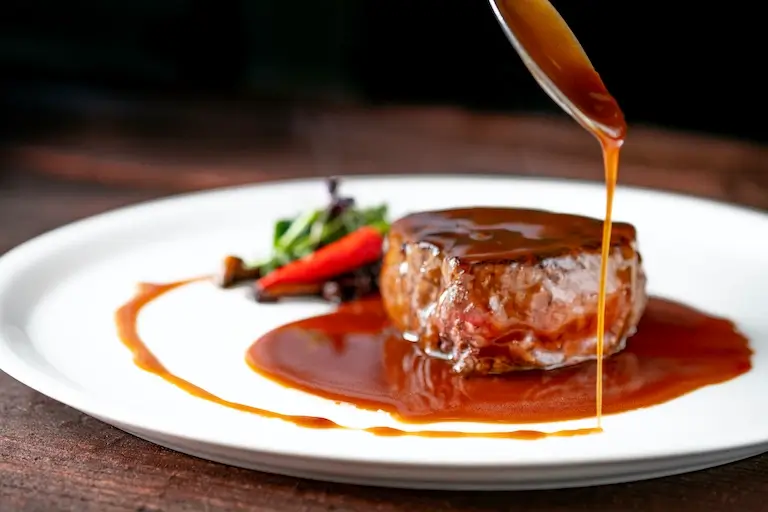
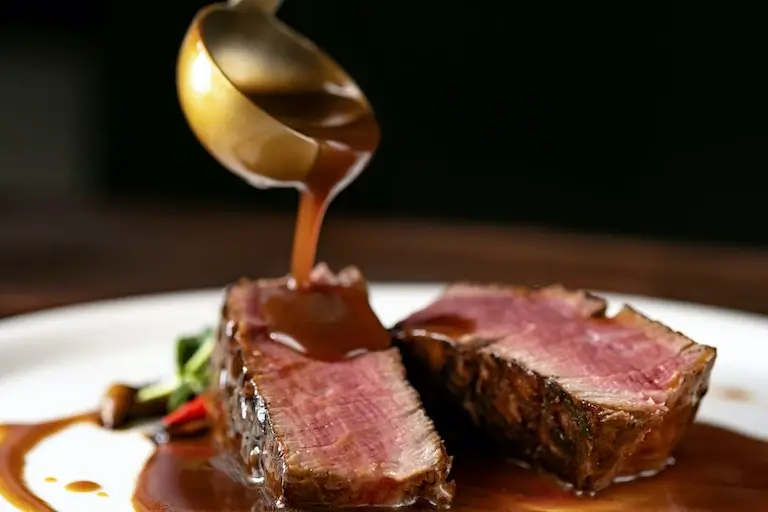
That exquisitely glossy, intensely savory brown sauce often gracing a restaurant steak frequently begins its journey as demi-glace. In the classical method, demi-glace is meticulously prepared by combining equal parts Espagnole and rich brown stock, then slowly simmering the mixture until its volume is reduced by half. This extended reduction process allows water to evaporate, concentrating the profound flavors of the stock and aromatics to an extraordinary degree. Crucially, it also concentrates the stock’s natural gelatin, which imparts a luxurious body and a characteristic sheen to the demi-glace without requiring additional roux. The finished sauce is meticulously strained, yielding a perfectly smooth, polished texture. Demi-glace is a superb accompaniment to steaks, veal chops, roast beef, lamb, and various other meat preparations. Beyond its direct use, it serves as the indispensable foundation for numerous finished brown sauces, including Chasseur (featuring mushrooms, shallots, white wine, and herbs), Madeira (infused with Madeira wine), and Bordelaise, which is described below.
Bordelaise Sauce
If demi-glace is the ultimate foundation for meat, Bordelaise takes this pairing to an even more refined level with the infusion of red wine, shallots, and, traditionally, bone marrow. Named for the illustrious Bordeaux wine region of France, this deeply savory and aromatic sauce is a revered classic accompaniment to beef. The preparation begins by simmering red wine with finely chopped shallots and aromatics such as thyme, bay leaf, and black peppercorns until the liquid is significantly reduced and concentrated. Demi-glace is then added, providing essential body and deepening the savory flavor profile. Traditional versions are completed with the addition of poached bone marrow, which dissolves into the sauce, contributing an unparalleled richness and a distinctive silky texture. Bordelaise is famously known for entrecôte à la Bordelaise, a preparation of rib steak served with this exquisite sauce. It also pairs beautifully with filet mignon, beef tenderloin, grilled steaks, lamb, and other roasted or grilled meats.
Sauce Tomate Daughter Sauces
Sauce Tomate in classical French cooking transcends the simple tomato sauces often spooned over pasta. It is a deeply flavored mother sauce, where tomatoes are slowly cooked with aromatics and other ingredients to create a robust base capable of supporting a wide array of variations. By incorporating herbs, peppers, onions, garlic, or other regional influences, this foundation transforms into vibrant daughter sauces such as Provençale, Créole, and Portugaise. Other variations found within the Sauce Tomate family include Milanaise and Piquante.
Provençale Sauce
For those who delight in the harmonious flavors of garlic, olive oil, sun-ripened tomatoes, and fresh herbs, Provençale sauce encapsulates a distinctly Mediterranean expression of Sauce Tomate. Inspired by the sun-drenched cuisine of Provence in southern France, this sauce builds upon the tomato base with fragrant garlic, sweet onions, and a medley of herbs such as parsley, thyme, or basil. Onions and garlic are gently sautéed in olive oil until translucent before being combined with Sauce Tomate and simmered, allowing their flavors to meld beautifully. Some variations may also include olives, capers, or additional chopped fresh tomatoes, though these are not strictly essential to every classical rendition. Provençale sauce graces dishes such as cod Provençal, chicken Provençal, and eggs à la Provençale. Its bright, herbaceous profile also beautifully complements grilled or roasted fish, lamb, poultry, eggplant, zucchini, and other Mediterranean vegetables.
Créole Sauce
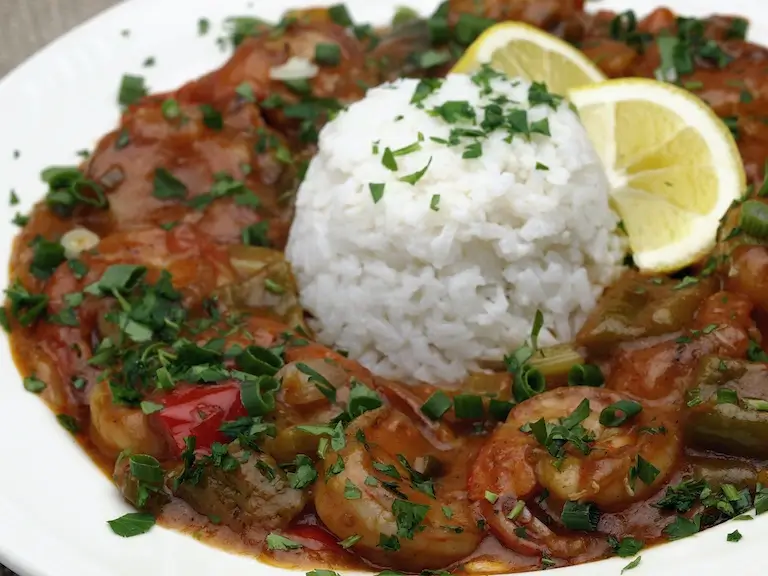
Anyone who has savored shrimp Creole understands how peppers, aromatics, and a touch of heat can dramatically transform a tomato sauce. Within the classical sauce-family framework, Créole sauce develops from Sauce Tomate through the vibrant addition of onion, celery, green bell pepper, garlic, herbs, and distinctive seasonings. The aromatic trio of onion, celery, and bell pepper, often dubbed the "Creole holy trinity," is gently cooked until softened before the Sauce Tomate is introduced. This creates a fresher, more textured sauce than the smooth mother sauce alone. Garlic, thyme, bay leaf, cayenne pepper, or a dash of hot sauce typically provide additional depth and a characteristic warmth, though recipes can vary across the diverse Creole culinary traditions. In shrimp Creole, shrimp are simmered directly in the seasoned sauce and most commonly served with fluffy white rice. Créole sauce also perfectly accompanies chicken, crab, catfish, grilled meats, and various other savory preparations.
Portugaise Sauce
Portugaise sauce brings the tomato itself to the forefront, celebrating its fresh, vibrant character. This sauce builds upon Sauce Tomate with sautéed onion, garlic, fresh parsley, and a generous inclusion of tomato concassée (tomatoes that have been peeled, seeded, and roughly chopped). This gives Portugaise a notably fresher flavor and a pleasingly chunkier consistency compared to the smooth mother sauce. To prepare it, onions are softened in oil before garlic and the concassée are added. The Sauce Tomate is then stirred in and gently simmered, allowing the flavors to marry, and finally finished with a generous toss of fresh parsley. Portugaise is classically featured in eggs à la Portugaise, where cooked eggs and tomatoes are enveloped in the thick, flavorful sauce. It also serves as an excellent accompaniment to beef, chicken, fish, and a wide array of vegetables.
Beyond the Basics: The Infinite Possibilities of Derivative Sauces
The beauty and enduring relevance of the French sauce system lie in its inherent flexibility and potential for endless variation. As demonstrated, some daughter sauces are not terminal points but rather new foundations upon which further sauces can be built. Sauce Choron, for instance, artfully builds upon Béarnaise with the addition of tomato purée, creating yet another distinctive branch within the Hollandaise family. This principle of layering and modification means that once the fundamental mother sauces are mastered, the classical sauce family tree becomes a dynamic and continuously growing entity. This structured approach not only simplifies the learning process but also encourages a chef’s creativity, allowing them to understand the underlying logic of flavor combinations and textual modifications, leading to innovative culinary expressions.
Conclusion: The Enduring Legacy of the French Sauce System
Learning the intricate network of daughter sauces is more than just acquiring a set of recipes; it is a transformative process that helps chefs move beyond rote execution to a profound understanding of how classical techniques interconnect. Once one recognizes how a foundational sauce can be expertly adapted through precise reductions, delicate emulsions, rich enrichments, and other nuanced techniques, a chef begins to approach cooking with unparalleled confidence, versatility, and an artistic sensibility. This systematic mastery empowers them to not only replicate time-honored dishes but also to innovate, creating new flavor profiles that are both sophisticated and deeply rooted in culinary tradition.
At institutions like the Auguste Escoffier School of Culinary Arts, students are immersed in these foundational cooking techniques, developing the skills and comprehensive culinary knowledge essential for success in a professional kitchen. The enduring legacy of the French sauce system continues to shape modern gastronomy, proving that a structured approach to learning can indeed lead to boundless culinary artistry. For those ready to deepen their culinary foundation and embark on a rewarding journey in the world of food, exploring these rich traditions is an indispensable next step.


 Lina Hope