 Dwi Wanna
 Nana Wu
 Muslim
 Reynand Wu
 Ammar Sabilarrohman
 Nila Kartika Wati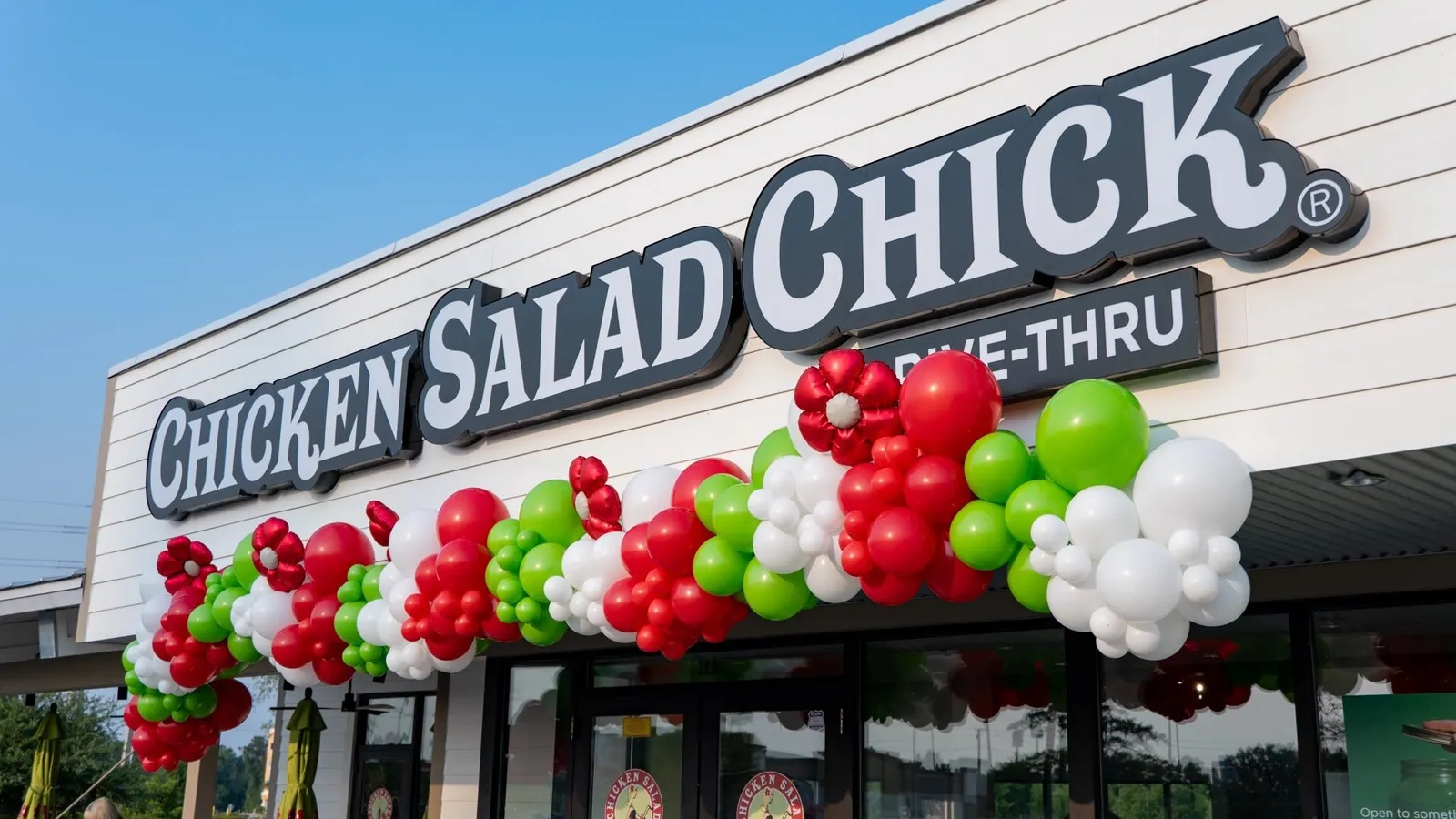
Chicken Salad Chick, the fast-casual chain famous for its diverse array of made-from-scratch chicken salads, is officially entering the New York market. This move represents a watershed moment in the company’s history, marking a decisive shift from its Southern roots toward a broader, nationwide footprint. With a robust development pipeline and a fresh leadership approach, the brand is signaling that its "comfort food" concept has the scalability to thrive in the competitive Northeast and beyond.
The New York Milestone: A Gateway to the Northeast
The company recently confirmed a franchise agreement that serves as its inaugural entry into the New York market. Management has characterized this deal as a “significant first entry into New York’s development,” emphasizing that it is a critical component of a larger roadmap designed to establish a formidable presence in the Northeast corridor.
For years, Chicken Salad Chick was synonymous with the American South. However, the brand’s executive team identified New York and New Jersey—along with major expansion targets in the Southwest—as primary strategic markets for franchising as early as last year. By securing a foothold in New York, the brand is testing its business model in a dense, high-barrier-to-entry market, a move that serves as both a logistical challenge and a massive branding opportunity.
Chronology: A Trajectory of Rapid Expansion
To understand the magnitude of this current expansion, one must look at the rapid acceleration of the brand over the past 24 months.
- Early 2024: The brand hits a major internal milestone, celebrating the opening of its 300th restaurant. This marked a shift in focus from regional establishment to national saturation.
- Late 2024: Following the 300-unit achievement, the company successfully closed several strategic franchise agreements across the Midwest, aiming to increase brand density in a region previously untapped by the chain.
- April 2025: In a bid to professionalize its growth strategy, the brand appointed Brian Lindley, a former Popeyes development executive, as its new Chief Development Officer. His mandate was clear: oversee the franchising machinery and identify opportunities for smaller-footprint stores that fit urban environments.
- February 2026: The chain announced a six-unit development agreement in Nevada, signaling that the Southwest, alongside the Northeast, was officially open for business.
- Present Day: The company boasts over 330 operational restaurants with a massive, 300-store development pipeline, suggesting that the brand’s growth is not merely a trend, but a sustained, aggressive corporate strategy.
Supporting Data: By the Numbers
The metrics behind Chicken Salad Chick’s growth paint a picture of a brand with significant momentum. According to recent internal data, the company has managed to maintain a balanced growth portfolio:
- Unit Count: With over 330 units currently in operation, the brand has successfully navigated the "middle-market" trap that claims many fast-casual concepts.
- Pipeline Velocity: A 300-store development pipeline indicates that for every restaurant currently serving guests, there is nearly another one in various stages of permitting, construction, or site selection.
- Regional Diversity: The move into Nevada, the Midwest, and now New York demonstrates a diversified risk profile. By moving away from a single-region dependency, the company is insulating itself against localized economic downturns or shifts in regional consumer preferences.
The Leadership Pivot: Professionalizing Development
The hiring of Brian Lindley was a calculated move intended to transition the brand from its "founder-led" growth phase into a more institutionalized expansion model. As a veteran of Popeyes—a brand known for its own aggressive national scaling—Lindley brings the tactical expertise required to manage multi-unit franchise operators.
Under Lindley’s leadership, the brand has begun exploring "smaller-footprint" locations. In the restaurant industry, the move to smaller physical sites is often a strategic hedge against rising real estate costs and a response to the post-pandemic reality of increased off-premise dining. Smaller stores require less capital expenditure (CapEx) for franchisees, which in turn makes the brand more attractive to a wider pool of potential operators.
The Demographic Shift: Engaging the Next Generation
Perhaps the most compelling trend in the brand’s recent reporting is the surge of interest from younger franchisees. Chicken Salad Chick has noted an uptick in inquiries from Millennial and Gen Z entrepreneurs.
Industry analysts point to a specific "value proposition" driving this trend. Younger operators are increasingly seeking a balance between the stability of a proven franchise system and the autonomy required to run a local business. Because Chicken Salad Chick operates in the fast-casual space—a sector that generally offers more favorable hours and operational workflows compared to full-service dining—it has become a "destination brand" for younger franchisees looking to build a portfolio.
The company’s ability to market itself as a stable, high-growth opportunity has resonated with these cohorts, who are looking for brands that offer both technological integration and a product that remains popular across generational lines.
Implications: Can the Southern Concept Travel?
The primary question for any regional chain expanding into the Northeast is whether its product-market fit remains intact. Chicken Salad Chick’s menu—centered on high-quality, comfort-oriented chicken salad—is culturally rooted in the Southern tradition of hospitality.
However, the brand has demonstrated that its model is remarkably portable. The success of its Midwest expansion proves that the concept is not limited by geography, but rather by operational execution. The implications of the New York expansion are threefold:
1. Market Validation
If the brand succeeds in New York, it validates its status as a true national player. New York’s competitive landscape is a "litmus test" for any fast-casual brand. If the concept can hold its own against the city’s dense concentration of established competitors, it will effectively prove that its menu has universal appeal.
2. Supply Chain and Operational Strain
Growth at this velocity introduces significant strain on supply chains. The company must now manage distribution logistics for fresh ingredients across a much wider geographic radius. Maintaining the "made-from-scratch" promise of its signature salads while scaling to 600+ units will be the ultimate operational challenge for the leadership team.
3. Franchisee Relations
With 300 stores in the pipeline, the company’s primary duty is to ensure that its franchisees remain profitable. Rapid expansion can sometimes lead to "cannibalization," where new stores take sales away from existing ones. The brand’s commitment to strategic, rather than haphazard, growth suggests they are aware of these risks, yet the pressure to fill the pipeline remains high.
Conclusion: A New Era of Growth
Chicken Salad Chick has reached a tipping point. By successfully bridging the gap between its Southern origins and its new, geographically diverse reality, the company is positioning itself as a leader in the next generation of fast-casual dining.
The combination of a veteran leadership team, a massive development pipeline, and a product that appeals to both older demographics and younger franchisees provides a solid foundation for the future. As the company prepares to open its doors in New York, the industry will be watching closely to see if this "comfort food" brand can truly become a permanent fixture on the national stage. If the past two years are any indication, the brand is not just growing—it is accelerating.

 Jia Lissa
 Iffa Jayyana