Lina Irawan
 Lina Hope
 Rifan Muazin
 Neng Nana
 Jia Lissa
 Sagoh
Sagoh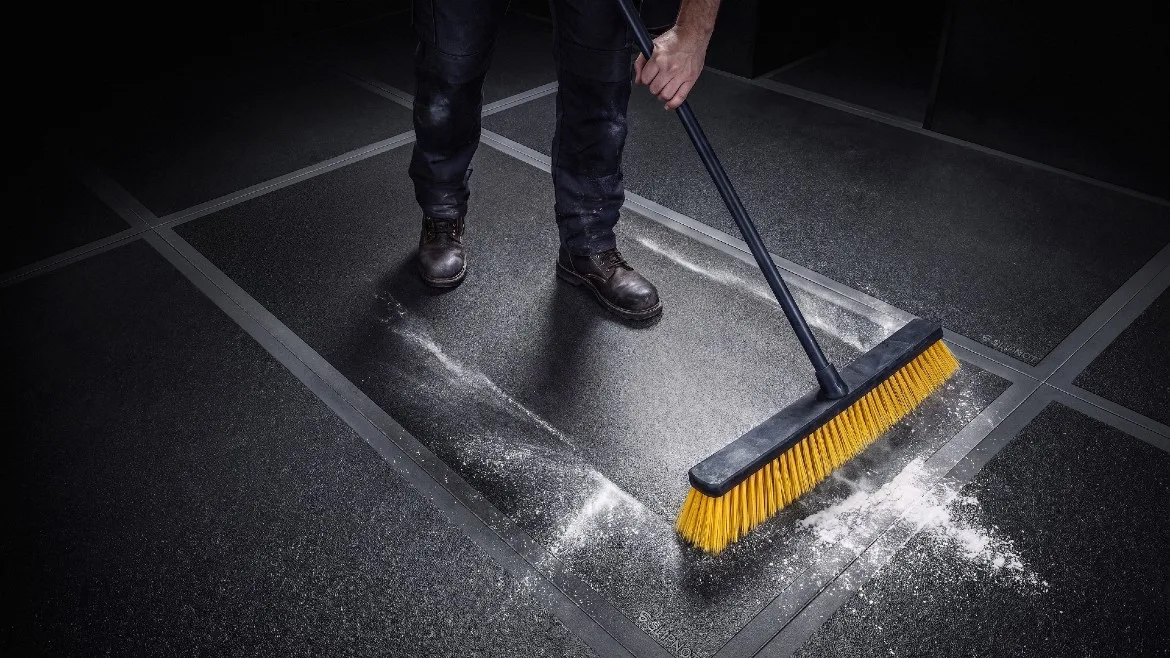
In the high-stakes world of industrial manufacturing, the intersection of employee safety and stringent sanitary compliance is often a point of friction. For facilities specializing in dry processing—such as food production, pharmaceutical manufacturing, and powder handling—the challenge of maintaining a non-slip floor without creating a reservoir for contaminants has long been a "holy grail" of facility management.
SLIPNOT, an industry leader in high-traction surface technology, has announced the launch of its patent-pending SLIPNOT Sweep, a specialized flooring solution engineered to address the persistent gap between high-performance slip resistance and cleanability in dry processing environments. By re-engineering the surface topography of its signature non-slip technology, the company aims to eliminate the sanitation hazards associated with traditional floor coatings while maintaining the rigorous safety standards required for heavy-duty industrial workflows.
The Evolution of Industrial Safety: A Chronology of Innovation
To understand the significance of the SLIPNOT Sweep, one must first look at the historical trajectory of industrial flooring. For decades, the industry relied on basic anti-slip measures—often rubber mats or simple epoxy coatings—which frequently deteriorated under the pressure of heavy machinery or high foot traffic.
- The Early Era: Facilities often used standard diamond-plate steel. While structurally sound, the metal offered limited friction when dry and virtually none when contaminated with fine powders or dust.
- The Mid-Century Shift: The introduction of grit-based coatings offered temporary relief but failed to withstand the rigorous, repetitive cleaning cycles of modern plants. These surfaces were prone to "shedding," where the abrasive grit would dislodge and become a foreign object contaminant (FOC) in the product stream.
- The Modern Dilemma: As global regulations for food safety (such as FSMA in the United States) and pharmaceutical purity became more stringent, plants moved away from wet-washdown methods to prevent the growth of Listeria and Salmonella. However, this necessitated a move toward "dry processing." The surfaces that were good at stopping slips were suddenly identified as "harborage points"—microscopic crevices where fine powders, organic dust, and pharmaceutical precursors could hide, leading to cross-contamination.
- The SLIPNOT Milestone: Following years of R&D focused on the metallurgy of surface friction, SLIPNOT began developing a solution that married the durability of tool-steel with a surface profile that could be cleaned with a simple push broom or industrial vacuum, culminating in the 2024 unveiling of the SLIPNOT Sweep.
The Technical Breakthrough: Bridging the "Valley"
The core innovation behind SLIPNOT Sweep lies in its unique surface geometry. Traditional high-traction surfaces rely on a randomized, mountainous topography. While effective at providing grip, these "valleys" between the peaks are notorious for trapping fine particulate matter.
"We’ve taken our leading SLIPNOT surface and filled in the microscopic valleys while leaving the millions of high-traction, tool-steel hard peaks exposed," explains Quinn Poor, manager of engineering and product development at SLIPNOT.
This design philosophy—what engineers call "planar-optimized friction"—ensures that while the coefficient of friction remains exceptionally high, the surface area available for dust accumulation is minimized. By smoothing the transition between the traction-bearing peaks, the company has effectively eliminated the "nooks and crannies" that previously mandated high-pressure, water-based cleaning, which is often contraindicated in dry processing facilities.
Supporting Data: Why "Sweepable" Matters
In dry processing facilities—including bakeries, dairy powder plants, and pharmaceutical labs—the accumulation of dust is not merely a nuisance; it is a significant operational hazard.
1. The Sanitation-Safety Paradox
When dust collects in the grooves of standard anti-slip plates, it eventually forms a compacted layer that renders the surface flat and slippery. Furthermore, this trapped material can become a breeding ground for microorganisms if ambient humidity levels fluctuate. SLIPNOT Sweep’s design allows for 100% removal of dry debris using standard sweeping tools, ensuring the surface remains "factory-new" in its performance over time.
2. Durability and Throughput
The product utilizes tool-steel hard peaks, which offer a hardness rating significantly higher than standard stainless steel or aluminum flooring. In facilities where pallet jacks, forklifts, and heavy foot traffic are constant, this ensures that the flooring does not wear down, deform, or lose its traction profile. Data from internal stress tests suggests that SLIPNOT Sweep maintains its friction coefficient even after millions of cycles of traffic.
3. Regulatory Compliance
For facility managers, the primary metric of success is audit readiness. By utilizing a product that is inherently easier to clean and inspect, companies can reduce the labor hours spent on sanitation crews. This translates to less downtime, fewer chemical cleaners used, and a more robust stance during third-party safety audits.
Official Perspectives: Addressing the Needs of Operations
The response from the industry has been focused on the practical application of this technology. Scott Sargent, vice president of sales and marketing at SLIPNOT, emphasizes that this product was developed in direct response to client feedback.
"The introduction of SLIPNOT Sweep provides facility managers, quality assurance leaders, and plant operations with a long-awaited solution that meets safety and sanitation standards, audits, and workflows in dry processing facilities," says Sargent. "It transforms potential slip, trip, and fall hazard areas into high-performance, sanitary environments, allowing people to move faster and more safely."
The emphasis on speed and efficiency is not incidental. In a modern plant, every second spent navigating a slippery or treacherous walkway is a second lost in productivity. By providing a secure, stable footing, SLIPNOT Sweep allows employees to maintain a steady, confident pace, reducing the "caution-induced slowdown" often seen in facilities with poor flooring.
Implications for Future Facility Design
The implications of the SLIPNOT Sweep extend beyond the immediate benefits of a cleaner floor. As manufacturing continues to pivot toward "Smart Factory" environments, the integration of passive safety solutions becomes more critical.
Impact on Maintenance Workflows
Traditionally, maintenance teams have had to schedule intensive deep-cleaning shifts to address the buildup on industrial floors. With the "Sweep" technology, these tasks can be integrated into the daily workflow of the production staff. A simple sweep at the end of a shift restores the floor to its optimal state, removing the need for specialized cleaning equipment.
Cross-Industry Utility
While the initial launch targets dry food and pharma, the versatility of the product suggests a broader application. The plastics industry, which deals with fine, static-charged powders that are difficult to manage, and the wood processing sector, which struggles with fine sawdust accumulation, are both prime candidates for this technology.
A New Standard for "Hygienic Design"
The industry is moving toward a standard where "hygienic design" is no longer limited to machinery and conveyors; it now extends to the very floor beneath the workers’ feet. SLIPNOT’s move to patent this design suggests that the company is setting a new benchmark for what is expected in terms of surface hygiene. If a facility cannot be cleaned easily, it is inherently risky. SLIPNOT Sweep effectively neutralizes that risk.
Conclusion: A Safer, Cleaner Path Forward
The industrial landscape is evolving, and with it, the expectations for safety and sanitation. The launch of SLIPNOT Sweep represents a pivotal moment for dry processing facilities that have long been forced to choose between the safety of their workers and the cleanliness of their production lines.
By successfully engineering a floor that is both aggressive in its traction and passive in its maintenance requirements, SLIPNOT has provided a solution that aligns with the lean manufacturing principles currently dominating the sector. As facilities continue to face pressure to increase throughput while adhering to ever-stricter health and safety regulations, innovations like the SLIPNOT Sweep are not just beneficial—they are essential components of the modern industrial ecosystem.
For plant managers and operations leaders, the message is clear: safety and sanitation are no longer mutually exclusive. With the right technology underfoot, the factory floor becomes an asset to productivity rather than a liability to safety.


 Layla Zulfa