

 Azzam Bilal Chamdy
 Neng Nana
 Nana Muazin
 Dwi Wanna
 Raul Delapena Setiawan
For the modern small-scale farmer, the growing season is a finite, precious resource. Every square foot of soil represents potential revenue, and every day of the calendar holds a specific thermal and light profile. To maximize the efficiency of a farm—and consequently its bottom line—growers are increasingly turning to succession sowing, a strategic planting method that moves beyond the traditional "once-and-done" harvest cycle. By staggering plantings, diversifying varieties, and utilizing the same space for multiple crops, farmers can transform a single, fleeting harvest into a continuous, season-long supply of produce.
The Core Philosophy: Why Succession Matters
At its most basic level, succession sowing is the practice of planting seeds at intervals rather than all at once. For the small farmer, the implications are profound. Rather than being flooded with a single, massive harvest of lettuce that must be sold within a narrow window—often leading to market saturation and price drops—succession sowing allows for a consistent, steady supply that meets customer demand week after week.
This approach transforms the farm from a factory that produces a singular commodity into a reliable food system. It effectively manages labor by spreading the workload of seeding, transplanting, and harvesting over time, preventing the "bottleneck" effect that often leads to burnout and crop waste.

The Mechanics of Timing and Data
The success of any succession program relies on a deep understanding of two variables: Days to Maturity (DTM) and Environmental Thresholds.
Every crop has a specific window of viability. Farmers must analyze their local frost dates and seasonal temperature shifts to determine when it is optimal to plant. By tracking DTM, growers can calculate backwards from their projected harvest date or forwards from their last frost date to ensure the final planting of a crop is completed before the weather turns too hot or too cold for the plant to thrive.
For beginners, the best way to grasp these mechanics is to start with quick-maturing crops like radishes, baby greens, or bush beans. Because these plants turn over in 30 to 60 days, they provide rapid feedback. If a planting fails or underperforms, the farmer has the opportunity to adjust their strategy for the very next batch, turning the entire growing season into a cycle of iterative learning.

Method 1: The Interval Approach
The most straightforward method of succession sowing is planting the same crop at regular intervals. For example, rather than planting an entire bed of beets on May 1st, a farmer might plant one-quarter of the bed every two weeks.
- The Benefit: This guarantees a steady supply of fresh, high-quality produce.
- The Logistics: Maintain a rigorous planting log. Whether using digital farm management software or a paper ledger, recording the date of sowing and the variety used is critical.
- The Constraint: This method requires space management. Farmers must either keep sections of their beds empty in anticipation of future plantings or be prepared to clear out spent crops immediately to make room for the next succession.
Method 2: Multi-Crop Spatial Management
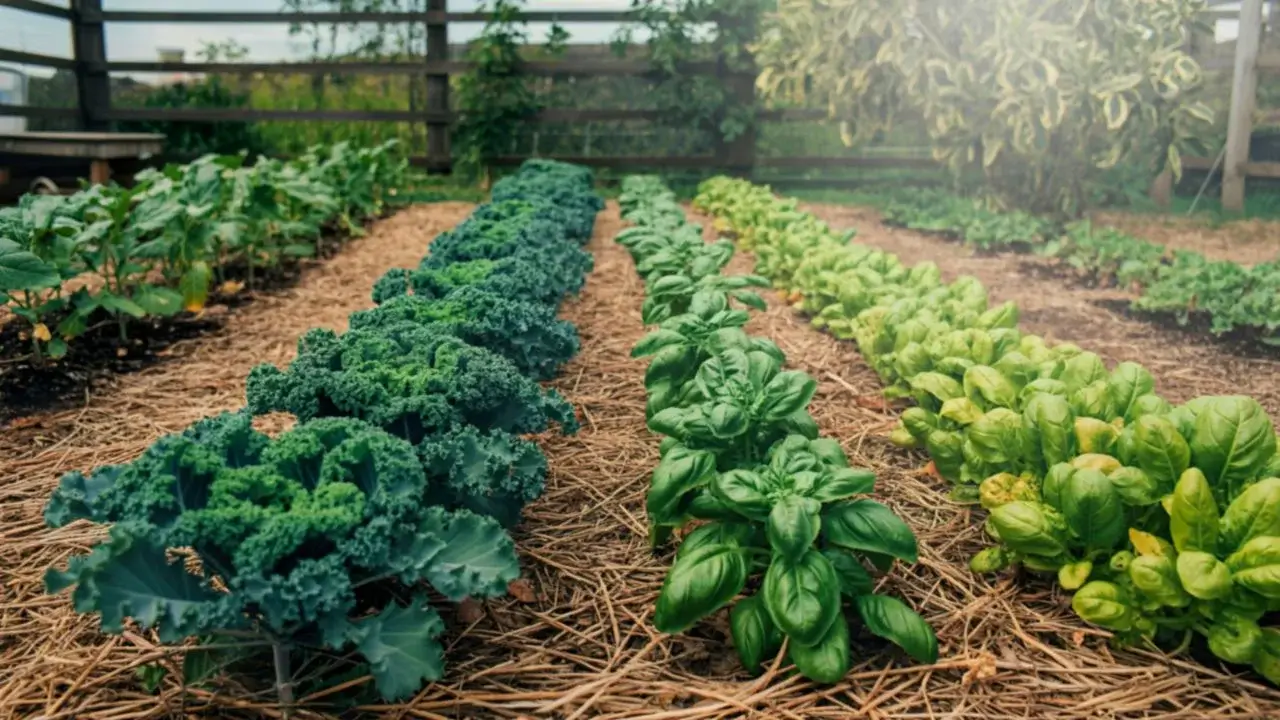
When the farm is small, every inch of soil must be productive. The "different crops in the same space" method involves a form of relay racing for plants. As soon as a spring crop—such as early-season spinach—is harvested, the bed is immediately amended with compost and replanted with a warm-season crop like bush beans or summer squash.
This strategy relies on Crop Rotation principles. It is not enough to simply swap plants; one must consider soil health. If you harvest a heavy nitrogen-feeder like cabbage in the early spring, follow it with a nitrogen-fixing legume like peas or beans. This keeps the soil biology active and nutrient-dense, reducing the need for external fertilizers and enhancing the flavor and health of the subsequent crop.

Method 3: Intercropping and Symbiotic Timing
Intercropping is an advanced succession technique that involves growing two or more crops in the same space simultaneously, but with staggered planting times. This is particularly effective in high-density systems.
For instance, a farmer might plant a "support" crop, such as tall, sturdy sunflowers or trellised peas, and then interplant a shade-tolerant ground cover, like lettuce or spinach, shortly after the primary crop is established.
- The Synergy: The tall crop provides necessary shade during the peak of summer, preventing the lower crop from bolting (going to seed) prematurely.
- Integrated Pest Management (IPM): This method also serves as a defensive strategy. By diversifying the plant life in a single bed, you create a complex ecosystem that is less attractive to pests that specialize in monocultures. When pests do arrive, they are less likely to wipe out an entire farm operation because the crops are not all at the same developmental stage.
Method 4: The Variety Selection Strategy
Not all varieties of a single vegetable are created equal. Many seed catalogs offer early, mid-season, and late-season varieties of the same crop, such as tomatoes or onions. By selecting a mix of these, a farmer can extend the availability of a high-demand crop significantly.

This is a powerful branding tool. If a farm is known for its high-quality tomatoes, being the first at the farmers’ market with an early-variety tomato—and the last to have a late-season, cold-hardy variety—establishes a reputation for consistency. It effectively captures the "early bird" and "late season" market share that other farmers miss.
Implications for the Modern Farm
Implementing a rigorous succession sowing schedule has far-reaching implications for the economic stability of a small farm.
1. Reduced Food Waste
The most common cause of food waste on small farms is the "harvest explosion," where everything ripens at once and cannot be sold or processed in time. Succession sowing flattens the supply curve, ensuring that the volume of harvest matches the volume of demand.
2. Market Resilience
In a volatile market, diversity is the best insurance. If a heatwave ruins a particular planting, the farmer is not left without inventory. They still have earlier plantings that were already harvested, and later plantings that were at a different stage of development and perhaps less susceptible to the specific weather event.
3. Financial Sustainability
By maximizing the number of crops grown per square foot per season, the revenue per acre increases dramatically. This allows small farms to remain competitive without needing to expand their land footprint, which is often the biggest barrier to entry for new farmers.
Expert Insight: Building the System
For those looking to adopt these methods, the transition should be incremental. Start by selecting one or two crops to succession sow this season. Document everything. Note the weather, the soil temperature, and the specific date of the first and last harvests.

As the years progress, layer in more complexity. Use seasonal extension tools like low tunnels, cold frames, or shade cloth to push the boundaries of what can be grown in the shoulder seasons. These tools act as a "multiplier" for succession sowing, allowing for harvests in months where the local climate might otherwise dictate dormancy.
Conclusion: The Path Forward
Succession sowing is more than just a technique; it is a mindset shift from reactive farming to proactive design. It requires the farmer to be a planner, a researcher, and a steward of the soil. While it demands more time at the planning desk and more attention to the calendar, the rewards—higher yields, reduced waste, and a more stable income—are the hallmarks of a truly sustainable and professional small-scale farming operation.
As the agricultural sector continues to face challenges from changing climates and volatile markets, the ability to manipulate the timing and output of a farm through strategic sowing will remain one of the most vital skills in the grower’s toolkit. Whether you are managing a backyard plot or a multi-acre market farm, the principles of succession sowing provide the structure necessary to turn every season into a successful harvest.



 Siti Muinah
