

 Dwi Wanna
 Nana Wu
 Muslim
 Reynand Wu
 Ammar Sabilarrohman
 Nana Muazin
For many, the dream of a professional culinary career begins with the romanticized image of a bustling kitchen: the rhythmic clatter of knives on wooden boards, the symphony of sizzling pans, and the intense, focused energy of a service in full swing. However, the path to becoming a chef is paved with more than just passion. It requires technical precision, scientific understanding, and a level of physical endurance that surprises many aspiring students.
Culinary school is undeniably challenging. It is a crucible where students, whether they are 18-year-old high school graduates or 48-year-old career changers, are forced to abandon their comfort zones. The curriculum is fast-paced, the standards are exacting, and the evaluation process—based on physical repetition and tactile skill—is vastly different from the abstract, theory-heavy assessments found in traditional university programs.
But as the Auguste Escoffier School of Culinary Arts demonstrates, the difficulty of the journey is not a barrier; it is a feature of the professional development process. With the right support infrastructure, this challenge becomes a catalyst for growth.
The Reality of the Culinary Curriculum
The core of a culinary education is the deliberate mastery of craft. At institutions like Escoffier, the educational structure is designed to take students from the absolute basics—how to hold a chef’s knife, the chemistry of a roux, and the critical importance of kitchen safety—to the complexities of global cuisines and high-level kitchen management.
The Progression of Skill
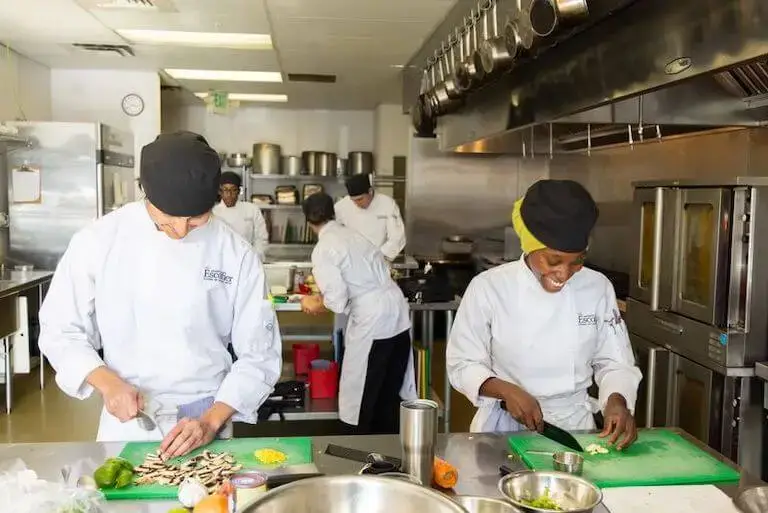
Culinary school functions on a laddered progression. Students cannot master a complex coq au vin without first understanding the fundamental principles of sautéing and stock preparation. This means the early weeks are often the most humbling. Even students who have spent years cooking for family or working in front-of-house restaurant roles often find they must "unlearn" bad habits.
The technical demand is two-fold: students must focus on the "micro"—the precise 1/8-inch julienne cut or the exact temperature at which an egg curdles—while simultaneously managing the "macro," or the workflow of an entire station. This dual focus is what separates a home cook from a professional chef.
Why Experience Levels Don’t Define Success
One of the most persistent myths about culinary school is that you need prior experience to thrive. In reality, programs are designed to teach, not to filter based on existing knowledge. Whether a student enters with a lifetime of kitchen experience or has never held a professional-grade blade, the playing field is leveled through a structured curriculum that emphasizes rigorous, repetitive practice. The "difficulty" of the program is consistent for everyone because the industry standard is uncompromisingly high.

A Robust Support Infrastructure
Recognizing that the intensity of the curriculum can lead to burnout, top-tier culinary institutions have moved toward a holistic model of student support. At Escoffier, this is embodied in a tripartite approach: the expertise of Chef Instructors, the logistical guidance of Success Coaches, and the accessibility of online learning formats.
The Role of the Success Coach
The modern culinary student is often balancing education with the realities of life—family, full-time jobs, and personal responsibilities. Success Coaches serve as the backbone of the student experience. They are not merely academic advisors; they are mentors who help navigate personal obstacles.
If a student encounters a financial hurdle, faces a health crisis, or struggles with the logistical burden of balancing a work-study schedule, the Success Coach is the first point of contact. By providing proactive outreach, these coaches ensure that a student’s academic progress isn’t derailed by external circumstances.
Industry-Seasoned Mentorship
Perhaps the most valuable resource for any student is the direct access to Chef Instructors. These individuals bring years of real-world kitchen experience to the classroom. They understand the grueling pace of a line, the pressure of a dinner rush, and the nuances of working under an executive chef. Having an instructor who has "been in your shoes" transforms the learning experience from a theoretical exercise into a masterclass in professional preparation.
Flexibility in the Digital Age: Online Culinary Education
For decades, culinary education was locked behind the doors of brick-and-mortar campuses, requiring full-time commitment and relocation. Today, that model has shifted. The Auguste Escoffier School of Culinary Arts has pioneered accredited online diploma and degree programs that maintain the integrity of hands-on learning while providing the flexibility of remote education.
How Online Learning Works
The misconception that online culinary school lacks "hands-on" elements is quickly dispelled by the program’s structure. Students complete assignments in their own kitchens, documenting their techniques through photos and videos submitted to Chef Instructors. This digital submission process allows for personalized, granular feedback that is often more detailed than what a student might receive in a crowded, noisy classroom. Furthermore, these programs include required industry externships, ensuring that students still gain the vital in-person experience required to thrive in professional kitchens.
Supporting the Student Journey: A Breakdown of Resources
Success in the kitchen is rarely a solo endeavor. Below is an overview of how students can leverage institutional support systems to navigate their education:
| Challenge Type | Primary Support Source | Key Assistance Areas |
|---|---|---|
| Technical Skill Gaps | Chef Instructor | Knife techniques, flavor profiles, recipe troubleshooting |
| Life & Scheduling | Success Coach | Time management, personal obstacles, work-life balance |
| Costs & Funding | Financial Aid Office | FAFSA, scholarship identification, loan counseling |
| Future Employment | Career Services | Resume building, interview prep, externship placement |
Financial Clarity: Demystifying the Investment
Financial barriers are among the most common reasons students hesitate to enroll. The complexity of FAFSA, the distinction between subsidized and unsubsidized loans, and the hunt for scholarships can be daunting.
At institutions like Escoffier, the Financial Aid office acts as a navigation tool rather than just an administrative department. By helping students identify specific scholarships—such as those for military families or underrepresented groups—and simplifying the loan application process, they turn a confusing financial landscape into a manageable plan. As students like Kadie Sardo have noted, having an attentive financial advisor can be the difference between starting a dream career and putting it on indefinite hold.
Best Practices for Academic Success
To truly excel in a high-pressure culinary environment, students must cultivate specific habits that mirror the expectations of a professional kitchen.
- The Discipline of Reading: The recipe is the final product, but the background reading is the "why." Understanding the science of heat transfer or the chemistry of emulsification prevents confusion when a recipe deviates from the norm.
- Professional Presence: Arriving early, having a clean uniform, and maintaining an organized mise en place (everything in its place) are not just school rules; they are the baseline requirements of the hospitality industry.
- Active Note-Taking: While cooking is physical, the theory is intellectual. Maintaining a detailed notebook of Chef Instructors’ guidance is essential for long-term retention.
- The Courage to Ask: A classroom is the only place where mistakes are safe. Every question asked during school is a mistake avoided during a live service.
Implications for the Future of the Industry
The shift in how we teach culinary arts reflects a broader change in the industry itself. Modern kitchens are moving away from the "trial by fire" mentality and toward environments that value mentorship, sustainability, and personal well-being. By fostering a culture where students are encouraged to ask for help and provided with the tools to balance their personal lives, culinary schools are producing graduates who are not just skilled cooks, but also resilient professionals.
The journey through culinary school is a transformative process. It requires grit, dedication, and a willingness to be corrected. Yet, for those who embrace the challenge, the rewards are immense. Graduates leave with more than a degree; they leave with a professional network, a deep-seated confidence, and a foundational skillset that will support them throughout their careers.
Whether your goal is to lead a Michelin-starred kitchen, open a boutique bakery, or pursue a career in food media, the path begins with a choice: to commit to the craft, to embrace the difficulty, and to utilize every resource at your disposal. Culinary school is hard—but it is precisely that difficulty that makes the professional chef a cut above the rest.


 Lina Irawan
 Evan Lee Salim