

 Reynand Wu
 Sagoh
Sagoh
 Basiran
 Evan Lee Salim
 Jia Lissa
 Rifan Muazin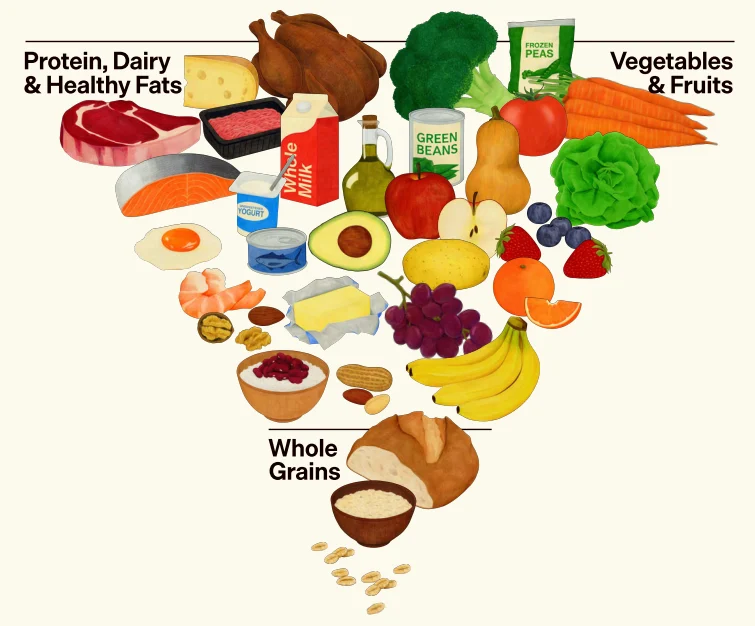
The U.S. government has officially released the 2025–2030 Dietary Guidelines for Americans (DGAs), a cornerstone document intended to shape national health policy, school lunches, and clinical nutrition advice. While the latest edition carries the catchy, consumer-friendly tagline "Eat Real Food" and takes a commendable, long-overdue stance against ultra-processed foods, the release has sparked significant controversy. Critics argue that the guidelines suffer from a profound disconnect between their written text and the accompanying visual "New Food Pyramid," which appears to prioritize animal products in a way that contradicts the core scientific consensus on cardiovascular health.
The Evolution of Federal Nutrition Policy: A Chronology
To understand the gravity of the current debate, one must look at the process behind the publication. Historically, the DGAs are developed through a rigorous, multi-year process. An independent Dietary Guidelines Advisory Committee (DGAC)—comprised of leading nutrition scientists—spends two years synthesizing the latest clinical evidence. This process is designed to be transparent, peer-reviewed, and insulated from political or industrial lobbying.
For the 2025–2030 cycle, the committee followed this established protocol, producing a robust Scientific Report. However, in an unprecedented departure from tradition, the current administration rejected significant portions of the committee’s findings. Instead, the final guidelines were informed by a "supplemental scientific analysis" conducted by a group of contractors rather than the original advisory panel.
This deviation has caused alarm within the public health community. Dr. Deirdre Tobias, an assistant professor at the Harvard T.H. Chan School of Public Health who served on the original DGAC, has publicly questioned the lack of transparency in the final drafting process. "There is no transparency in the methodology and rigor that was employed," Tobias noted. "The reviews themselves… deviate significantly from the rigorous process that the HHS developed to ensure the evidence base was replicable and free from non-scientific influences." Furthermore, investigative reports have highlighted that several of the individuals involved in the supplemental analysis held disclosed financial ties to the beef and dairy industries, fueling concerns that the new pyramid’s emphasis on steak and full-fat dairy is a result of industry influence rather than nutritional science.
Deconstructing the "New Food Pyramid"
The most striking feature of the 2025–2030 guidelines is the return of the pyramid graphic, albeit inverted. While the base of the pyramid includes vegetables and fruits, it places significant visual weight on foods like red meat, butter, and whole milk.
This creates a "mixed message" crisis. The written text of the guidelines maintains the longstanding recommendation that saturated fat intake should be capped at 10% of total daily calories—a standard established by the American Heart Association and other global health bodies to mitigate the risk of cardiovascular disease. However, the visual prominence of animal-based fats in the pyramid suggests that these foods are "foundation" items.
The math, as experts point out, does not add up. For an average 2,000-calorie diet, the 10% limit equates to roughly 22 grams of saturated fat. A standard daily intake of three servings of dairy—as suggested by the guidelines—using full-fat products (e.g., whole milk, Greek yogurt, and cheddar cheese) accounts for 17 grams of saturated fat alone. Adding a single tablespoon of butter or beef tallow for cooking—both prominently featured in the new guidelines—immediately pushes the consumer over their daily limit, even before considering the saturated fat naturally present in other protein sources like red meat.
Key Shifts: Processing, Sugar, and Protein
Despite the contradictions, the 2025–2030 edition does introduce several positive, evidence-based shifts that address the modern American diet.
A War on "Highly Processed" Foods
For the first time, the DGAs explicitly target a broad category of "highly processed" foods. While the definition of processing is a spectrum, the guidelines provide actionable advice: limit sugar-sweetened beverages, salty packaged snacks, and refined carbohydrates like white bread. By prioritizing whole, fiber-rich grains and whole foods, the guidelines align with contemporary research suggesting that the "food matrix"—the structure of the food itself—is as important as its macro-nutrient content.
The Stricter Stance on Added Sugars
The new guidelines take a notably aggressive stance on added sugars, declaring that "no amount of added sugars or non-nutritive sweeteners is recommended or considered part of a healthy or nutritious diet." The guidance now suggests that children should avoid added sugars entirely until age 10, a significant increase from the previous age-2 threshold. While the scientific intent is clear, the practical implementation remains vague, leaving parents and educators with little guidance on how to navigate a food environment where added sugars are pervasive.
The Protein Paradox
The guidelines suggest an increase in protein intake, recommending 1.2 to 1.6 grams per kilogram of body weight. While this range is supported by some athletic and geriatric nutrition research, nutritionists worry about the lack of nuance regarding "protein quality."
Dr. Frank Hu, chair of the Department of Nutrition at Harvard, emphasizes that the "protein package"—what comes along with the protein—is critical. "Evidence continues to suggest that plant-based proteins and fish are associated with more favorable health outcomes than diets high in red meat," Dr. Hu states. By failing to distinguish between protein sources, the guidelines may inadvertently encourage the consumption of red meats, which are often accompanied by high levels of saturated fat and sodium, rather than healthier, plant-based alternatives like legumes, nuts, and soy.
Implications for Public Health
The potential consequences of these mixed signals are significant. The DGAs serve as the "north star" for government feeding programs, including the National School Lunch Program and the Supplemental Nutrition Assistance Program (SNAP). If these programs prioritize the foods featured in the new pyramid, the nutritional quality of meals provided to millions of children and low-income individuals could be compromised.
Furthermore, the lack of consideration for environmental sustainability is a glaring omission. As the global climate crisis intensifies, the intersection of diet and environmental health has become a critical topic of discussion in international policy. By ignoring the carbon footprint and water usage associated with heavy red meat and dairy consumption, the U.S. government has missed an opportunity to align national nutrition goals with broader planetary health objectives.
The Bottom Line: Navigating the Confusion
The 2025–2030 Dietary Guidelines for Americans are a document in conflict with itself. While they successfully modernize the conversation around ultra-processed foods and added sugars, they simultaneously undermine their own cardiovascular recommendations by promoting a visual hierarchy of animal-based fats that contradicts the science of heart health.
For the average American, the message is indeed confusing. When visual media—which is often more memorable than 100+ pages of text—suggests that butter and steak are "staples," the public is likely to act accordingly.
As experts like Dr. Hu suggest, it is essential for consumers to look beyond the government’s new pyramid. Relying on verified, independent resources—such as the Healthy Eating Plate developed by Harvard researchers—remains a safer bet. In an era where nutritional misinformation is rampant, the 2025–2030 DGAs serve as a sobering reminder that policy documents are not always synonymous with the most current or unbiased scientific consensus. For those seeking to optimize their health, the advice remains consistent: prioritize whole plants, choose healthy unsaturated fats like olive oil, and treat the government’s latest dietary graphics with a healthy degree of skepticism.


 Ammar Sabilarrohman
 Iffa Jayyana
