Laily UPN

 Reynand Wu
 Ali Ikhwan
 Nila Kartika Wati

 Nana Wu
In the rapidly evolving world of nutraceuticals and functional foods, the "delivery problem" has long been the industry’s Achilles’ heel. While scientists can identify powerful bioactives—from gut-healing fatty acids to therapeutic peptides—ensuring these compounds survive the harsh, acidic environment of the human digestive tract to reach their target cells remains a monumental challenge.
Enter BioClé, an Argentina-based biotechnology startup that is betting on a revolutionary approach: harnessing the body’s own biological communication system. By utilizing genetically engineered bacterial extracellular vesicles (bEVs), BioClé is developing a delivery platform that functions not as a passive shield, but as an active transport system.
The Core Innovation: Nature’s Nano-Carriers
At the heart of BioClé’s technology are bacterial extracellular vesicles (bEVs)—tiny, membrane-bound particles produced naturally by bacteria. These vesicles, which typically measure between 200 and 300 nanometers in diameter, act as natural "envelopes" for biological cargo.
Unlike traditional encapsulation methods such as liposomes or synthetic nanoparticles, which often rely on passive diffusion to deliver nutrients, BioClé’s vesicles possess an innate biological affinity for intestinal cells. "We are different to nanoparticles, to liposomes, or even capsules, because we are able to deliver bioactives directly into the gut cells because of an affinity between the vesicle and the gut cells," explains Juan Cassini, co-founder and CEO of BioClé.
By leveraging this existing biological pathway, the startup can effectively bypass the standard, often inefficient, transit through the gastrointestinal tract. Once the vesicle reaches the intestine, it is taken up by the intestinal cells, releasing its payload directly into the intracellular space. This "active delivery" approach is proving significantly more effective; in early in vivo studies, the company reported that their delivery method achieved more than twice the efficacy of free-form compounds at the same dosage.
Chronology: From Academic Research to Market-Ready Tech
The genesis of BioClé lies in years of rigorous scientific exploration within Argentina’s prestigious scientific landscape.
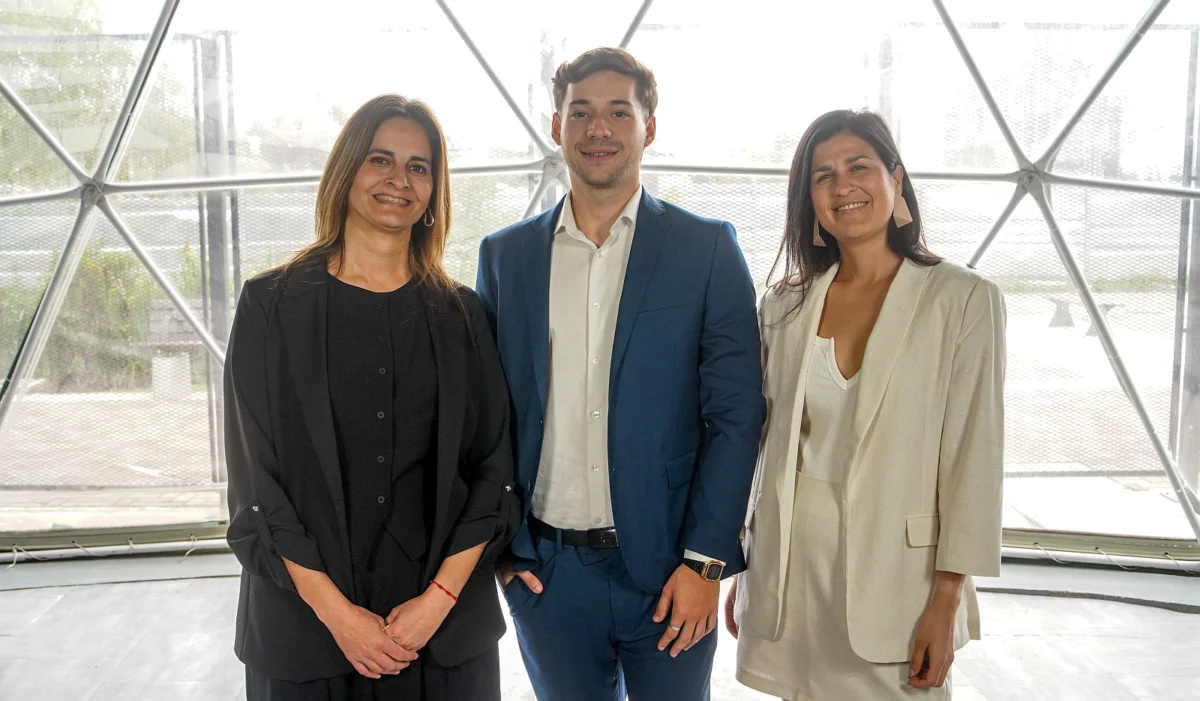
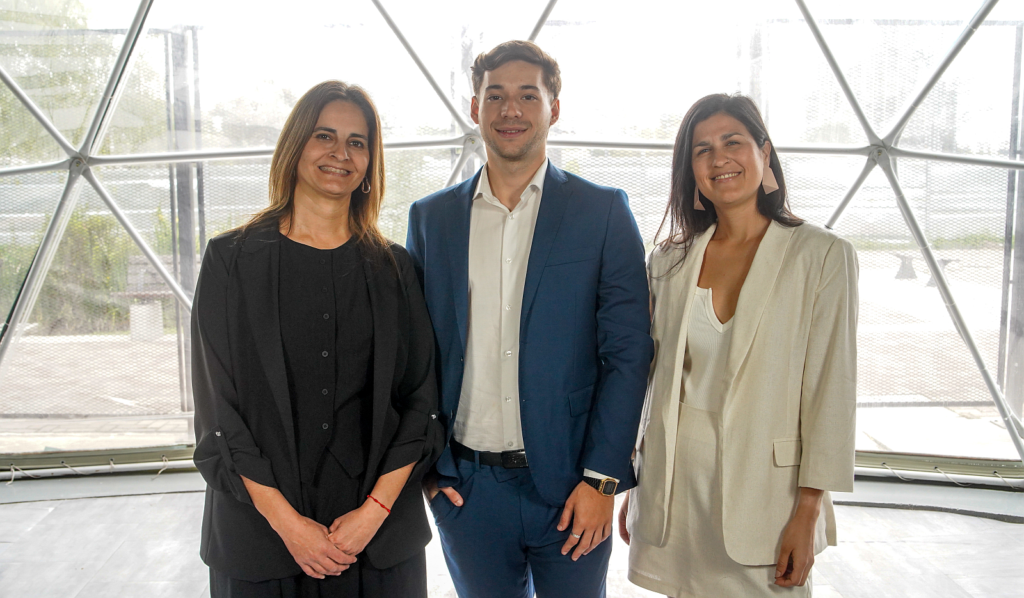
- October 2025: BioClé is officially founded by Juan Cassini (CEO), Dr. Daniela Albanesi (CSO), and Dr. Albertina Scattolini (CTO). The company is built upon foundational research conducted by Albanesi and Scattolini at CONICET, Argentina’s national scientific and technical research council.
- Early Development Phase: The team focuses on optimizing the production of bEVs. Recognizing that natural production levels are too low for industrial applications, they develop a proprietary method to genetically engineer a food-grade probiotic strain to supercharge vesicle production.
- Funding Milestones: The company successfully secures $500,000 in pre-seed funding, backed by Big Idea Ventures and GridX, supplemented by additional research grants.
- Validation Phase (Present Day): The company moves through successful in vitro human cell testing. Currently, mouse studies are underway, with conclusive results expected in late 2026.
- Future Projections (2027 and beyond): BioClé is targeting 2027 for the initiation of human clinical trials, aiming to establish clear efficacy benchmarks for commercial partners.
Supporting Data and Technical Mechanics
The technical prowess of BioClé’s platform relies on two distinct loading methodologies. The first involves "in-situ" loading, where the modified bacteria are engineered to produce the bioactive compound during the vesicle synthesis process. The second is an ex-situ approach, where external bioactives are loaded into the vesicles after they have been harvested from the fermentation broth.
The vesicles are then separated using a sophisticated combination of filtration and centrifugation. The final product is a highly stable ingredient that can be processed into liquid or dried forms. Notably, BioClé has demonstrated that its freeze-dried vesicles maintain stability for at least six months at ambient temperatures—a critical factor for the supply chain in the functional food and supplement industries.
The Butyrate Benchmark
The company’s lead project involves the encapsulation of butyrate, a short-chain fatty acid essential for gut health. A 2023 review in the journal Nutrients highlighted the "bioavailability gap" in current oral butyrate supplements, which are often absorbed in the upper digestive tract before they can reach the colon. BioClé’s vesicles solve this by shielding the butyrate through the upper GI tract and releasing it specifically in the colonocytes.
Furthermore, these vesicles are not mere "empty trucks." They naturally contain other metabolites, such as acetate, which function as postbiotics. This gives the BioClé product a "two-for-one" health benefit, potentially increasing its market value over traditional, single-ingredient supplements.
Official Perspectives: The Vision of the Founders
"We are an active delivery system, whereas those are passive delivery systems," says CEO Juan Cassini. This distinction is the bedrock of the company’s pitch to both investors and potential pharmaceutical partners.
While the initial focus is on gut health, the leadership team is already looking toward broader horizons. The company’s IP strategy is focused on protecting the unique method of increasing vesicle yield and the specific techniques for payload loading.
"Nobody is using vesicles in the food industry because it’s not cost-effective," notes Cassini. "That’s why we are modifying the bacteria to improve the yield. This is what we are protecting with our IP."
The company is currently in high-level discussions with industry giants like Nestlé and Givaudan. A signed material transfer agreement with a major US-based firm marks the start of their first paid pilot program, signaling that the industry is ready to take the next step in precision nutrition.
Implications for the Future of Healthcare and Nutrition
The implications of BioClé’s technology extend far beyond the wellness aisle.
1. Targeted Drug Delivery
The pharmaceutical industry has already begun to take notice. The ability to engineer vesicle surface proteins could allow BioClé to "program" these carriers to seek out specific cell types, such as cancer cells. This would represent a major advancement in targeted drug delivery, minimizing the side effects associated with systemic treatments.
2. The Blood-Brain Barrier
Perhaps most intriguingly, the potential for these vesicles to cross the blood-brain barrier opens the door for novel treatments in cognitive health. By delivering compounds like phosphatidylserine directly to the brain, BioClé could create a new class of "smart" supplements for mental wellness and neuroprotection.
3. Economic Efficiency
By improving the bioavailability of high-value compounds, BioClé may solve a major economic hurdle for manufacturers. If a company can achieve the same therapeutic effect with half the amount of a raw ingredient, the total cost of goods sold drops significantly, making high-end nutraceuticals more accessible to the average consumer.
4. Regulatory Strategy
The company is currently navigating the regulatory landscape, working with experts to pursue GRAS (Generally Recognized as Safe) status in the United States. While the EU market poses more complex regulatory hurdles regarding GMO-derived ingredients, the US and potentially the pet nutrition market offer a clear, immediate pathway for commercialization.
Conclusion
BioClé sits at the intersection of synthetic biology and traditional nutrition. By turning bacterial waste into a sophisticated, targeted transport system, the company is not just creating a new ingredient—it is building a new delivery infrastructure. Whether it succeeds in its ambitious goal to revolutionize drug and nutrient delivery remains to be seen, but the early data suggests that the future of gut health may well be wrapped in a 300-nanometer bacterial membrane.
As the industry pivots toward "precision" everything, BioClé’s move to make delivery systems as specialized as the drugs themselves marks a significant, and potentially disruptive, shift in how we approach human health.