Ali Ikhwan

 Nila Kartika Wati

 Nana Wu

 Asro

 Iffa Jayyana
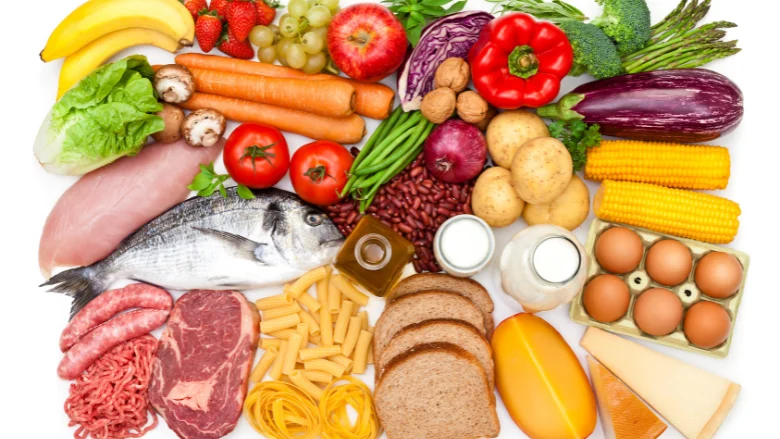
In an era of conflicting nutritional advice, where social media influencers often hold as much sway as clinical researchers, a major international coalition of scientists has released a new framework designed to cut through the noise. Led by researchers at Brigham Young University (BYU) and the International Carbohydrate Quality Consortium, this new "International Food Guide Pyramid" aims to establish a universal baseline for healthy eating, grounded in rigorous, cross-continental scientific consensus.
The initiative, recently published in the journal Advances in Nutrition, arrives at a volatile moment for American health policy. While the international guidelines reaffirm the long-standing scientific focus on plant-based nutrition, healthy fats, and high-quality carbohydrates, they stand in stark contrast to the shifting ideological landscape of the Dietary Guidelines for Americans 2025–2030 (DGAs). This divergence highlights a deepening rift between global nutritional science and the specific, politically charged messaging emanating from the current U.S. administration.
The Foundations of Healthy Eating: A Global Consensus
The International Food Guide Pyramid was not born in a vacuum. To develop the model, Dr. Karen Della Corte—a BYU Assistant Professor of Nutritional Science—led a team of 22 prominent scientists from across the globe. The group performed an exhaustive synthesis of dietary guidelines from Canada, Australia, China, Germany, the Netherlands, and the Nordic countries, while also incorporating the landmark findings of the EAT-Lancet Planetary Health Diet.
"Despite what people often hear, there is actually substantial agreement in nutrition science about the foundations of healthy eating," Dr. Della Corte stated. "We wanted to bring those shared principles together and translate an extensive body of scientific evidence into a coherent and practical food guide pyramid."
At its core, the international model relies on three fundamental pillars:
- Prioritizing Plant-Forward Nutrition: Emphasizing vegetables, whole grains, legumes, and nuts as the primary energy sources.
- Strategic Fat Management: Replacing saturated fats—found in animal products—with unsaturated fats, particularly those derived from plant-based oils.
- Carbohydrate Quality: Focusing on high-fiber, low-glycemic index (GI) carbohydrates to maintain metabolic stability.
"When you’re designing a meal, start by thinking about the plant foods you want to emphasize," Dr. Della Corte explained. "What vegetables, whole or lower-GI grains, beans, or lentils could you include?"
A Chronology of Scientific Divergence
The tension between the International Food Guide Pyramid and current U.S. policy can be traced through the evolution of nutritional research over the last decade.
- 2019: The EAT-Lancet Commission publishes its report on the "Planetary Health Diet," which calls for a global shift toward plant-heavy diets to address both the rising tide of chronic disease and environmental degradation.
- 2023–2024: Preparations for the Dietary Guidelines for Americans 2025–2030 begin. Meanwhile, the "Make America Healthy Again" (MAHA) movement gains significant political traction in the U.S., championed by figures like Health Secretary Robert F. Kennedy Jr.
- Late 2024: The U.S. administration releases messaging that diverges from previous iterations of the DGAs. The new guidance moves away from the historical focus on limiting saturated fats, specifically by framing animal-based fats like beef tallow and butter as "healthy" alternatives to seed oils.
- 2026: The international coalition publishes their new Food Guide Pyramid, implicitly critiquing the U.S. policy pivot by reaffirming the necessity of limiting saturated fats for cardiovascular health.
Supporting Data: Why the Shift Matters
The primary point of contention lies in the metabolic impact of saturated versus unsaturated fats. The international guidelines are supported by a massive body of evidence synthesized from over 250 peer-reviewed publications.
The consensus data suggests that the consumption of saturated fats—heavily present in red meat, butter, and full-fat dairy—is linked to elevated LDL cholesterol and an increased risk of cardiovascular disease. Conversely, the evidence supporting the replacement of these fats with unsaturated fats (such as olive oil, avocado, and nuts) is robust.
Critics of the new U.S. guidelines argue that the "pro-animal protein" stance ignores decades of longitudinal studies. By promoting beef tallow and butter, the U.S. policy risks reversing public health progress made in the management of metabolic syndrome and heart disease. While the U.S. government maintains that these changes are designed to prioritize "real food" and move away from highly processed seed oils, the scientific community warns that this may be a case of trading one health risk for a much more dangerous one.
Official Responses and Political Friction
The U.S. position, spearheaded by officials who have aligned themselves with the MAHA movement, frames the new guidelines as a liberation from the "war on protein." The official government portal, realfood.gov, advocates for a return to traditional animal-based diets. The messaging argues that industrial seed oils—like canola or soy—are the primary culprits behind America’s health crisis, rather than saturated animal fats.
However, the international group of scientists, along with several public health advocacy organizations, has pushed back. Critics have asserted that the U.S. guidelines "prop up the meat and dairy industries at the expense of human and environmental health."
There is also the issue of mixed messaging. The DGAs still contain technical language acknowledging that saturated fats should be limited, yet the political marketing of the guidelines suggests otherwise. This has created a state of mass confusion for the American consumer. One moment, they are warned about the saturated fat content in a ribeye; the next, they are told that cooking with beef tallow is a "healthy" health-conscious choice.
The Path Forward: Implications for Global Health
Despite the sharp disagreements over animal fats, there is one rare point of total harmony: the war on sugar and ultra-processed foods. Both the international scientists and the U.S. administration agree that added sugars, refined grains, and industrial snacks are detrimental to health.
However, the implications of the current U.S. divergence are significant. If the world’s largest economy sets a precedent that ignores international scientific consensus on cardiovascular health, it may embolden other nations to weaken their own dietary standards to favor domestic agricultural interests.
For the average individual, the takeaway is increasingly complex. The International Food Guide Pyramid serves as a reminder that science is an iterative process, and global collaboration is essential for establishing a framework that works. As the world navigates the 2025–2030 period, the divide between the "International Pyramid" and the "American Guideline" represents more than just a difference of opinion; it is a fundamental debate about the role of government in defining health, the influence of industry on policy, and the survival of objective science in a polarized political climate.
Ultimately, the BYU-led research team hopes that by focusing on plant-based diversity, high-quality carbohydrates, and unsaturated fats, individuals can regain control over their metabolic health, regardless of the shifting tides of national political rhetoric. The evidence is clear, even if the policy is currently anything but.


 Lina Hope

 Neng Nana