
 Reynand Wu
 Nana Wu
 Neng Nana
 Pevita Pearce
 Ali Ikhwan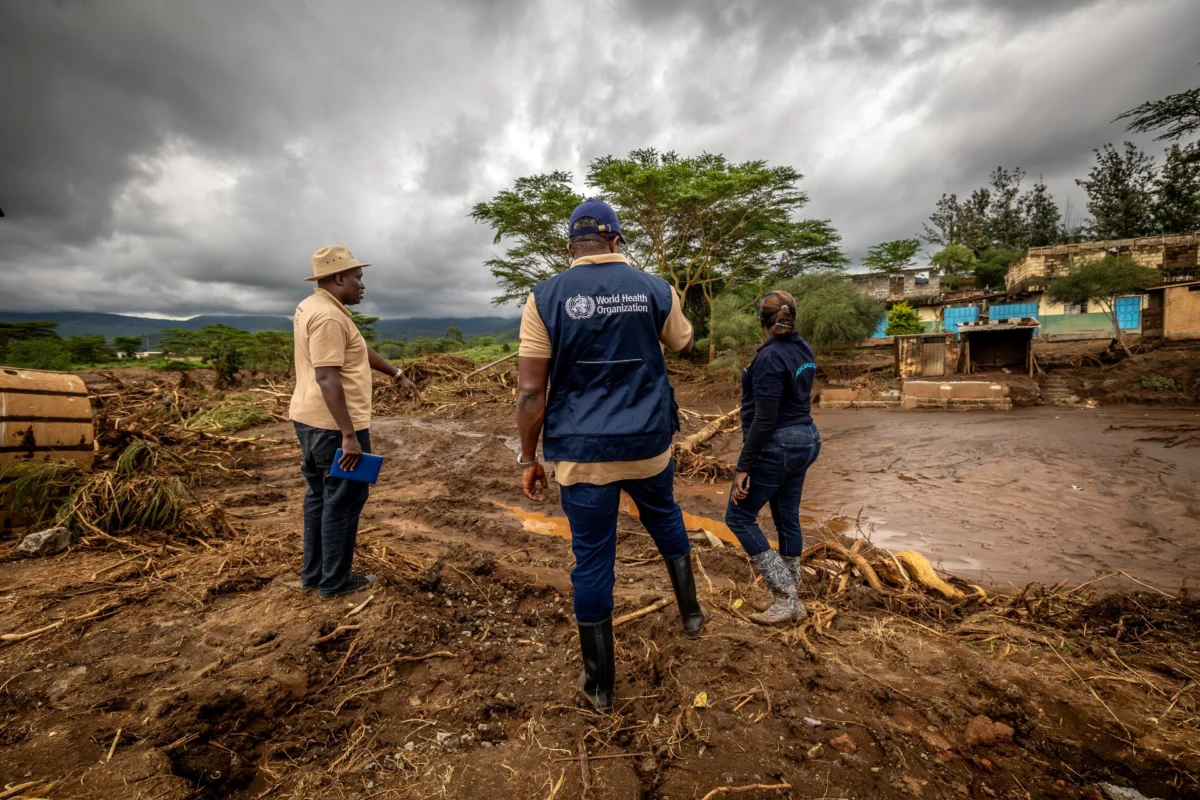
In an era where the nexus between environmental degradation and public health has moved from a theoretical concern to an urgent, daily reality, the World Health Organization (WHO) and the Kingdom of the Netherlands have announced a significant renewal of their strategic partnership. With a new commitment of €500,000 for 2024, the Netherlands continues to solidify its role as a vanguard in the global movement to build climate-resilient, sustainable, and low-carbon healthcare systems.
This renewed financial support brings the total Dutch contribution to WHO’s climate and health initiatives to over €1.1 million since 2023. As the global community prepares for the upcoming COP29 summit in Azerbaijan, this partnership serves as a critical blueprint for how international cooperation can mitigate the health impacts of a warming planet.
The Core Mandate: Why Climate Resilience Matters
The primary objective of this renewed collaboration is to bolster the Alliance for Transformative Action on Climate and Health (ATACH) Secretariat. Climate change is no longer a distant threat; it is an active driver of health insecurity. From the intensification of extreme weather events—such as the devastating flash floods seen in Kenya in early 2024—to the shifting patterns of vector-borne diseases, health systems globally are under unprecedented strain.
The partnership focuses on three essential pillars:
- Surveillance and Early Warning: Harmonizing systems to predict climate-related health risks before they spiral into humanitarian catastrophes.
- Capacity Building: Assisting nations in the African, Asian, and Eastern Mediterranean regions to operationalize climate-resilient health infrastructure.
- Low-Carbon Transition: Supporting the development of sustainable health systems that do not exacerbate the very environmental conditions driving the crisis.
A Chronology of Collaboration: From 2023 to 2024
The synergy between the Netherlands and the WHO has evolved rapidly, moving from initial conceptual collaboration to concrete policy implementation.
- Early 2023: The Netherlands launched its Global Health Strategy 2023–2030, which explicitly identifies the intersection of climate change and health as a primary policy concern. This provided the foundation for the initial partnership with the WHO.
- Late 2023: Initial funding and collaborative frameworks were established, focusing on the immediate need for early warning systems in vulnerable regions.
- May 2024: A pivotal moment occurred at the 77th World Health Assembly (WHA77). The Netherlands, co-leading with Peru, successfully spearheaded the adoption of a new resolution on Climate Change and Health. This resolution replaces an aging 2008 framework, providing a modernized, urgent mandate for WHO member states.
- June 2024: The formal announcement of the additional €500,000 grant was made, ensuring the continued operation of the ATACH secretariat and the mainstreaming of climate-health objectives into the WHO’s Fourteenth General Programme of Work (GPW).
Supporting Data and the Human Cost
The necessity for this partnership is grounded in cold, hard data. The WHO’s latest investment case estimates that through proactive climate-health initiatives, the global community can save approximately 7.5 million lives over the next four years.
The human cost of inaction is visible on the ground. For instance, the heavy rains in Kenya between March and May 2024 served as a grim case study for the necessity of this work. The floods resulted in significant fatalities, infrastructure collapse, and the subsequent risk of disease outbreaks. WHO-trained responders were deployed to the Mai Mahiu region to mitigate these secondary health crises—an operation that highlights the need for the early warning systems the Dutch-WHO partnership aims to scale.
Furthermore, the integration of climate resilience into national health policies is a massive logistical undertaking. With the new resolution adopted at WHA77, the WHO is tasked with helping member states integrate climate action into their primary health care (PHC) models. This involves everything from upgrading cold-chain logistics for vaccines to ensuring hospitals can withstand extreme temperature fluctuations and power outages.
Official Responses and Strategic Significance
The Netherlands has consistently framed its health policy as a pillar of its broader foreign and development policy. By positioning climate-health at the center of their strategy, Dutch officials are signaling that "health security is climate security."
"The urgency of the climate crisis demands that we do not treat health in a vacuum," noted a spokesperson close to the partnership. By supporting the WHO, the Netherlands is ensuring that the "Health Argument for Climate Action" is heard in the highest chambers of international negotiation, including the UNFCCC COP processes.

The WHO, in turn, views the Dutch contribution as a "catalytic investment." Because the funding supports the ATACH Secretariat—a body that facilitates collaboration between governments, civil society, and Multilateral Development Banks—the impact of the €500,000 extends far beyond the direct procurement of supplies. It creates the policy environment, the data-sharing networks, and the technical assistance framework that allows individual nations to secure their own funding for greening their health sectors.
Implications for Global Health Governance
The renewal of this partnership carries profound implications for how the world handles health crises in the coming decade.
1. Mainstreaming Climate in the GPW
The Fourteenth General Programme of Work (GPW) for the WHO marks a shift in institutional priorities. By embedding climate change mitigation and adaptation into the core of the organization’s work, the WHO is moving away from "siloed" environmental health and toward a comprehensive health-climate approach.
2. Empowering Vulnerable Regions
The partnership specifically targets the "Global South," where populations are often the least responsible for carbon emissions but suffer the most severe health consequences. By strengthening surveillance in the Eastern Mediterranean and African regions, the partnership aims to narrow the health equity gap.
3. COP29 and Beyond
As the global health community gears up for COP29 in Azerbaijan, the Dutch-WHO alliance provides a success story that can be leveraged to pressure other high-income nations to increase their contributions. The focus will be on transitioning from the "commitment phase" to the "implementation phase."
4. A Multi-Stakeholder Approach
The partnership recognizes that the WHO cannot act alone. By engaging with health professionals, climate scientists, and development banks, the alliance creates a "whole-of-society" approach to climate health. This involves training the next generation of doctors and nurses to recognize climate-related illnesses and equipping health ministries to work with ministries of finance to secure the necessary climate-resilient infrastructure budgets.
Conclusion: A Roadmap for the Future
The renewal of the strategic partnership between the Netherlands and the World Health Organization is more than a simple financial transaction; it is a profound declaration of intent. It acknowledges that the health of our planet and the health of our populations are inextricably linked.
As countries navigate the increasing frequency of heatwaves, floods, and shifting disease vectors, the infrastructure built today will determine the survival rates of tomorrow. With the €500,000 allocation for 2024, the partnership provides the necessary resources to turn the 2024 WHA resolution into a reality.
The path forward, as outlined by the WHO and the Dutch government, is clear: strengthen the surveillance, empower the frontline workers, and ensure that the healthcare systems of the future are not only capable of treating the sick but are also fundamentally designed to protect the environment. As the world turns its eyes toward COP29, the collaboration between the Netherlands and the WHO stands as a beacon of progress in the global effort to safeguard human health in a changing climate. The 7.5 million lives targeted for preservation represent not just a statistical goal, but the fundamental promise of a healthier, more resilient global future.