

 Dwi Wanna
 Nana Wu
 Muslim
 Reynand Wu
 Ammar Sabilarrohman
 Asep Darmawan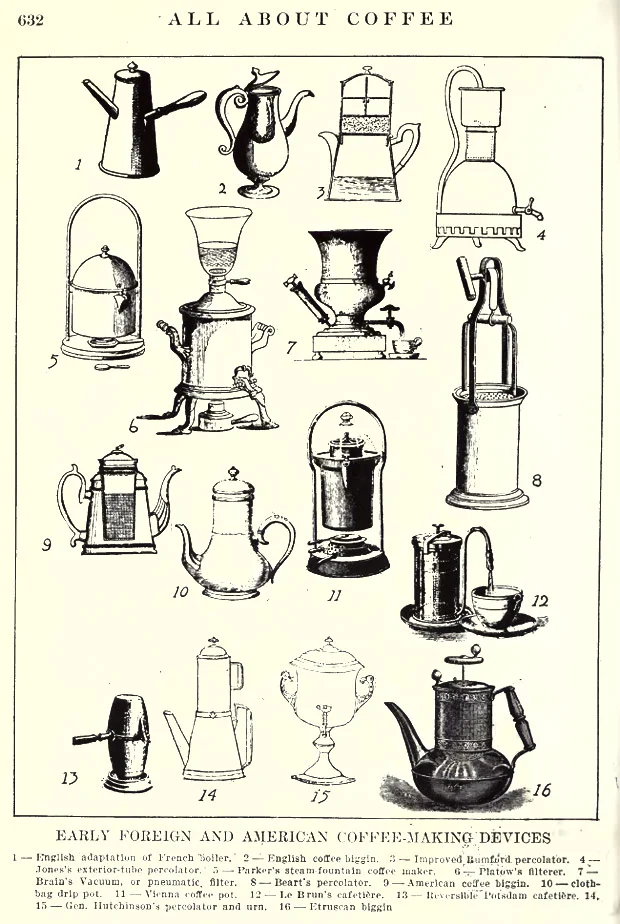
For many, the morning ritual of brewing coffee is a simple, mechanical act—a quick transition from bean to cup. However, beneath the surface of this daily habit lies a world of profound chemical complexity. As we delve deeper into the science of coffee, it becomes clear that every variable, from the geometry of the filter holder to the "laziness" of water as it seeks the path of least resistance, dictates the final flavor profile. By examining the mechanics of pour-over brewing and the robustness of immersion methods, we can move closer to the elusive goal of the perfect extraction.
Main Facts: The Chemical Landscape of Extraction
At the molecular level, a cup of coffee is a suspension of thousands of chemical compounds, each possessing a unique solubility and extraction rate. The extraction process is not a uniform event; rather, it is a highly selective dance of variables.
In a perfectly roasted coffee bean, not all compounds are desirable. If one were to extract everything—grinding as fine as possible and boiling the slurry—one could achieve an extraction yield approaching 30%. While chemically thorough, this "total extraction" method often yields a harsh, bitter brew. The true art of the barista lies in selective extraction: creating a deliberate imbalance where specific, flavor-positive compounds are prioritized while others are left behind.
The pour-over technique is the primary tool for this selective extraction. Unlike a traditional percolator, where convection cycles the liquid, a modern pour-over relies on gravity-fed percolation. This method allows the brewer to manipulate the "coffee knot"—the interconnected web of grind size, water temperature, flow rate, and filter geometry.
Chronology: From 1922 to the Modern Precision Era
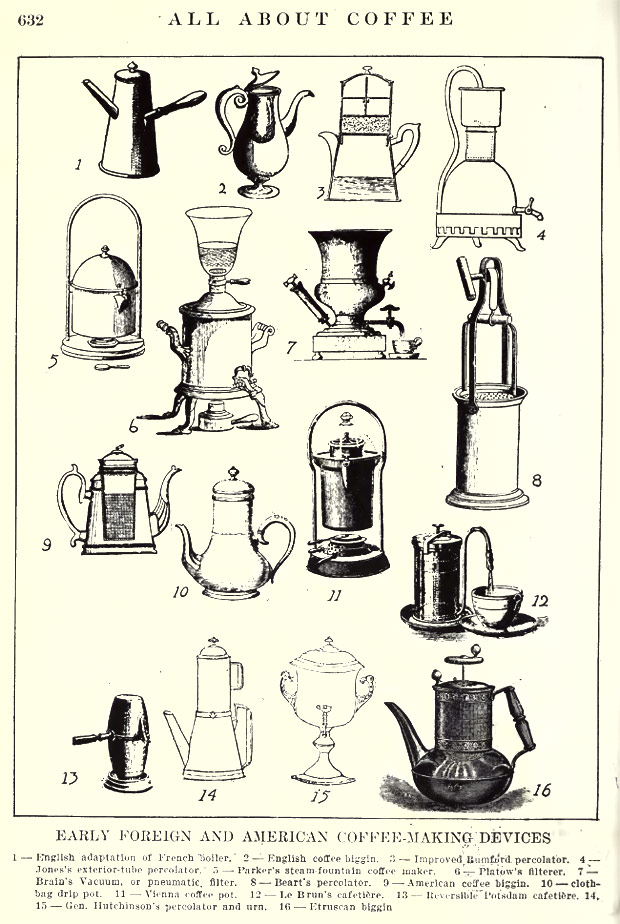
The pursuit of the perfect drip coffee is far from a modern obsession. Historical records, such as W.A. Ukers’ 1922 tome All About Coffee, illustrate that engineers and enthusiasts have been obsessed with the mechanics of filtration for over a century.
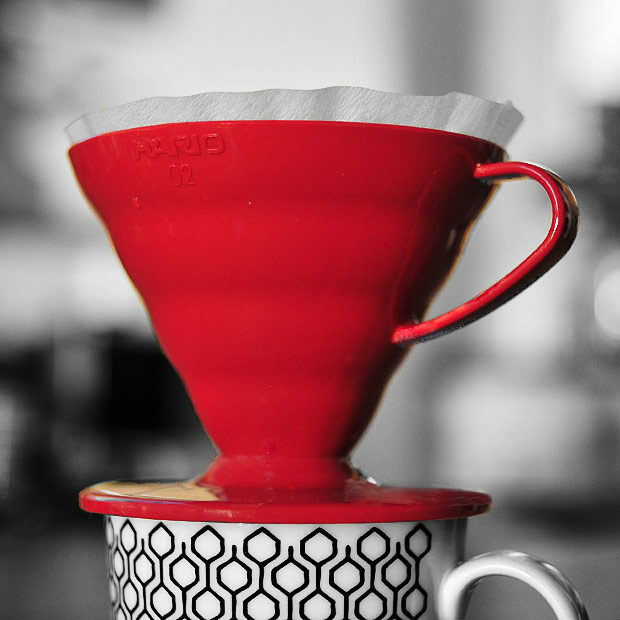
- The Early 20th Century: Early innovators focused on simple gravity filtration, often using ceramic or rudimentary metal funnels. These designs were functional but lacked the nuanced control over flow rate and temperature stability that define contemporary standards.
- The 1970s Explosion: The 1970s marked a significant pivot in consumer coffee culture, with the widespread adoption of drip coffee makers. These machines standardized the process, though they often introduced the very "myths" of brewing that modern specialty coffee seeks to debunk.
- The Contemporary Renaissance: Today, we see an influx of high-precision equipment—from vacuum-insulated drippers to specialized water distributors like the Melodrip. These devices represent a shift from convenience to scientific optimization, aiming to solve the issue of "bypass" (water that leaves the coffee grounds without extracting flavor).
Supporting Data: The Architecture of Brewing
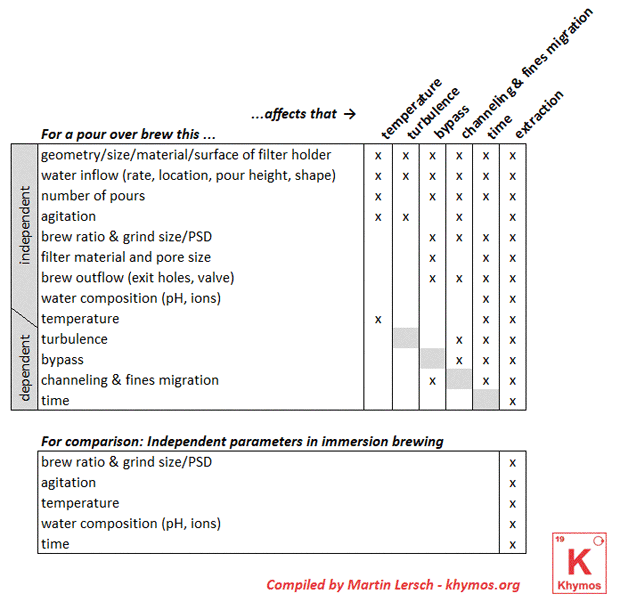
To understand why one brewer might produce a superior cup compared to another, one must categorize the physical parameters of the equipment. Through a systematic analysis of current market offerings, we can identify six critical factors that define the brewing experience:
1. Material and Thermal Stability
Temperature is the kinetic energy behind extraction. Metal is often detrimental due to its high thermal conductivity, which draws heat away from the brewing slurry. Vacuum-insulated or high-thermal-mass materials, such as heavy ceramic or high-density polypropylene (PP), are preferred to maintain the heat necessary for consistent extraction.
2. Geometry and Bed Depth
The shape of the filter holder dictates the "coffee bed." A deep, narrow bed increases contact time, enhancing extraction, while a flat-bottomed bed encourages a faster, more uniform flow. However, the latter carries the risk of channeling—where water carves a path through the grounds, bypassing most of the coffee.
3. Surface Tension and Bypass
"Water is lazy." It will always choose the path of least resistance. In many commercial drippers, water flows around the sides of the coffee bed, diluting the brew. Designers are now utilizing fluted paper and specialized ridges to control this bypass. The most effective designs, such as the Aeropress or the Tricolate, position the entire filter bed beneath the water, ensuring that every drop of water must interact with the coffee grounds.
4. Filtration and Flow Control
The filter paper itself acts as a variable. Fine particles (fines) can clog paper, stalling the brew. Modern designs, like the Kalita Wave, use W-folded filters to increase surface area, while others implement manual shut-off valves—like the Clever Dripper—to transition between immersion and percolation phases.
Official Perspectives: The Debate on Immersion vs. Percolation
While pour-over brewing offers the greatest degree of control, it is inherently susceptible to human error and unintended variables. This has led to a growing appreciation for immersion brewing.
As a chemist, the appeal of immersion—exemplified by the French Press—lies in its robustness. Because the grounds are steeped entirely in the water, the process is far less sensitive to pouring technique. The extraction approaches an equilibrium, ensuring that the results are highly repeatable.
However, immersion is not without its trade-offs. The lack of a fine paper filter means that suspended solids and oils remain in the cup, contributing to a "muted" or heavy texture compared to the clarity of a pour-over. For the purist, the sediment at the bottom of a French Press represents a lack of filtration precision, while for others, it is the defining characteristic of a "full-bodied" cup.
Implications: The Future of the "Perfect" Cup
The quest for the perfect cup of coffee is essentially an attempt to reconcile the precision of a laboratory with the sensory experience of a morning beverage. The complexity of the variables involved—as illustrated by the correlation between particle size distribution, bypass, and extraction efficiency—suggests that no single device can satisfy every palate.
The current trend in the coffee industry is a move toward repeatability. By removing the "randomness" of human pouring—through the use of water distributors, valves, and precision-engineered drippers—the industry is attempting to turn the art of the barista into a replicable science.
However, perhaps the true implication is found in the cultural fascination with the process itself. Whether it is a character in a television drama meticulously assembling a glass-blown apparatus or a home enthusiast experimenting with the latest Kickstarter-funded dripper, the underlying drive is the same. We are not just looking for caffeine; we are looking for the "ultimate" extraction—the point where the chemical potential of the bean is perfectly realized in the liquid.
As we move forward, the integration of new materials, better thermal management, and more sophisticated flow control will continue to push the boundaries of what is possible in the home kitchen. The "coffee knot" may never be fully untied, but every experiment—from the simple V60 to the most complex vacuum-siphon—brings us one step closer to the ideal. The next time you pour hot water over your coffee grounds, consider the physics at play: the path of the water, the temperature of the slurry, and the chemistry of the bean. You are not just brewing a drink; you are conducting an experiment in one of the most complex, yet rewarding, chemical systems in the culinary world.


 Sagoh
Sagoh