

 Dwi Wanna
 Nana Wu
 Muslim
 Reynand Wu
 Ammar Sabilarrohman
 Jia Lissa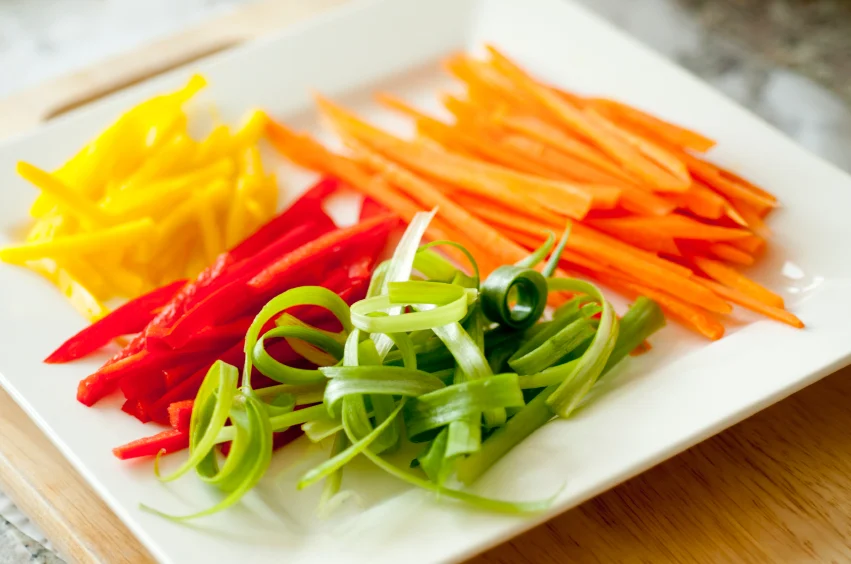
Main Facts:
In the intricate world of culinary arts, the proficiency with which a chef wields their primary tool – the knife – stands as a defining hallmark of their skill and professionalism. Far beyond the simple act of cutting, mastering knife skills encompasses precision, consistency, efficiency, and, crucially, safety. For beginning cooks, the sheer versatility and transformative power of a well-handled knife can be a revelation. The distinction between basic kitchen tasks and professional-grade culinary execution often hinges on a deep understanding and diligent practice of fundamental knife techniques such as mincing, dicing, chopping, julienning, and chiffonade. While anyone can learn the rudimentary motions, true mastery is a journey that chefs dedicate years to perfecting, elevating raw ingredients into components of culinary artistry.
Chronology & Supporting Data:
The journey to knife mastery isn’t merely about learning individual cuts; it’s a progression built upon foundational principles, meticulous practice, and an understanding of how each technique contributes to the final dish. This "chronology" begins with the most basic elements: selecting the right tools, understanding their care, and adopting a safe and effective stance.
The Culinary Foundation: Knife Selection, Care, and Ergonomics
Before any ingredient meets the blade, a chef must understand the instruments themselves. The relationship between a chef and their knife is intimate, built on trust, maintenance, and ergonomic synergy.
Choosing Your Blade Wisely
The professional kitchen is home to a diverse array of knives, each designed for specific tasks. While a high-quality chef’s knife is often considered the workhorse, a complete set provides specialized advantages:
- Chef’s Knife: Typically 8-12 inches, this all-purpose knife is essential for chopping, slicing, and dicing. Its curved blade allows for a rocking motion, making it highly versatile.
- Santoku Knife: A Japanese equivalent to the chef’s knife, often shorter and with a straighter edge, excelling at chopping, dicing, and mincing. Many feature a Granton edge (indentations) to prevent food from sticking.
- Paring Knife: A small, short-bladed knife (2-4 inches) used for intricate tasks like peeling, trimming, and creating garnishes.
- Utility Knife: A versatile mid-sized knife (4-7 inches), bridging the gap between a paring knife and a chef’s knife, suitable for various small to medium tasks.
- Slicing Knife: Characterized by a long, thin blade, ideal for carving roasts, poultry, and slicing delicate items like fish.
- **Cleaver: A heavy, broad-bladed knife used for chopping through bone, tough meats, and hard vegetables. Its weight aids in forceful cuts.
Beyond type, blade material is crucial. High-carbon stainless steel offers an excellent balance of sharpness, edge retention, and resistance to corrosion. Ceramic blades, while incredibly sharp, are brittle and require specialized sharpening. The handle’s ergonomics and the knife’s overall balance are equally vital, ensuring comfort, control, and reducing fatigue during extended use. A well-balanced knife feels like an extension of the hand, facilitating fluid and precise movements.
The Lifeline of Your Knife: Sharpening and Honing
A sharp knife is not only more efficient but also significantly safer. A dull blade requires more force, increasing the risk of slipping and injury. It also tears food rather than cleanly cutting it, compromising presentation and texture.
- Sharpening involves removing a small amount of metal from the blade to create a new, acute edge. This is typically done with whetstones (water stones or oil stones) of varying grits, or specialized electric sharpeners. The goal is to achieve a consistent angle along the entire edge.
- Honing, often confused with sharpening, realigns the microscopic edge of the blade, which can bend or roll during use. A honing steel, a rod made of steel, ceramic, or diamond, is used for this frequent maintenance, keeping the knife performing optimally between sharpening sessions. Regular honing vastly extends the period between full sharpenings.
The consensus among professional chefs and culinary academies is that a consistently sharp and well-maintained knife is non-negotiable. It’s an investment in both the quality of the work and the safety of the cook.
The Stance and Grip: Anchoring Your Technique
Before even making a cut, proper body mechanics are paramount. A stable, comfortable stance and a correct grip on both the knife and the ingredient minimize strain and maximize control.
- Body Posture: Stand upright with feet shoulder-width apart, slightly staggered, providing a stable base. Keep your body relaxed but engaged, allowing for fluid movement from the hips and shoulders, not just the wrist.
- Cutting Board: A stable, non-slip cutting board is essential. Placing a damp cloth or non-slip mat underneath the board prevents it from sliding, a common cause of accidents.
- The Professional Grip (Pinch Grip): This is the standard for most chefs. The thumb and forefinger pinch the base of the blade, just in front of the handle, while the remaining fingers wrap around the handle. This grip offers superior control over the blade’s angle and movement, allowing for precision and power.
- The "Claw Hand" Technique: When holding the ingredient, the non-dominant hand forms a "claw," with fingertips curled inward and knuckles protruding forward. The knife blade rests against the knuckles, guiding the cut and keeping fingers safely tucked away from the path of the blade. As the ingredient is cut, the claw hand moves backward, maintaining its protective posture. This technique significantly reduces the risk of injury.
Official Responses: Culinary schools globally emphasize these foundational elements as the very first steps in knife skill training, recognizing them as critical for building proficiency and fostering a safe working environment.
Precision in Motion: Deconstructing Core Knife Techniques
With the right tools and proper posture established, the focus shifts to the execution of specific cuts. Each technique serves a unique culinary purpose, influencing texture, cooking time, flavor release, and presentation.
Mincing: The Art of Fine Integration
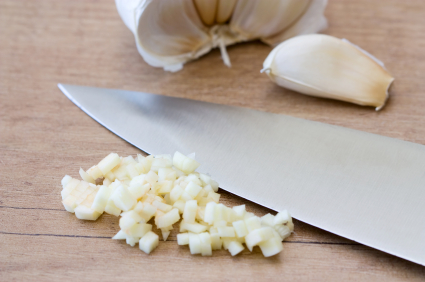
Mincing is the process of cutting an ingredient into extremely fine, uniform pieces, often smaller than a dice. This technique is primarily used for aromatic ingredients where maximum flavor distribution and quick integration into a dish are desired.
- Definition & Purpose: To create minuscule, almost paste-like pieces of an ingredient. The increased surface area allows flavors to meld seamlessly and cook rapidly, preventing harsh raw notes.
- Applications: Garlic, ginger, shallots, fresh herbs (e.g., parsley for garnish). For instance, mincing garlic ensures its pungent oils are released evenly throughout a sauce without encountering large, overpowering chunks.
- Technique Breakdown:
- Preparation: Peel and trim the ingredient. For garlic, crush cloves lightly to remove skin.
- Initial Slicing: For larger items like onions or garlic, first cut into thin slices. For garlic, cut lengthwise from head to root.
- Turning and Cross-Cutting: Turn the sliced ingredient 90 degrees and cut across the slices, creating small, fine pieces.
- Rocking Motion Refinement: Gather the finely cut pieces into a small pile. Place the tip of your chef’s knife on the cutting board, keeping it stationary. Rock the blade back and forth over the pile, using a sweeping motion, continuously gathering the ingredient until the desired fineness is achieved. Maintain the "claw hand" for safety when gathering and refining.
- Expert Insight: Proper mincing ensures that ingredients like garlic or ginger don’t burn quickly due to uneven sizing, while also dispersing their robust flavors evenly throughout a dish. Over-mincing, however, can bruise delicate herbs, releasing bitter compounds.
- Common Pitfalls: Inconsistent size, leading to uneven cooking or strong flavor bursts; bruising delicate ingredients by chopping too forcefully.
Chopping: The Versatile Foundation
Chopping is a foundational and versatile technique that produces larger, often less uniform pieces compared to dicing or mincing. It’s the workhorse cut, used when the exact size and shape are less critical, but a certain texture or cooking consistency is still desired.
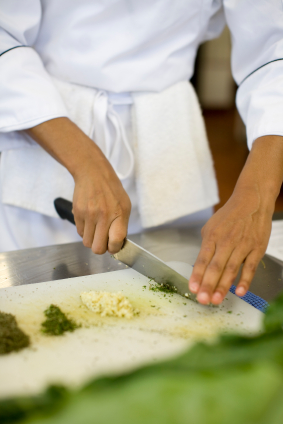
- Definition & Purpose: To cut ingredients into moderately sized pieces, which can vary from medium to large. The emphasis is on speed and efficiency for bulk preparation.
- Applications: Root vegetables for soups, stews, or roasting; onions for sautéing where a rustic texture is desired; herbs for robust dishes.
- Technique Breakdown:
- Secure Grip: Hold the chef’s knife or cleaver securely with the pinch grip. For a cleaver, placing the non-dominant hand on the top, dull side of the blade provides additional control and leverage for heavier cuts.
- Controlled Downward Motion: Using a controlled, downward motion, cut through the ingredient. The size of the chop can be adjusted by varying the spacing of your cuts.
- Rocking Motion (Optional): While often a more direct downward motion, a slight rocking motion can be employed for larger ingredients, utilizing the full blade length for cleaner cuts.
- Supporting Data: Chopping is often the first technique taught for processing large quantities of ingredients efficiently, forming the basis for many preparatory tasks in a professional kitchen.
- Official Responses: This baseline skill is universally expected, demonstrating a cook’s ability to process ingredients quickly and safely, even if the final aesthetic isn’t as refined as other cuts.
Dicing: The Pursuit of Uniformity
Dicing is a subcategory of chopping, distinguished by its commitment to creating small, uniform cubes. It demands greater precision than basic chopping and is crucial for dishes where even cooking, consistent texture, and attractive presentation are paramount.
- Definition & Purpose: To cut ingredients into neat, uniform cubes. The size can vary (e.g., small dice, medium dice, large dice), but consistency within each cut is key.
- Applications: Mirepoix (carrots, celery, onion) for stocks and sauces, vegetables for stir-fries, salads, garnishes, fruit salads. Uniformity ensures all pieces cook at the same rate.
- Technique Breakdown:
- Squaring Off: Begin by squaring off the ingredient (e.g., carrot, potato, onion) by trimming its sides to create flat surfaces. This creates a stable block to work with.
- Creating Planks: Slice the squared ingredient into uniform planks (slabs) of the desired thickness.
- Creating Batons: Stack the planks and cut them lengthwise into uniform sticks or "batons" (e.g., ¼-inch by ¼-inch by 2-inch for a small dice baton).
- Creating Cubes: Turn the batons 90 degrees and cut across them, creating the desired uniform cubes.
- Knife Choice: While smaller knives can be used for fine dicing, experts can still achieve precise dice with a well-controlled chef’s knife or even a cleaver for larger vegetables. A Granton edge (the indentations along the blade) can be particularly helpful as it creates air pockets, preventing food from sticking to the blade and facilitating smoother, faster cuts.
- Supporting Data: The precise, even cuts of dicing directly impact cooking consistency, ensuring that all pieces of a vegetable, for instance, reach the desired tenderness simultaneously. Aesthetically, it creates a clean, professional appearance.
- Safety Reinforcement: The "claw hand" technique is absolutely critical here, as the cuts are precise and the fingers are in close proximity to the blade. It reduces the risk of injury by keeping fingertips protected behind the knuckles.
Julienning: Elegance in Strips
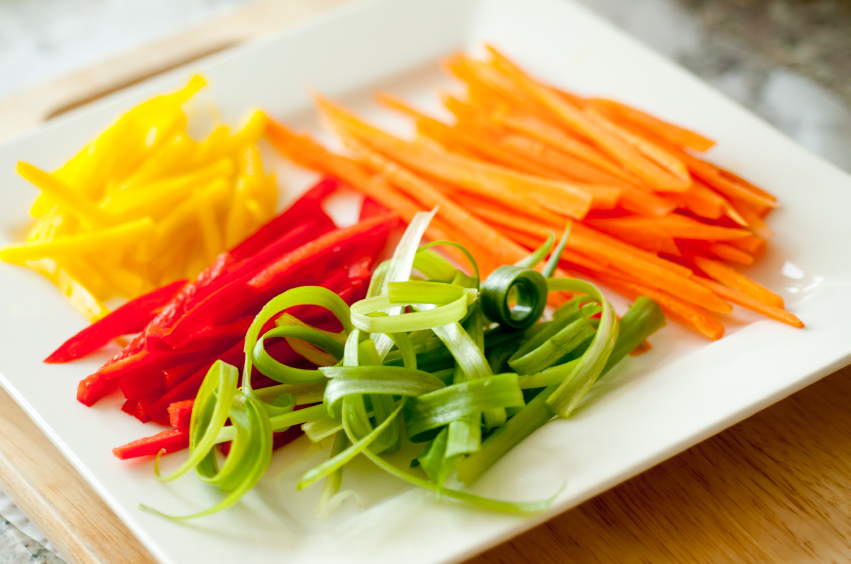
Julienning is a classic French technique that produces long, thin, matchstick-like strips. It is celebrated for its elegance and the delicate texture it imparts to ingredients, making it popular for both cooking and garnishing.
- Definition & Purpose: To create slender, uniform strips, typically about 1/8 inch by 1/8 inch by 1-2 inches long. This cut promotes quick cooking and offers a refined presentation.
- Applications: Vegetables (carrots, celery, bell peppers, zucchini) for stir-fries, salads, spring rolls, or garnishes. It can also be applied to firm cheeses, fish, or lean meats.
- Technique Breakdown:
- Professional Grip: Use the standard pinch grip on your chef’s knife.
- Squaring Off: As with dicing, begin by trimming the ingredient to create a rectangular or square block, ensuring stable cutting surfaces. Discard or reserve the trimmings for stock.
- Creating Uniform Planks: Cut the block into uniform planks of the desired thickness (e.g., 1/8 inch).
- Stacking and Cutting into Batons: Stack these planks neatly and then cut them lengthwise into uniform strips (batons). Avoid a straight "chopping" motion; instead, employ a smooth rocking motion that allows the knife’s blade to glide easily and continuously through the vegetable or other ingredient, ensuring clean, even cuts. The rocking motion is essential for precision and preventing the blade from getting stuck.
- Supporting Data: The slender nature of julienned vegetables allows them to cook very quickly and evenly, retaining a crisp-tender texture often desired in Asian cuisine or delicate salads. Visually, it adds an element of sophistication and artistry to a dish.
- Chronology: Julienning often marks a progression in a cook’s skill set, requiring a higher degree of control and consistency than basic chopping or dicing.
Chiffonade: The Delicate Ribbon
"Chiffonade," a French word meaning "made of rags," is a specialized technique primarily used for cutting leafy greens and herbs into fine, delicate ribbons. It is valued for its ability to create a visually appealing garnish and to evenly distribute the flavor of herbs without bruising them.
- Definition & Purpose: To produce thin, delicate shreds or ribbons from leafy ingredients. This technique is designed to maximize visual appeal and flavor release while minimizing damage to fragile leaves.
- Applications: Basil, mint, spinach, lettuce, sorrel. It’s perfect for garnishing soups, salads, pasta dishes, or incorporating into delicate sauces at the last minute.
- Technique Breakdown:
- Stacking: Gather several leaves of the herb or leafy green and stack them neatly on top of each other.
- Rolling: Carefully roll the stacked leaves tightly into a compact cylinder, resembling a small green cigar.
- Precise Cutting: Using an extremely sharp knife (a dull knife will bruise and tear the leaves, turning them dark), make very thin cuts across the rolled cylinder. Employ the same rocking motion as with julienning, allowing the blade to slice cleanly through the delicate layers.
- Unfurling: As you cut, the rolled leaves will unfurl into beautiful, uniform ribbons.
- Supporting Data: The chiffonade technique is particularly effective for herbs like basil, as it prevents bruising, which can lead to discoloration and a bitter taste. The delicate shreds melt into warm dishes or elegantly top cold ones, maximizing both aesthetic and flavor impact.
- Official Responses: This technique is a staple in French culinary schools and high-end restaurants, signifying attention to detail and a commitment to elegant presentation.
Implications:
The mastery of these foundational knife skills extends far beyond the mere execution of cuts; it profoundly impacts every facet of the culinary journey, from safety and efficiency to the ultimate quality and creativity of the finished dish.
Beyond the Cut: The Broader Implications of Knife Mastery
Enhanced Safety and Efficiency
The most immediate and tangible benefit of mastering knife skills is a dramatic increase in safety. A sharp knife, wielded with confidence and proper technique (like the "claw hand"), is far less likely to slip and cause injury than a dull blade used hesitantly. This focus on safety translates directly into efficiency. When a cook is confident and precise with their knife, preparation times plummet, allowing for a smoother, faster workflow in the kitchen. This efficiency is critical in high-volume professional settings and makes home cooking a more enjoyable, less daunting experience.
Elevating Culinary Quality and Consistency
Professional knife skills are the bedrock of culinary consistency. Uniform cuts, whether minced garlic or diced vegetables, ensure even cooking. Imagine a stew where some carrots are tiny while others are large; the tiny pieces would turn to mush while the large ones remain undercooked. Precision ensures that every component of a dish reaches its optimal texture and doneness simultaneously, contributing to a harmonious eating experience. Beyond texture, consistent cuts also contribute to professional presentation, making dishes visually appealing and appetizing – a non-negotiable in fine dining.
Fueling Creativity and Confidence
When basic knife mechanics become second nature, a chef’s cognitive load is freed. Instead of focusing on the physical act of cutting, they can direct their energy towards flavor development, ingredient combinations, and creative plating. This mastery builds immense confidence, allowing chefs to tackle new ingredients and complex recipes with ease. It transforms a potentially stressful task into an intuitive, almost meditative process, opening doors to greater culinary exploration.
A Non-Negotiable for Professional Advancement
For anyone aspiring to a career in the culinary arts, impeccable knife skills are not merely a desirable trait but a fundamental requirement. Culinary schools dedicate significant curriculum time to these skills, and professional kitchens expect a high level of proficiency from day one. It’s a foundational competency that speaks volumes about a chef’s discipline, attention to detail, and overall professionalism. Without this mastery, career progression in the competitive culinary world is severely limited.
The Home Cook’s Advantage
While the demands of a professional kitchen are intense, the benefits of mastering knife skills are equally transformative for the enthusiastic home cook. Faster prep times, safer cooking, and consistently delicious, beautifully presented meals elevate everyday cooking from a chore to a genuine pleasure. It empowers home cooks to experiment with more complex recipes and to derive greater satisfaction from their culinary endeavors.
Conclusion: The Lifelong Journey of the Blade
In conclusion, the journey of mastering knife skills is a lifelong pursuit, beginning with careful selection and maintenance of tools, progressing through the meticulous practice of foundational cuts, and culminating in a profound impact on culinary quality, safety, and creative expression. From the delicate chiffonade of herbs to the rustic chop of root vegetables, each technique serves a vital role in the kitchen’s symphony. These are not merely mechanical tasks; they are an integral part of culinary artistry and professionalism. For both the aspiring professional and the dedicated home enthusiast, investing time and effort into perfecting these skills is an essential step towards unlocking their full culinary potential, transforming raw ingredients into dishes of precision, flavor, and beauty. The true chef understands that the blade is an extension of their will, and its mastery is the key to unlocking an entire world of culinary possibilities.


 Iffa Jayyana
 Ali Ikhwan