
 Dwi Wanna
 Nana Wu
 Muslim
 Reynand Wu
 Ammar Sabilarrohman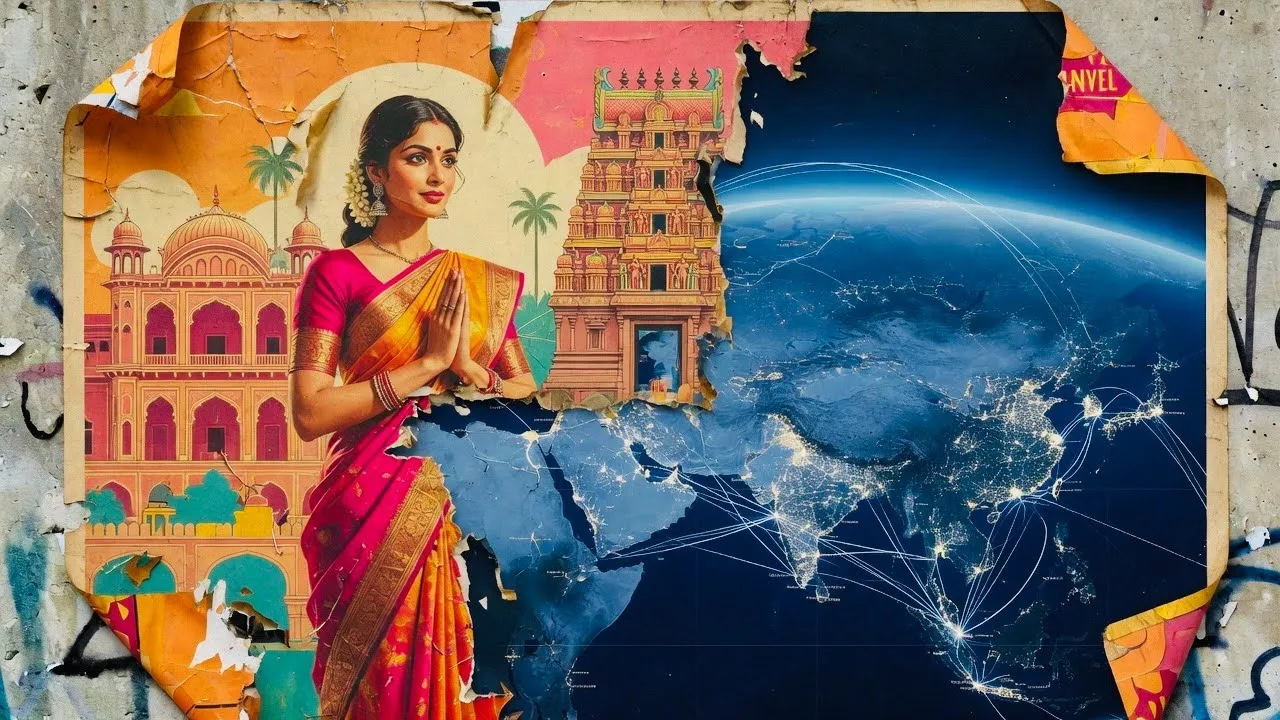
In the shifting landscape of global tourism, few phenomena have been as disruptive as the sudden, meteoric rise of Azerbaijan as a premier destination for the Indian traveler. Without a multi-million dollar "Incredible Azerbaijan" campaign, without deep-seated historical ties, and without the benefit of cultural familiarity, the Caucasus nation has ascended to the top of the growth charts for India’s outbound market.
This anomaly forces a reckoning for destination marketing organizations (DMOs) globally. It suggests that in an era of hyper-connected, tech-savvy, and experience-hungry travelers, the traditional "brand-first" marketing playbook—an artifact of the early 2000s—is rapidly losing its efficacy. The Azerbaijan case study proves that when it comes to capturing the Indian outbound market, the most potent marketing tool is not a billboard in Times Square or a celebrity-endorsed social media campaign, but the total elimination of friction.
Main Facts: The Unlikely Rise of a Destination
The rise of Azerbaijan is not merely a statistical quirk; it is a structural shift in how Indian travelers choose their next vacation. Data from major Indian Online Travel Agencies (OTAs) indicates that Azerbaijan has outpaced traditional European and Southeast Asian strongholds in year-over-year growth.
While countries like Switzerland or Thailand rely on decades of brand equity and established tourism infrastructure, Azerbaijan’s success is built on a "frictionless" trinity:
- Visa Accessibility: A seamless, rapid e-visa process that removes the administrative burden that plagues many Schengen-area destinations.
- Direct Connectivity: The establishment of direct flight corridors between major Indian metros and Baku, significantly reducing the "travel fatigue" factor.
- Price-to-Experience Ratio: A value proposition that resonates with the aspirational yet budget-conscious Indian middle class.
The absence of a "brand" in the traditional sense has not been a hindrance; rather, it has allowed the destination to remain a blank canvas, untarnished by the high costs and logistical nightmares often associated with established Western destinations.
Chronology: From Obscurity to Top-of-Mind
To understand how Azerbaijan achieved this, one must look at the timeline of the Indian outbound travel evolution over the last decade.
- 2015–2018 (The Traditional Era): Indian outbound travel was dominated by "brand-heavy" destinations. Marketing spend was directly correlated with footfall. Destinations like Dubai and Singapore cemented their positions through massive, sustained campaigns.
- 2019–2021 (The Pandemic Reset): The global travel shutdown caused a total collapse of traditional marketing channels. When borders reopened, the criteria for travel shifted from "aspirational brand resonance" to "logistical feasibility."
- 2022–2023 (The Azerbaijan Pivot): As visa backlogs in Europe reached record levels, Indian travelers began searching for "accessible" luxury. Azerbaijan, leveraging a proactive digital visa portal and strategic airline partnerships, began appearing in the search queries of mid-tier Indian travelers.
- March 2024 (The Intelligence Summit): During the Skift India Intelligence Summit in New Delhi, the data revealed that Azerbaijan had become the fastest-growing destination. The industry realized that the "Incredible India" model—a 2002-era strategy—was no longer the blueprint for modern success.
Supporting Data: The Anatomy of Frictionless Travel
During the Skift India Intelligence Summit, discussions held under Chatham House Rules shed light on the primary drivers of this trend. A senior executive from one of India’s largest OTAs presented data that shattered the conventional wisdom of the marketing department.
When analyzing the conversion funnels of Indian travelers, the "friction coefficient" emerged as the primary determinant. The data revealed that:
- Administrative Friction (Visas): For every 10% increase in visa complexity, there is a 25% drop in conversion rates for the Indian outbound segment. Azerbaijan’s e-visa turnaround time, often measured in hours rather than weeks, effectively captures the "impulse traveler."
- Logistical Friction (Connectivity): Direct flights act as a force multiplier. Destinations that require a layover in a third country lose approximately 40% of their potential Indian market due to the perceived "hassle" of transit.
- Economic Friction (Perception of Value): The Indian traveler is highly sensitive to the "value-for-money" equation. By avoiding the premium marketing tax (the cost of running massive ad campaigns passed down to the consumer), Azerbaijan offers a product that feels "premium" at a "value" price point.
Official Responses and Industry Sentiment
The industry’s reaction to this shift has been one of defensive confusion. Traditional tourism boards have long operated under the assumption that if they stop spending on brand awareness, they will vanish from the consumer consciousness.
"We are essentially looking at the death of the ‘destination brand’ as the primary driver of travel," noted one analyst at the New Delhi summit. "When a destination like Azerbaijan succeeds without a single major brand campaign, it effectively renders the marketing budget debate moot. You can spend $50 million on a campaign, but if your visa process takes 30 days and requires a physical interview, you will lose to a destination that is easy to access."
Tourism leaders are now faced with a stark reality: their budgets are better spent lobbying for policy changes—such as visa-on-arrival, streamlined immigration processes, and improved airport infrastructure—than on glossy television advertisements.
Implications: The New Marketing Playbook
The Azerbaijan phenomenon serves as a warning and an opportunity. For global DMOs, the implications are profound:
1. Shift from Brand to Infrastructure
Marketing is no longer about "selling the dream"; it is about "removing the barrier." The modern Indian traveler is already sold on the dream through social media and peer-to-peer influence. They do not need a tourism board to tell them that Paris is romantic or that Baku is exotic. They need the tourism board to ensure they can get there without an existential crisis at the embassy.
2. The Rise of the "Micro-Destination"
We are entering the age of the micro-destination. Because the "barrier to entry" (cost of awareness) has been lowered by digital platforms, smaller nations can now compete with global giants. Azerbaijan’s success proves that you do not need to be a global superpower to win in the outbound Indian market; you just need to be easy to visit.
3. The Death of the "Incredible India" Model
The "Incredible India" campaign was a response to a different era—a time when India needed to prove its legitimacy to the West. Today, the problem is reversed. The challenge is no longer "is this country worth visiting?" but "how can we facilitate the millions of Indians who already want to visit?" The strategy must shift from persuasion to logistics.
Conclusion: Friction is the New Brand
The debate over marketing budgets—whether to spend on mass media or digital precision—is becoming increasingly irrelevant. The real battleground for the next decade of tourism is in the background: the visa office, the immigration desk, and the airline gate.
Azerbaijan has inadvertently written the new manual for tourism success. By ignoring the traditional noise of brand marketing and focusing entirely on the user experience—by becoming a friction-free destination—they have captured a market segment that is as vast as it is demanding.
As we look toward the future, the winners in the Indian outbound market will not be the countries with the most beautiful commercials. They will be the countries that treat the Indian traveler with the respect of a seamless, efficient, and welcoming entry process. The brand is no longer the message; the brand is the journey itself. If the journey is frictionless, the travelers will come, and they will keep coming—with or without a campaign.

 Basiran