Ammar Sabilarrohman
 Ali Ikhwan
 Dwi Wanna
 Neng Nana
 Siti Muinah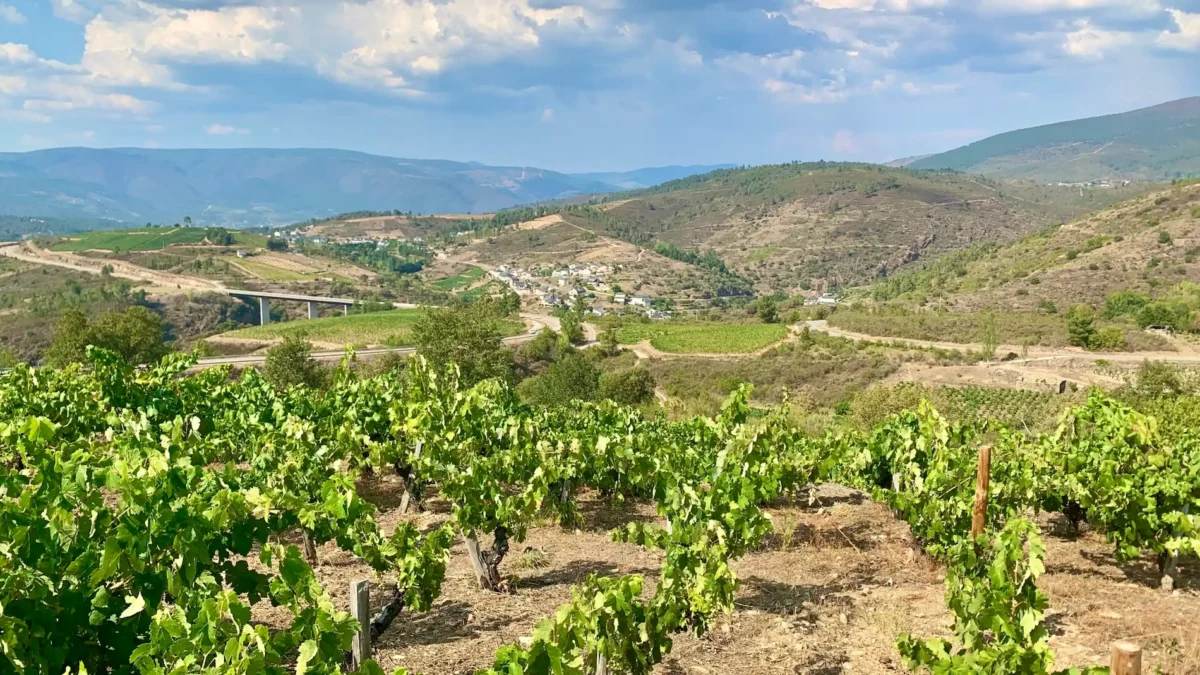
In the rugged, northwestern folds of Spain’s Galicia region, the comarca of Valdeorras sits like a hidden kingdom. While the Atlantic coast of Galicia has long basked in the international spotlight thanks to the crisp, saline profile of Albariño, the interior has remained a world unto itself—isolated, ancient, and quietly fermenting a revolution. Today, Valdeorras is shedding its obscurity, emerging as the premier destination for serious, structured white wines based on the versatile and expressive Godello grape. This is not merely a regional trend; it is a profound viticultural renaissance that is challenging the status quo of Spanish white wine.
Main Facts: The Terroir of the Sil River Valley
Valdeorras, which translates from the local dialect as the "Valley of Gold," is defined by its dramatic topography and unique microclimates. Stretching across the basins of the Sil, Xares, and Bibei Rivers, the region is shielded from the harsher, wetter Atlantic weather by surrounding mountain ranges. This creates a continental influence that, when combined with the high-altitude vineyards—often situated between 400 and 750 meters—allows for a slow, even ripening process that is essential for the Godello grape.
The region’s soil composition is a complex mosaic of slate, schist, and granite, which provides the backbone for its wines. While the name "Valdeorras" is often romanticized as a nod to the Roman gold mines once operated along the Sil River, its true etymology is rooted in the pre-Roman history of the Gigurros tribe, whose settlements evolved linguistically over centuries into the modern name. Today, the "gold" of the region is no longer found in the riverbeds, but in the glass: the concentrated, complex, and age-worthy white wines that are garnering 100-point scores and global acclaim.
Chronology: A History of Resilience and Revival
The history of viticulture in Valdeorras is a testament to the endurance of its people. Documentation of winemaking in the region dates back to the 10th century, with monastic records from San Salvador de Celanova confirming that vines were a staple of the local economy as early as 953 AD.
The 19th Century Pivot
By the early 1800s, the region faced a crisis of quality. In 1804, Lucas Labrada’s Descripción del Reino de Galicia highlighted the need for structural reform. Local wisdom, documented in interviews with villagers, led to a mass migration of vineyards from the flood-prone, humid valley floors to higher, terrace-built slopes. This shift was essential for the health of the vines, setting the stage for a period of relative prosperity.
The Phylloxera Catastrophe
The late 19th century brought devastation in the form of phylloxera. Arriving via Portugal in 1882, the louse decimated 8,000 hectares of vines. The recovery was agonizingly slow. By the time grafting onto American rootstocks became standard in 1904, many indigenous, high-quality varieties—such as Alvarello and Merenzao—had been lost. In their place, high-yielding but lower-quality varieties like Palomino (Jerez) and Alicante Bouschet were planted to ensure survival, leading to a period of mediocrity that lasted for much of the 20th century.
The REVIVAL Initiative (1976–1977)
The turning point for modern Valdeorras came in the mid-1970s with the Reestructuración de los Viñedos de Valdeorras (REVIVAL). Spearheaded by visionaries like Horacio Fernández Presa, the project sought to abandon the pursuit of quantity in favor of quality. Despite Godello occupying a mere 0.5% of the region’s vineyard holdings at the time, the team identified it as the variety best suited for the region’s complex terroir. The founding of the Godeval winery in 1986—housed in the restored Xagoaza monastery—proved that Godello was capable of greatness, even if the road to commercial viability was steep.
Supporting Data: The Ascendancy of Godello
The transformation of the region is best reflected in recent harvest data. In 2023, Valdeorras produced approximately 7.8 million kilograms of grapes. Notably, 76% of this production consisted of white grapes, and of those, a staggering 96% was Godello.
The economic shift is equally compelling. Where once high-yielding, bulk-production grapes were the backbone of the region, today, the market value of Godello has rendered other, less distinguished varieties economically non-viable. At small, family-owned estates like Alan de Val, owners are actively regrafting Alicante Bouschet over to Godello to meet the soaring demand.
Furthermore, the influence of high-profile winemakers—such as Rafael Palacios—has elevated the region’s profile. Since acquiring his first vineyard in 2004, Palacios has treated the land with a grand cru philosophy. His flagship wines, such as O Soro and As Sortes, have redefined the ceiling for Galician white wine, proving that Godello can achieve a textural, mineral-driven complexity that rivals the finest Chablis or white Burgundies.
Official Responses and Industry Shifts
The Denominación de Origen (DO) Valdeorras, established in 1945, has served as a regulatory bedrock, but it is the influx of external talent that has truly accelerated the region’s modernization. Legendary winemakers like Raul Pérez and Telmo Rodríguez have established projects within the region, recognizing that the combination of slate/schist soils and high-altitude climate is unique in Europe.
The "Quality Over Quantity" Mandate
The shift in winemaking philosophy is palpable. Many producers have moved away from traditional oak-aging, which often masked the subtle aromatic profile of the Godello grape. Instead, they are turning to large foudres or concrete eggs and focusing on extended lees contact to build texture. Rafael Palacios’ decision to sell off 35% of his 2022 harvest because it failed to meet his exacting standards for his label is perhaps the ultimate signal of the region’s commitment to excellence. The goal is no longer to compete with cheap, mass-market whites, but to compete with the world’s most prestigious white wine regions.
Implications: The Future of the "Valley of Gold"
The resurgence of Valdeorras has broader implications for the Spanish wine industry. As climate change begins to affect more traditional Mediterranean regions, the cooler, high-altitude vineyards of Valdeorras become an increasingly attractive proposition for investors and oenophiles alike.
Challenges Ahead
However, the region faces a delicate balancing act. As Godello becomes a "darling" of the wine world, there is a risk of over-expansion and the dilution of brand identity. The challenge for the local producers is to maintain the distinctiveness of their terroir while scaling production to meet international interest. The current downturn in global red wine sales provides a secondary tailwind for Valdeorras; as consumers migrate toward fresh, crisp, and sophisticated whites, the region is perfectly positioned to capture market share.
A New Legacy
Valdeorras has transitioned from a remote, post-phylloxera agricultural zone into a global viticultural reference point. The "gold" of the region has been redefined from the literal metal sought by Romans to the liquid gold of the Godello grape. Through the tireless work of the REVIVAL project and the subsequent arrival of world-class winemakers, Valdeorras has proven that history is not a static weight, but a foundation upon which a new, brighter future can be built.
As the world continues to discover the depth, minerality, and aging potential of Godello, Valdeorras stands ready. It is no longer a hidden corner of the Iberian Peninsula; it is the new frontier of Spanish wine, offering a purity of expression that suggests the best is yet to come. With 41 registered wineries and a growing consensus that "Valdeorras is Godello, and Godello is Valdeorras," the region has finally staked its claim to the prestige it has long deserved.