

 Azzam Bilal Chamdy
 Neng Nana
 Nana Muazin
 Dwi Wanna
 Raul Delapena Setiawan
 Lina Hope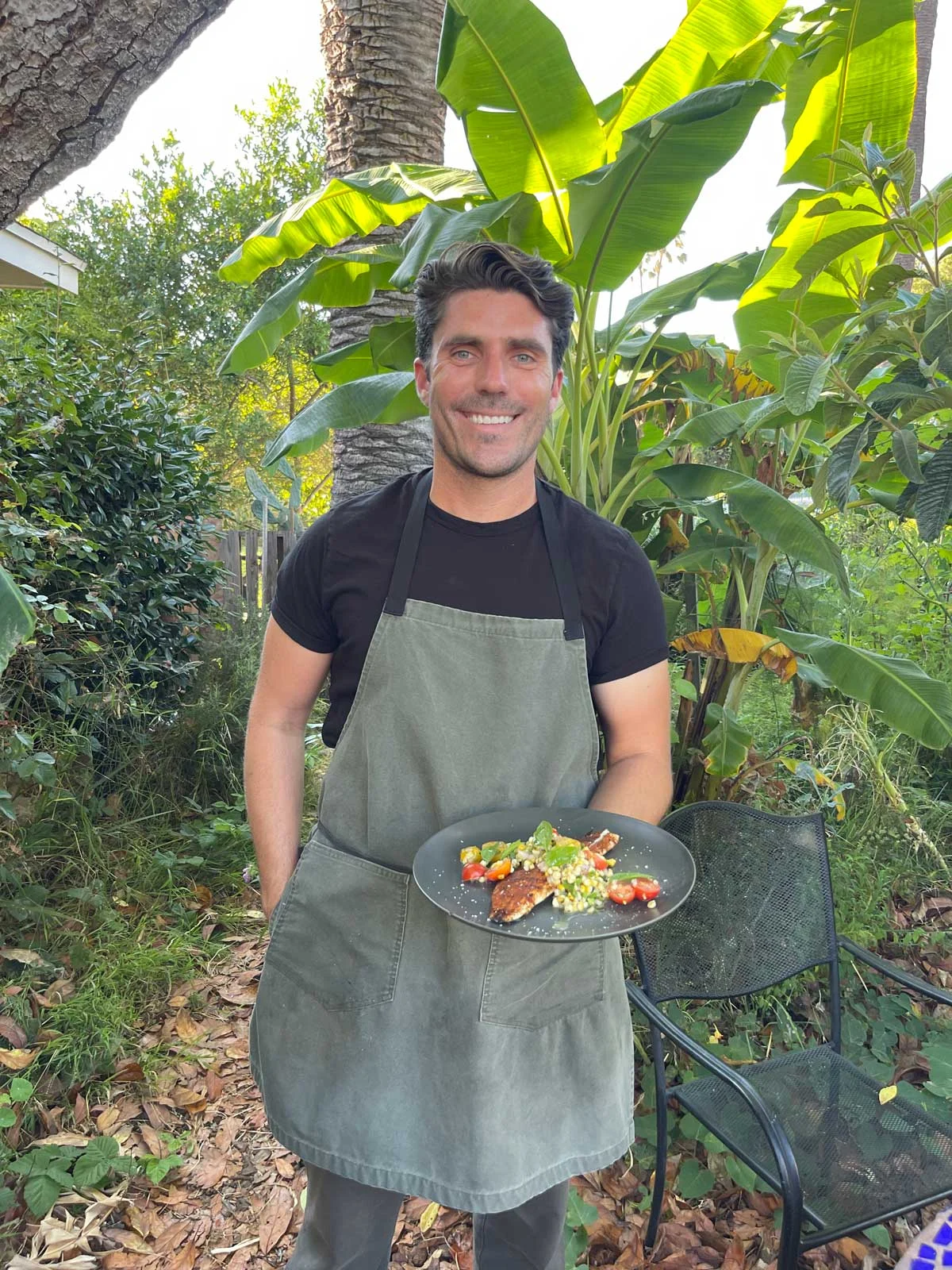
It begins in the quiet dawn, in the nutrient-rich soil of the American heartland, and in the calloused hands of the men and women who tend to the earth. While the modern consumer is often separated from the source of their sustenance by thousands of miles of supply chain and grocery store aisles, a movement is growing to bridge that divide. At the forefront of this narrative shift is filmmaker and chef Oliver English, whose creative work seeks to reposition the American farmer not merely as a producer, but as the essential steward of our collective survival.
Through his production house, Common Table Creative, English has embarked on a nationwide mission to illuminate the challenges facing the agricultural sector. Central to this journey is his partnership with the American Farmland Trust (AFT), an organization dedicated to the dual goals of land preservation and farmer viability. As the pressures of urbanization, climate instability, and economic volatility mount, the work of English and the AFT has never been more critical.
The Genesis of a Movement: Bridging the Gap Between Table and Field
Oliver English’s career has long been defined by an obsession with the provenance of food. As a chef, he spent years in high-end kitchens, learning the intricacies of flavor profiles and culinary technique. However, it was his transition into filmmaking—specifically the creation of the documentary Feeding Tomorrow—that shifted his focus from the plate back to the soil.
“Farmers are the backbone of America,” English notes. “And they’re often underappreciated or unseen.”
English’s work aims to dismantle the anonymity of food production. By visiting farms across the United States, his team captures the raw, unvarnished reality of agricultural life. These are not curated images of pastoral perfection; they are portraits of resilience. From family-run ranches in the West to regenerative produce farms in the East, English is documenting the tangible impact of the American Farmland Trust’s initiatives.
Chronology of an Agricultural Crisis
The urgency behind this collaboration is rooted in a decades-long decline of agricultural land. To understand the mission of the AFT, one must first look at the trajectory of American land use:
- 1980: The Founding: The American Farmland Trust was established at a time when the loss of agricultural land to urban sprawl was accelerating at an alarming rate. It was the first organization to argue that land protection, sound farming practices, and the economic viability of farmers were inextricably linked.
- The 1990s and 2000s: As the U.S. economy expanded, the conversion of farmland into residential developments and commercial real estate surged. During this era, AFT pioneered the use of Agricultural Conservation Easements, a legal tool that allows landowners to voluntarily limit future development of their land, keeping it in production in perpetuity.
- 2010s to Present: The challenge evolved from simple sprawl to a complex trifecta of climate change, the aging farmer demographic, and the "great transfer" of land ownership. AFT shifted its strategy to include climate-smart agricultural grants, providing the capital necessary for farmers to transition to regenerative practices that sequester carbon and improve water retention.
- 2023–2024: Through the lens of collaborators like Oliver English, the narrative has shifted to public engagement. By documenting the "kitchen table" conversations, the AFT is now focusing on human-interest storytelling to galvanize policy change and philanthropic support.
Supporting Data: The Stakes of Soil Security
The data supporting the AFT’s mission is sobering. According to recent AFT research, the United States is losing farmland at a rate of approximately 2,000 acres per day. This is not merely an aesthetic loss; it is a fundamental threat to food security.
- The Conversion Threat: If current trends continue, the U.S. could lose millions of acres of prime farmland to low-density residential development by 2040.
- Economic Viability: A significant portion of these losses occurs because small and mid-sized family farms struggle to remain profitable. AFT’s research shows that farm viability grants—which provide capital for equipment, infrastructure, and business planning—are the most effective tools for preventing land conversion. When a farm becomes financially sustainable, the pressure to sell the land to developers vanishes.
- Regenerative Impact: AFT-supported farms that have adopted regenerative practices—such as cover cropping, no-till farming, and rotational grazing—have reported significant improvements in soil organic matter and moisture retention. These practices are the primary defense against the increasing frequency of droughts and floods.
Official Responses and Strategic Advocacy
The American Farmland Trust occupies a unique space in the agricultural sector. As the only national organization that simultaneously tackles land protection, farmer health, and environmental stewardship, it acts as a bridge between private landowners and federal policy.
"It’s one thing to read about these programs on a website," says Oliver English, reflecting on his time in the field. "It’s another thing entirely to sit at a farmer’s kitchen table and hear that a grant helped to keep their farm running, to protect their land from development, or to transition to more resilient practices."
The AFT’s institutional philosophy is clear: A healthy food system requires healthy farmers. Their current initiatives include:
- Farmland Protection: Working with land trusts and government agencies to secure conservation easements.
- Farmer Viability: Providing direct technical assistance and financial grants to help new and legacy farmers modernize their operations.
- Climate-Smart Agriculture: Partnering with federal agencies to incentivize carbon sequestration and soil health management.
By amplifying these efforts, English is providing a platform for farmers to voice their own needs, ensuring that the conversation around food policy is informed by those actually working the land.
Implications: A Future Without Farmers?
The implications of failing to protect our agricultural infrastructure are profound. If the current rate of farmland loss continues, the American food system will become increasingly centralized, reliant on long-distance supply chains, and vulnerable to global market shocks.
"If we lose our farmland, there is no future," English warns. This sentiment is not hyperbolic. The farmland that is being paved over today is often the most productive land in the country, located near urban centers where it could provide fresh, local produce to millions.
When farmland is lost to sprawl, it is lost forever. Unlike a factory that can be repurposed, paved-over farmland loses its biological capacity to produce food for generations. The cost of restoring such land is economically and ecologically prohibitive. Therefore, the work being done by the AFT—and showcased by the storytelling of Common Table Creative—is a race against time.
A Call to Action for the Next Generation
The movement to save American farms is not just the responsibility of policymakers or institutional donors. It is a societal imperative. The AFT’s recent push for membership is designed to create a grassroots coalition of citizens who recognize that their own food security is tied to the survival of the family farm.
For those inspired by the stories shared by Oliver English, the path to involvement is clear. By becoming an AFT member, individuals contribute directly to the resources, legal advocacy, and financial grants that keep farmers on their land. It is an investment in the literal ground beneath our feet.
As we look toward the future, the partnership between creatives like English and organizations like the American Farmland Trust serves as a model for how to build public awareness around complex issues. By blending the aesthetic beauty of film with the hard data of agricultural science, they are ensuring that the stories of the soil—and the people who protect it—are no longer ignored.
To learn more about how you can support this vital work and to join the movement, visit farmland.org/edible. In doing so, you are not just supporting an organization; you are helping to ensure that the fields remain green, the soil remains productive, and the farmers remain on the land that sustains us all.
About American Farmland Trust
American Farmland Trust is the only national organization that takes a holistic approach to agriculture, focusing on the connection between the land, the practices used on that land, and the farmers who work it. Since its founding, AFT has been a catalyst for saving millions of acres of farmland from development, helping tens of thousands of farmers adopt environmentally sound practices, and keeping family farms in business. Through its "No Farms, No Food" message, AFT continues to lead the national conversation on the necessity of a resilient and sustainable agricultural system.


 Iffa Jayyana
