

 Lina Hope
 Iffa Jayyana
 Lina Irawan
 Ammar Sabilarrohman
 Ali Ikhwan
 Azzam Bilal Chamdy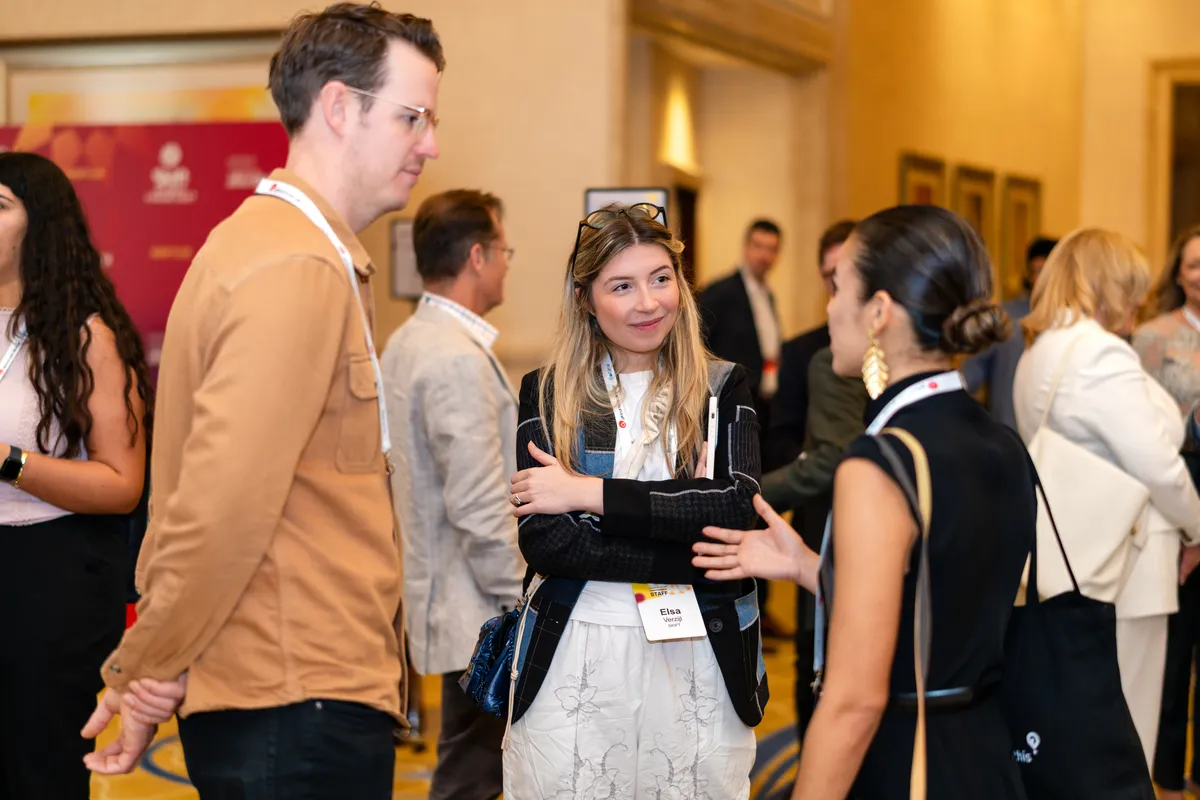
For five years, the Gulf Cooperation Council (GCC) states operated under a narrative of inevitable, exponential growth. From the towering cranes of Riyadh to the luxury-drenched horizons of Dubai and the cultural aspirations of Abu Dhabi, the region became the world’s most ambitious construction site. Capital flowed freely, visitor numbers shattered records, and infrastructure projects—once considered science fiction—transformed into tangible tourism hubs at a pace that left global competitors scrambling to keep up.
However, the eruption of conflict between Iran and the U.S. has abruptly terminated that sense of inevitable progress. The air of invincibility has been replaced by a climate of caution. As the region navigates this new geopolitical reality, every major travel organization—from national airlines to private equity real estate firms—is forced to confront a sobering question: How much of the Gulf’s high-octane growth trajectory is built on bedrock, and how much is vulnerable to the shifting sands of sustained conflict?
As the industry grapples with these uncertainties, Skift Global Forum East returns to Abu Dhabi on December 8-9, 2026. Hosted by Experience Abu Dhabi, this fifth edition serves as a critical junction for the travel sector. In a landscape where "certainty" is the rarest commodity, the forum promises to be a crucible where the industry’s next strategic moves are debated, dissected, and refined.
A Chronology of the Gulf’s Rise and Realignment
To understand the current tension, one must look at the rapid-fire timeline of the past half-decade:
- 2021–2022: The post-pandemic recovery period. The Gulf leads the world in tourism reopening, fueled by high vaccination rates and massive state-backed marketing campaigns.
- 2023: The "Mega-Event" era hits its stride. Massive investment in sports, entertainment, and hospitality cements the region as a primary global destination, moving beyond its historical role as a transit hub.
- 2024: The peak of investor enthusiasm. Capital supercycles reach their zenith, with massive institutional investment pouring into Giga-projects across the region.
- Late 2025–Early 2026: The regional conflict escalates. The intersection of Iran-U.S. tensions creates a "shock wave" across regional aviation, insurance markets, and international traveler sentiment.
- December 2026 (Forthcoming): The Skift Global Forum East. Industry leaders gather to pivot from the "growth at all costs" model to a "resilience-first" strategy.
Supporting Data: The High Stakes of the Gulf Market
The importance of the region cannot be overstated. Last year’s Skift Global Forum East was a testament to the industry’s gravity, drawing 424 leaders from 279 companies across 21 countries. Crucially, 65% of these attendees were director-level or above, signaling that the decisions made in this room dictate the flow of billions of dollars.
The current economic indicators suggest a complex picture. While consumer demand in the Gulf remained robust throughout 2025, the cost of insurance for regional aviation and shipping has seen localized spikes. Furthermore, the volatility in regional oil markets—traditionally a hedge for Gulf travel spend—has forced CFOs to adjust their revenue forecasts. The upcoming forum will be the venue for stakeholders to weigh these systemic risks against the still-formidable demand for the region’s unique hospitality products.
The Six Critical Decisions on the Table
As the region faces this inflection point, six specific strategic dilemmas have emerged as the focal points for the 2026 forum.
1. The Capital Supercycle: Recommit or Redirect?
Investors are currently at a crossroads. The "Capital Supercycle" that fueled the last five years of hospitality expansion is now under review. Asset owners must decide whether to lean into the long-term potential of the Middle East, capitalizing on depressed valuations, or to diversify their portfolios into markets with lower geopolitical premiums.
2. AI: From Experimental Pilot to Bottom-Line Revenue
Artificial Intelligence has long been the "next big thing" in travel tech. However, in an era of volatile demand, efficiency is no longer optional—it is a survival mechanism. CEOs and COOs are tasked with moving AI beyond customer service chatbots into the core of their distribution and yield management strategies. The challenge lies in governance: how to scale automation without compromising the hyper-personalized service that defines Gulf luxury.
3. Regenerating Demand Amid Global Tensions
The return of South and East Asian travelers in Q4 2026 is far from guaranteed. Airlines and national tourism boards are now engaged in a fierce battle for "share of mind." The question is no longer just about marketing; it is about storytelling. How do destinations communicate stability and safety in a media environment that often paints the entire region with a broad brush?
4. The Post-Mega-Event Syndrome
The Gulf has invested heavily in "mega-events" to drive tourism. Yet, global history is littered with sports and entertainment infrastructure that became "white elephants" once the spotlights dimmed. Developers are now confronting the "post-event fade" and asking if their infrastructure can sustain demand cycles once the initial hype cycles are exhausted.
5. Redefining the 2028 Hospitality Supply Mix
The development pipeline is currently heavy with branded residences and short-term rentals. Hospitality executives must determine if these hybrid models will cannibalize traditional hotel revenue or if they are the future of the regional stay. The 2028 supply mix will be locked in soon, making this decision irreversible for the next decade.
6. Resilience as the Core Strategy
Perhaps the most fundamental change is the shift from "growth" to "resilience." CFOs are no longer planning for single-variable risks. They must now construct operating models capable of absorbing climate shocks, geopolitical volatility, and source-market instability simultaneously. The new strategy is not about avoiding risk, but about the agility to respond to it.
Official Responses and Industry Sentiment
The prevailing sentiment among industry leaders, as voiced in recent preparatory discussions for the forum, is one of "cautious optimism." While there is no denying the severity of the geopolitical backdrop, there is a strong belief that the region’s infrastructure is too integrated into the global economy to falter.
"The room is curated, not closed," note the organizers of the Skift Global Forum East. This ethos reflects the need for high-level dialogue that moves beyond corporate PR. The forum provides a rare, vetted space for tourism authorities, airline executives, and sovereign wealth fund managers to speak candidly about the risks. By keeping the sessions curated, the event ensures that the discourse remains grounded in reality rather than speculation.
Implications for the Global Travel Economy
The outcome of these discussions will have profound implications far beyond the Gulf. Because the region serves as a massive connecting hub for Europe, Asia, and Africa, any disruption in its growth trajectory is felt globally.
If the Gulf successfully pivots to a resilience-based model, it will likely set a new benchmark for how modern, tourism-dependent economies navigate the volatility of the 21st century. If, however, the region struggles to reconcile its massive infrastructure build-out with the realities of modern conflict, it could trigger a wider contraction in global hospitality investment.
As the industry prepares to gather in Abu Dhabi this December, the atmosphere will be distinct. The celebratory tone of previous years will be replaced by a focus on structural integrity. The industry is not merely attending a conference; it is participating in a high-stakes recalibration of the global travel order. For those who can successfully navigate these six core decisions, the next chapter of Gulf growth may prove more durable, more efficient, and more sophisticated than anything seen in the previous five years.
The question for 2026 is no longer, "How fast can we build?" but rather, "How well can we endure?" The answer to that question will define the next generation of global travel.

 Asro
Asro
 Dwi Wanna
