

 Ali Ikhwan

 Iffa Jayyana

 Muslim

 Nana

 Dwi Wanna
 Sagoh
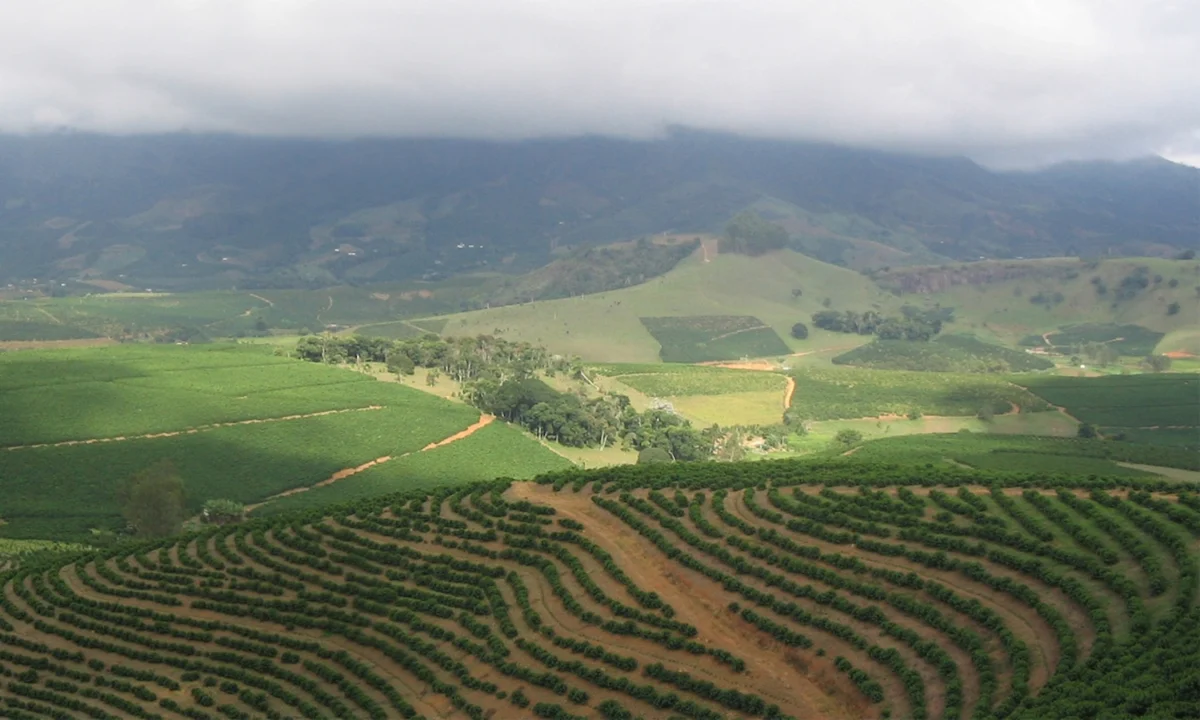
The re-election of President Luiz Inácio Lula da Silva represents far more than a political transition; for many, it serves as a critical bulwark for democracy, a lifeline for Indigenous communities, and a significant triumph in the global fight against hunger. In a world where democratic institutions are increasingly fragile, Brazil’s recent trajectory offers a compelling, if complex, case study in how state policy can effectively reverse systemic collapse.
However, beneath the surface of these achievements lies a profound and persistent tension. While the current administration has successfully steered the nation away from the environmental and social degradation that defined the Bolsonaro era, it remains locked in a high-stakes tug-of-war with Brazil’s entrenched agribusiness sector—a powerful, deep-pocketed lobby that continues to dictate the terms of the nation’s economic and environmental reality.
A Chronology of Recovery: From Hunger to Hope
To understand the scale of the challenge, one must look at the recent timeline of Brazil’s socioeconomic recovery. Following his return to office in 2023, President Lula identified the eradication of hunger as the primary pillar of his domestic agenda. The results were rapid and unprecedented.
- 2023: Upon taking office, the administration immediately reinstated social programs that had been dismantled or defunded during the previous administration.
- 2024: The focus shifted toward stabilizing food prices and strengthening the supply chain for small-scale family farmers.
- 2025: A landmark year for Brazil, as the United Nations officially removed the country from the global Hunger Map. In a span of just 24 months, over 40 million Brazilians were successfully lifted out of moderate or severe food insecurity.
This victory was not the result of a "technological miracle" or the further industrialization of the food system. Rather, it was a triumph of deliberate political choice. By expanding conditional cash transfers, indexing the minimum wage to inflation, bolstering school meal programs, and prioritizing the procurement of food from local family farmers, the state demonstrated that hunger is, ultimately, a policy failure—and thus, a policy-fixable problem.
Supporting Data: The Environmental Paradox
The narrative of progress extends to the realm of ecology. Under the current administration, the protection of Brazil’s vital biomes has become a cornerstone of international diplomacy and domestic policy.
The data is striking: between 2025 and 2026, deforestation in the Amazon plummeted by 41.8 percent—the lowest level recorded since modern satellite monitoring began in 1988. Simultaneously, the Cerrado—a vast, biologically diverse savanna often overlooked in international coverage—saw a 23.8 percent reduction in deforestation. These gains were accompanied by renewed efforts to demarcate Indigenous territories, providing legal protections to the stewards of these forests.
Yet, these successes are fragile. The administrative victories are constantly tested by a legislative environment that remains hostile to environmental regulation. Despite the President’s executive initiatives, the Brazilian Congress has frequently acted to undermine environmental licensing, overturn presidential vetoes, and erode the oversight capabilities of environmental agencies. The paradox is clear: while the executive branch works to save the forests, the legislative branch, influenced by the powerful ruralist caucus, often acts as a counterweight, favoring deregulation and expansionist land-use policies.
The Power of the Ruralist Caucus: A Colonial Legacy
To comprehend why agribusiness remains so dominant, one must look at the historical roots of the Brazilian economy. The nation’s current political structure is an evolution of a colonial-era economy built upon massive land concentration, extractive industries, and an historical reliance on enslaved labor. This created a powerful rural oligarchy that has successfully transitioned from the plantation era to the era of globalized commodity exports.
Today, this power is institutionalized through the Agricultural Parliamentary Front (FPA). Comprising a significant cross-party bloc in Congress, the FPA operates as a formidable legislative force. It is bolstered by the Instituto Pensar Agro (IPA), a think tank that provides the strategic framework for the caucus’s political agenda.
While the FPA officially frames its mission as "modernizing agriculture" and "protecting rural producers," its legislative record suggests a different priority: the deregulation of pesticides, the opening of Indigenous lands to commercial exploitation, and the systematic weakening of environmental protections. Even after recent electoral shifts, the FPA retains a comfortable majority in both houses of Congress, ensuring that no agricultural or environmental policy can be passed without their tacit or explicit consent.
Official Responses and the Ministry Divide
In response to this political reality, the Lula administration has adopted a strategy of accommodation. This is most visible in the dual-ministry structure that governs Brazilian food policy.
On one side, the Ministry of Agriculture and Livestock is traditionally led by figures aligned with the agribusiness sector. This ensures that the nation’s massive export industries—soybeans, beef, sugar, and biofuels—receive the state support, tax breaks, and credit access they require. On the other side, the Ministry of Agrarian Development and Family Farming operates with the specific mandate to promote agroecology, land reform, and small-scale, sustainable food production.
The disparity between these two ministries is immense. While the Ministry of Agrarian Development provides a vital safety net and promotes sustainable growth, its budget and resource allocation are dwarfed by the massive incentives provided to the agribusiness giants. This leads to a fragmented food system where the "industrial" and "sustainable" models exist in parallel, but with wildly unequal playing fields.
Implications: The Future of the Global Food System
The implications of Brazil’s struggle extend far beyond its borders. As a global powerhouse in agricultural exports, Brazil’s choices influence commodity prices, climate change outcomes, and the survival of global biodiversity.
The MATOPIBA Challenge
A critical point of concern is the MATOPIBA region—a massive agricultural frontier spanning Maranhão, Tocantins, Piauí, and Bahia. As the global demand for soy and beef fluctuates, this region has become a flashpoint. Expanding production here threatens to push agricultural activity into fragile ecosystems and Indigenous lands, potentially reversing the hard-won environmental gains of the past two years.
The Role of Global Markets
Brazil’s agricultural sector is also highly sensitive to global shifts. China’s ongoing efforts to achieve greater self-sufficiency in soybean production, for instance, could drastically alter the export-led model of Brazilian agribusiness. Should the global demand for Brazil’s primary commodities shift, the nation may be forced to reckon with the inherent instability of an economy so heavily reliant on a few, ecologically destructive exports.
A New Model for the World
The most significant lesson from the current administration is that another model is not only possible but currently in practice. By centering family farmers, Indigenous and traditional communities, and those most affected by food insecurity at the heart of policymaking, Brazil has demonstrated that tackling hunger, inequality, and climate change are not conflicting goals—they are deeply interconnected.
The path forward, however, is fraught. For Brazil to consolidate its progress, it must find a way to navigate the entrenched power of the agribusiness lobby. It will require more than just executive orders; it will necessitate a fundamental shift in how the nation values its land and its people.
If Brazil succeeds in tilting the scales further toward agroecology and sustainable food sovereignty, it could provide the world with a blueprint for a post-extractive economy. If it fails, the progress made since 2023 risks being nothing more than a temporary respite before the next wave of industrial expansion.
Ultimately, Brazil’s journey highlights a universal truth: true systemic change requires the courage to challenge the status quo, even when those forces have been entrenched for centuries. The progress made in the last two years is a testament to what is possible when political will meets civil society engagement. Now, the harder work begins: ensuring that this "sigh of relief" evolves into a permanent, sustainable transformation of the Brazilian food system.

 Layla Zulfa
 Rifan Muazin

