

 Azzam Bilal Chamdy
 Neng Nana
 Nana Muazin
 Dwi Wanna
 Raul Delapena Setiawan
 Lina Irawan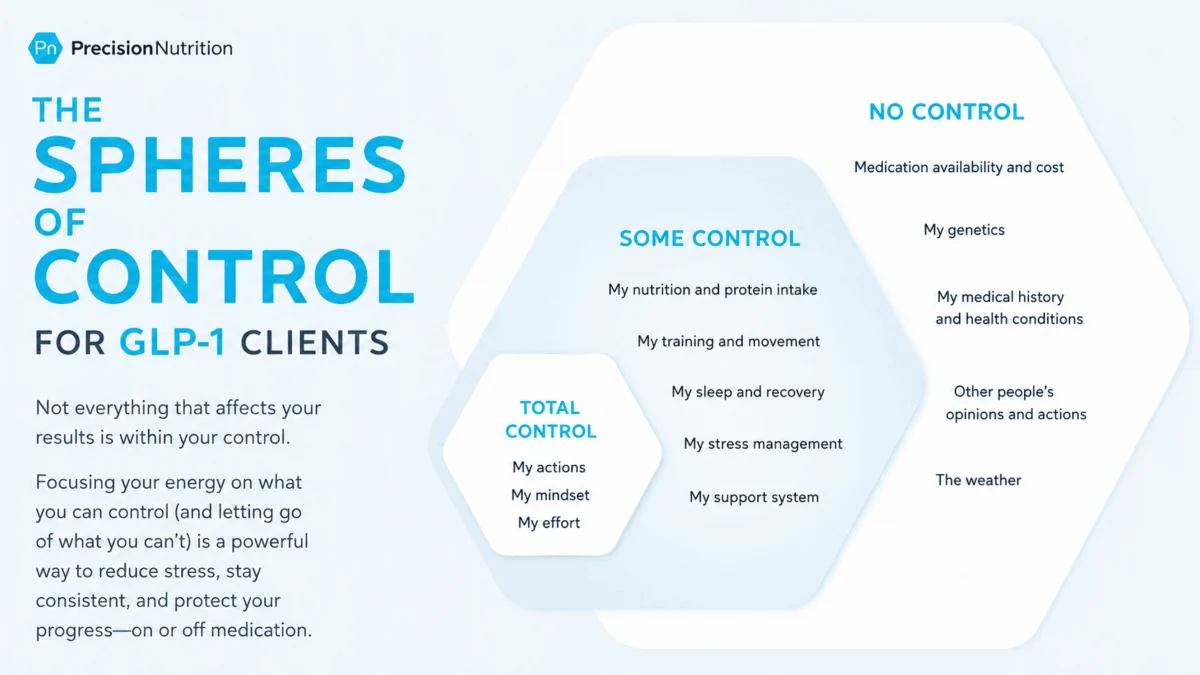
Reviewed by Brian St. Pierre, MS, RD
When GLP-1 receptor agonists like semaglutide (Ozempic) first hit the mass market in 2017, the fitness industry was gripped by a quiet, existential panic. Health and fitness coaches across the globe asked the same uncomfortable question: "Is this drug going to steal my job?"
At the time, the threat felt theoretical. Prescription rates were minuscule; you had to look hard to find someone using these injectables. But the landscape of 2026 is unrecognizable compared to that initial launch. Today, over one in ten U.S. adults are actively taking a GLP-1 medication. The "theoretical" has become the ubiquitous.
As the novelty of these medications has faded, so has the industry’s defensiveness. Most coaches have moved past the fear of obsolescence, instead embracing a more pragmatic reality: GLP-1 medications are a powerful tool, but they are not a complete solution. In this new era, the role of the coach has shifted from being a primary architect of weight loss to becoming a specialized support system.
The Evolution of the Coaching Paradigm
The shift in perspective is best captured by Kate Solovieva, Super Coach and Director of Community at Precision Nutrition. "As a coach, you’re not in the GLP-1 world; you’re in the GLP-1 support world," she explains.
Coaches must recognize that their target market is no longer just "people who want to lose weight." It is "people on GLP-1s who want support." This distinction is critical. Trying to coach every individual on a GLP-1 is a strategic error; many are satisfied with the drug’s effects and have no desire for lifestyle intervention. Coaches who fixate on "the wrong way" people are using these drugs are simply burning energy that could be better spent on the substantial sub-group of users who are ready, willing, and eager to optimize their health alongside their medical treatment.
The Seven Archetypes of GLP-1 Clients
Coaching readiness is fluid, not fixed. A client who is resistant today may be seeking guidance tomorrow. Based on extensive experience coaching over 175,000 clients, Precision Nutrition has identified seven distinct GLP-1 client types, each requiring a tailored approach.
1. The Honeymooner (Readiness: Very Low)
The Honeymooner is experiencing the "magic" of the drug: minimal side effects, rapid weight loss, and zero effort required. Because they are seeing results on the scale, they see no reason to change their underlying habits.
- Coaching Strategy: Avoid the "righting reflex." Trying to warn them about muscle loss or "quick fixes" often makes a coach look like an antagonist. Celebrate their success and keep your door open for when the honeymoon phase inevitably hits a plateau.
2. The Ambivalent Candidate (Readiness: Low-to-Moderate)
This individual hasn’t started the medication but is paralyzed by the decision. They struggle with the societal stigma of "taking the easy way out" or fear the unknowns of long-term usage.
- Coaching Strategy: Help them navigate their own hesitation. Use tools like the "4 Crazy Questions" to explore the pros and cons of both starting and not starting, ensuring the final decision remains firmly in the hands of the client and their medical provider.
3. The Ready-to-Quitter (Readiness: Moderate)
These clients are seeing results but are suffering from severe nausea, exhaustion, or digestive distress. They are on the verge of stopping, often feeling that they are "broken" because they aren’t tolerating the drug as well as others.
- Coaching Strategy: Normalize the experience. Educate them on common side effects and encourage them to work with their doctor to adjust dosage. Suggest experiments like smaller, more frequent meals to manage symptoms.
4. The Muscle-Loss Risk (Readiness: Moderate)
This client is losing weight, but at the expense of their lean tissue. They are often sedentary and have poor protein intake habits.

- Coaching Strategy: Focus on the "invisible." Use objective data—like a DEXA scan or simple functional strength tests—to highlight the risk of muscle loss. Prioritize protein consumption and introduce low-barrier resistance training.
5. The Under-Fueler (Readiness: Moderate-to-High)
The medication has worked so well that their appetite has vanished, leading to dangerous caloric deficits.
- Coaching Strategy: If you suspect an eating disorder, refer them to a specialist immediately. For others, use a "show me" approach with food logs. Help them treat eating as a task to be scheduled, rather than a response to hunger.
6. The Graduate (Readiness: High)
These clients have reached their goal and are weaning off the medication. They are vulnerable to weight regain and often terrified of the "appetite rebound."
- Coaching Strategy: Focus on habit consistency. The goal is to ensure that the behaviors they practiced while on the drug become their new identity. Those who built strong habits during treatment are four times more likely to maintain their results after cessation.
7. The Priced-Out (Readiness: High)
These are clients forced off the medication due to insurance changes or cost. They are often grieving the loss of a tool that finally worked for them.
- Coaching Strategy: Reframe the situation. Validate their frustration as a systemic failure, not a personal one. Shift the focus to the "Spheres of Control"—letting go of what they cannot change (price) and doubling down on what they can (nutrition, movement, and stress management).
Supporting Data: Why Habits Matter
The necessity for coaching in the GLP-1 era is backed by hard data. Clinical observations suggest that up to 40% of weight lost on GLP-1s can be lean muscle mass if protective behaviors are not in place. Furthermore, the rate of weight regain after discontinuing medication is significant for those who did not use the time to build sustainable lifestyle ruts.
Conversely, those who successfully integrate strength training and protein-forward nutrition while on the medication demonstrate significantly higher long-term success rates. The medication provides the window of opportunity; the coaching provides the infrastructure to keep that window open once the drug is removed.
Official Guidance and Scope of Practice
It is vital for coaches to maintain strict boundaries. While a coach can educate, suggest experiments, and offer accountability, they cannot prescribe or adjust medication dosages.
When to Refer to a Medical Professional
If a client exhibits signs of severe distress, such as persistent vomiting, signs of pancreatitis, or severe depression, the coach must immediately involve the client’s medical team. Always encourage clients to bring a log of their symptoms and food intake to their doctor to facilitate better clinical decisions.
Implications for the Future of Fitness
The integration of GLP-1s into the weight-management toolkit is not the end of the coaching industry; it is a pivot point. The coach of the future is a behavior-change specialist who understands that physiology is only half the battle.
As Toni Bauer, Director of Coaching and Education Operations at Precision Nutrition, notes, the goal is to build "ruts" in the trail of life—deep, neural pathways that persist long after the chemical aid is removed. Whether a client chooses to stay on medication for life or opts to taper off, the foundational habits—protein intake, strength training, sleep hygiene, and emotional regulation—remain the primary determinants of long-term health.
Ultimately, the most successful clients are those who transition from viewing the medication as the "doer" to viewing it as a "facilitator" for their own agency. The coach’s job is to ensure that when the drug is no longer there, the person who remains is a stronger, more capable version of themselves.
References
- For a comprehensive list of clinical studies, systemic reviews on GLP-1 efficacy, and data on weight regain and muscle mass preservation, please visit the Precision Nutrition Resource Center.


 Nila Kartika Wati
 Iffa Jayyana
