Basiran
 Neng Nana
 Nila Kartika Wati
 Layla Zulfa
 Ammar Sabilarrohman
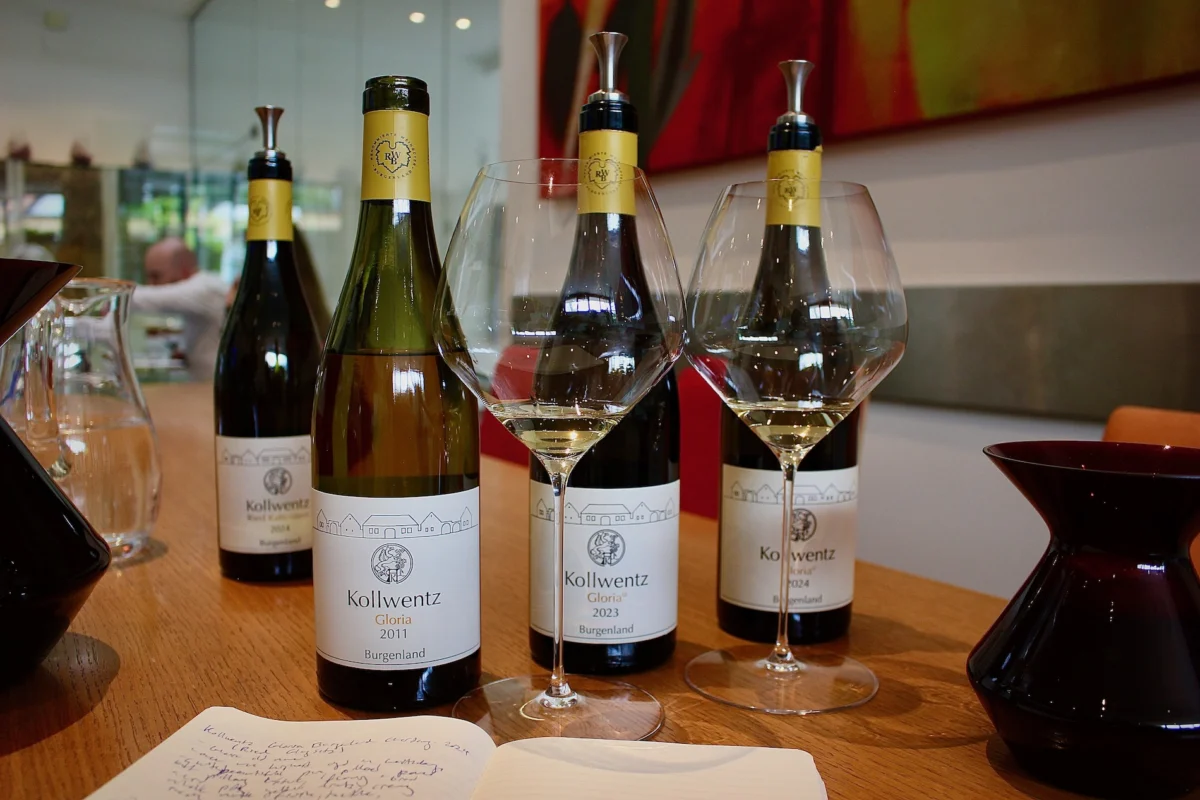
It is a common refrain in the sommelier community: the world has enough Chardonnay. Name any winegrowing region from the sun-drenched plains of California to the cool-climate pockets of Tasmania, and you will almost certainly find a producer tending to at least a few rows of the variety. Chardonnay’s adaptability—its ability to act as a blank canvas for terroir and winemaking technique—has made it the undisputed heavyweight champion of the white-wine world.
While official global viticultural records have historically placed the Spanish variety Airén at the top of the planting charts, the tide has turned. As Airén’s footprint shrinks in the face of modern consumption habits, Chardonnay has steadily climbed the ladder. It is now widely accepted by industry analysts that Chardonnay has overtaken its Spanish rival to become the most planted white-wine grape on the planet. Yet, despite this saturation, a compelling new narrative is emerging from the heart of Europe. Two nations, traditionally pigeonholed for their own indigenous or specialized varieties, are quietly producing some of the most profound, complex, and age-worthy Chardonnays in existence: Germany and Austria.
The Case for Central European Chardonnay
To suggest that Germany and Austria should be considered among the global elite for Chardonnay may seem bold, given the historic dominance of Burgundy. However, top-tier producers in these regions are not merely "replicating" French styles; they are crafting wines that express the unique geological and climatic signatures of Central Europe.
These wines possess a taut, crystalline acidity and a profound sense of place—attributes that have allowed them to sit comfortably alongside the finest offerings from Meursault or Puligny-Montrachet. The ascent of these wines is not a story of imitation, but of evolution. While Germany’s foray into the variety is a modern phenomenon, Austria’s relationship with the grape is steeped in centuries of tradition, creating a fascinating dichotomy that showcases the immense potential of the grape when pushed to the margins of its viticultural comfort zone.
Chronology: A Modern Renaissance
The journey of Chardonnay in Central Europe is characterized by a sharp contrast in timelines.
Germany’s Late-Blooming Revolution
In Germany, Chardonnay is a relative newcomer. It was not until 1991 that the Bundessortenamt (Federal Plant Variety Office) officially authorized the variety for cultivation. Before this, any trial plantings were relegated to the shadows of experimental plots. However, visionary winemakers saw the potential early.
- 1988: Weingut Ökonomierat Rebholz in the Pfalz region planted experimental plots of Chardonnay, challenging the prevailing notion that the region should stick strictly to Riesling and Pinot varieties.
- 1989-1990: Weingut Keller in Rheinhessen, under the guidance of Klaus Keller, began early trials, recognizing that the limestone-rich soils of the region might mimic the complexity of the Côte d’Or.
- 1991: Official legal status is granted, opening the floodgates for serious investment and vineyard conversion.
- 2000s-Present: A rapid maturation period occurs, where German producers—having already mastered the art of Spätburgunder (Pinot Noir)—applied the same rigorous viticultural standards to Chardonnay.
Austria’s Centuries-Old Connection
Conversely, Austria’s history with Chardonnay is far more entrenched. Historically known locally as Morillon (particularly in Styria), the grape has been grown in the region for centuries. Unlike Germany, which had to fight for the right to plant the vine, Austria’s challenge was one of identity. It took decades of rigorous quality control to move the grape from a "bulk blending" component to the high-status varietal bottling seen today. By the late 20th century, the Austrian wine industry underwent a radical quality shift, and Chardonnay was at the forefront of this refinement.
Supporting Data: Why the Climate Works
The success of these regions is not coincidental; it is a matter of geography. Chardonnay is a grape that thrives when it can balance ripeness with high acidity. In warmer climates, it can lose its verve, becoming flabby or overly alcoholic. In the cool-climate vineyards of Germany and Austria, the growing season is longer and the diurnal temperature shifts are more pronounced.
Comparative Climatic Factors
| Region | Latitude | Dominant Soil | Typical Acidity Profile |
|---|---|---|---|
| Burgundy | 47° N | Limestone/Marl | Moderate/High |
| Pfalz, DE | 49° N | Sandstone/Loess | High |
| Styria, AT | 47° N | Opoq/Volcanic | Sharp/Electric |
These conditions allow for a longer "hang time," which permits the grapes to develop complex phenolic maturity without sacrificing the bracing, structural acidity that makes a great Chardonnay age-worthy. Data from recent vintages indicates that German Chardonnays often maintain a pH level lower than their French counterparts, providing a "vertical" structure that many collectors find highly desirable.
Official Responses and Producer Perspectives
The industry has taken notice, though the producers themselves remain humble about their place in the hierarchy. Felix Keller, a representative of the next generation at the legendary Weingut Keller in Rheinhessen, reflects on his grandfather’s foresight. "My grandfather planted Chardonnay with the belief that the limestone soils of our vineyards were not just suitable, but ideal," he notes. "We weren’t looking to make ‘German Burgundy’; we were looking to capture the energy of our specific plots. The grape is just the medium."
This sentiment is echoed in Austria, particularly in the Steiermark (Styria) region. Winemakers like Willi Sattler and Armin Tement have argued that their version of the grape—often characterized by volcanic minerality—offers a counterpoint to the buttery, oak-heavy styles of the New World. They view the official recognition of their Chardonnay as a validation of a century-long search for the perfect expression of their unique soil.
Implications for the Future of Wine
The rise of German and Austrian Chardonnay has significant implications for the global market.
1. The Diversification of "Premium"
The traditional monopoly held by France is being challenged by a "Quality-First" movement in Central Europe. Collectors are increasingly diversifying their cellars, seeking out the "nerdy" or "alternative" Chardonnays that offer value and a distinct sensory profile.
2. Adaptation to Climate Change
As global temperatures rise, the regions that were once considered "too cold" for certain varieties are becoming the new sweet spots. Germany and Austria are perfectly positioned to benefit from this shift, as their vineyards are currently sitting in a climatic "Goldilocks zone" for cool-climate viticulture.
3. Economic Shifts in Viticulture
For regions like the Pfalz or Rheinhessen, the success of Chardonnay provides an economic hedge against the volatility of Riesling markets. By producing a world-class white that is recognized globally by name, these regions are cementing their status as high-end wine destinations rather than niche regional producers.
Conclusion: A Seat at the Table
To say that the world has enough Chardonnay is to ignore the infinite variations that winemaking, soil, and climate can produce. Germany and Austria have moved past the experimental phase and are now delivering wines that possess profound tension, depth, and character.
The story of these two nations is one of patience and technical mastery. Whether it is the limestone-driven precision of the Rheinhessen or the volcanic intensity of Styria, these regions are not just participants in the Chardonnay conversation—they are defining its future. As these wines continue to find their way onto the tables of discerning collectors and top-tier restaurants, the label "Central European Chardonnay" will likely shift from a curiosity to a hallmark of excellence. The global map of fine wine has grown larger, and in doing so, it has become infinitely more interesting.

 Raul Delapena Setiawan