

 Nana Wu

 Dwi Wanna

 Suro Senen

 Evan Lee Salim

 Raul Delapena Setiawan
In the hyper-competitive landscape of Scandinavian fine dining, few names command as much respect as Lasse Peder Nielsen. As the partner and general manager of Copenhagen’s two-Michelin-starred Koan, Nielsen sits at the intersection of Nordic culinary tradition and contemporary Asian refinement. With over 15 years of rigorous experience in the industry, he has become a gatekeeper of taste, shaping the beverage programs for some of the region’s most prestigious establishments, including 108, Barr, and Hotel Saxkjøbing.
This profile explores the philosophy, the palate, and the professional journey of a man who views hospitality not merely as a service, but as a disciplined art form.
The Genesis of a Palate: A Chronological Journey
Nielsen’s ascent to the upper echelons of the hospitality world began not in a classroom, but on the floor of a restaurant in Copenhagen. At just 18 years old, his nascent interest in the mechanics of service caught the eye of mentor and owner Henrik Laszlo.
The Catalyst: The 1996 Vintage
The defining moment of Nielsen’s career occurred during a quiet moment following a grueling service. Recognizing a curiosity in his young protégé that transcended the typical boundaries of junior staff, Laszlo opened two bottles that would define the trajectory of Nielsen’s life: a 1996 Dom Pérignon and a 1996 Salon.
"That was the first time I tasted both Champagnes," Nielsen recalls. "It was an exceptional vintage that really got me hooked." That single evening of discovery served as a masterclass in terroir and aging potential, cementing a lifelong devotion to sparkling wine. Nielsen’s commitment was immediate; he remained at that establishment for five years, eventually ascending to the role of manager and taking total control of the wine program.
From 108 to Koan
Following his foundational years, Nielsen’s career trajectory saw him honing his craft at some of Scandinavia’s most demanding tables. His tenure at 108—the sister restaurant to the world-renowned Noma—and his work with the Barr project allowed him to bridge the gap between casual, high-volume service and the exacting standards of fine dining. At Koan today, he oversees a synthesis of Nordic ingredients and Asian techniques, ensuring the beverage program reflects the complex, umami-forward profile of the kitchen.
The Sommelier’s Philosophy: Supporting Data and Preferences
To understand the mind of Lasse Peder Nielsen is to understand a professional who favors precision over trend-chasing. His preferences are anchored in quality and provenance, often eschewing the "natural wine" movement when it sacrifices clarity for ideology.
Everyday Selections and "Pet Hates"
When asked about his go-to daily drinkers, Nielsen points toward the complexity of German Rieslings, citing Peter Jakob Kühn as a benchmark producer. His disdain for "faulty" wines masked under the label of "natural" is a sentiment shared by many in the professional sommelier community.
"I have a pet hate for wines that are faulty but are justified by them being ‘natural,’" he notes. This highlights a professional commitment to viticultural integrity over the current industry trend of championing imperfection for the sake of marketing.
The "Death Row" Pairing
When pressed on his ultimate culinary fantasy, Nielsen opts for a classic, high-tension pairing: a vintage Château d’Yquem paired with a rich terrine de foie gras, served with apricot jam and toasted brioche. It is a selection that speaks to his appreciation for the marriage of acidity, sugar, and fat—a cornerstone of his approach to pairing at Koan.
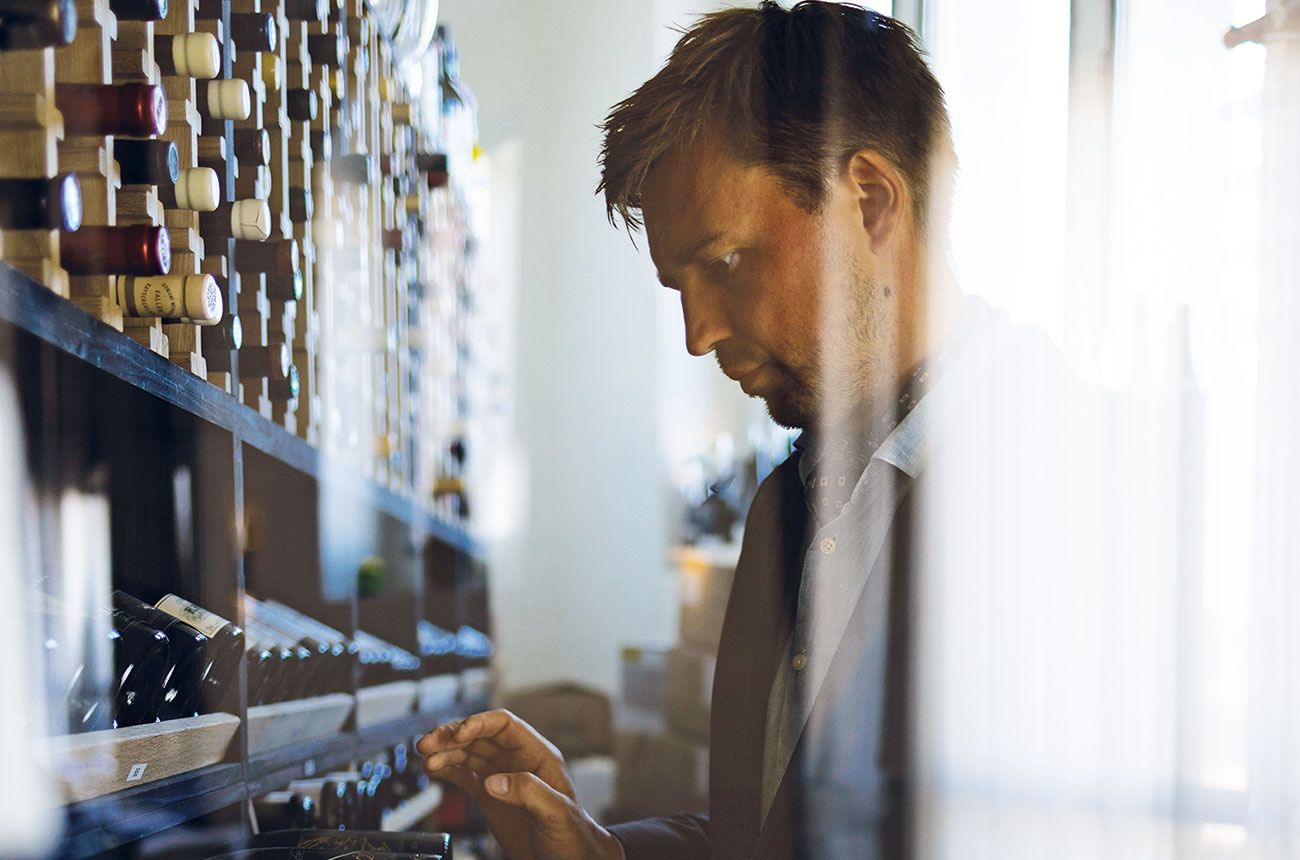
Operational Excellence: The View from the Floor
Managing a two-Michelin-starred operation requires a balance of extreme professional rigor and the humility to learn from failure. Nielsen’s most embarrassing moment—dropping a full tray of welcome drinks down a guest’s neck during his first week in the industry—serves as a reminder of the volatility inherent in hospitality.
The "Krug" Standard
Nielsen’s pride in the Koan wine list is evident, particularly his decision to offer Krug Clos du Mesnil by the glass. This is not merely a luxury offering; it is a statement of intent. By lowering the barrier to entry for one of the world’s most iconic single-vineyard Champagnes, he democratizes the experience of "perfect" wine, inviting guests into a conversation about precision and heritage.
The "Njord" Surprise
Perhaps the most intriguing aspect of his current list is the focus on domestic Danish production. He points to Sune Albertsen of Njord as a "true magician" who has mastered the production of Pinot Noir Précoce in the Danish climate.
"I have been triggered a few times in blind tastings myself," Nielsen admits. By featuring Njord on his list, he challenges his guests’ preconceived notions about viticulture, proving that world-class wine can originate from regions previously dismissed by traditionalists.
Implications for the Future of Nordic Hospitality
As the industry grapples with changing consumer habits, Nielsen’s approach provides a blueprint for the next generation of hospitality leaders. His focus on "value for money" regions—specifically the Vaud and Valais regions in Switzerland and Jurançon in France—suggests a pivot toward discovery over prestige labels.
The Rise of Emerging Producers
Nielsen highlights producers like Jordi Renard (Maison Vulpin) and Lucas Mandonia as the future of the industry. These selections demonstrate a sommelier who is actively scouting talent rather than relying on the "safe" portfolios of large distributors. This curation style is vital for a restaurant of Koan’s caliber, where the beverage program must be as innovative as the food.
The Enduring Love of Champagne
Despite his forays into new regions, Champagne remains his North Star. His preference for the atmosphere of Reims and institutions like Brasserie Le Jardin underscores a deep respect for the history of the craft. For Nielsen, Champagne is not just a celebratory drink; it is a constant, a versatile companion to any time of day, and the ultimate benchmark of his profession.
Conclusion: A Discipline of Taste
Lasse Peder Nielsen represents a new breed of hospitality leader—one who respects the history of the cellar while remaining aggressively curious about the future of global viticulture. Whether he is pairing Danish fjord shrimp with local Pinot Noir or discussing the structural nuances of an Alsatian Gewürztraminer (which, he maintains, will never grace his glass), his actions are guided by a singular, unwavering standard of quality.
As he continues to define the beverage experience at Koan, his influence will likely ripple outward. In a world where the noise of trends often drowns out the quiet signal of quality, Nielsen serves as an essential conductor. His journey, from a curious 18-year-old in a Copenhagen restaurant to a partner at one of the world’s most acclaimed dining destinations, is a testament to the power of passion, mentorship, and a relentless pursuit of the perfect pour.
For those looking to understand where the future of fine wine service is headed, looking toward Copenhagen—and specifically, looking at what Lasse Peder Nielsen is pouring—is the only place to start.

 Basiran

