

 Azzam Bilal Chamdy
 Neng Nana
 Nana Muazin
 Dwi Wanna
 Raul Delapena Setiawan
 Pevita Pearce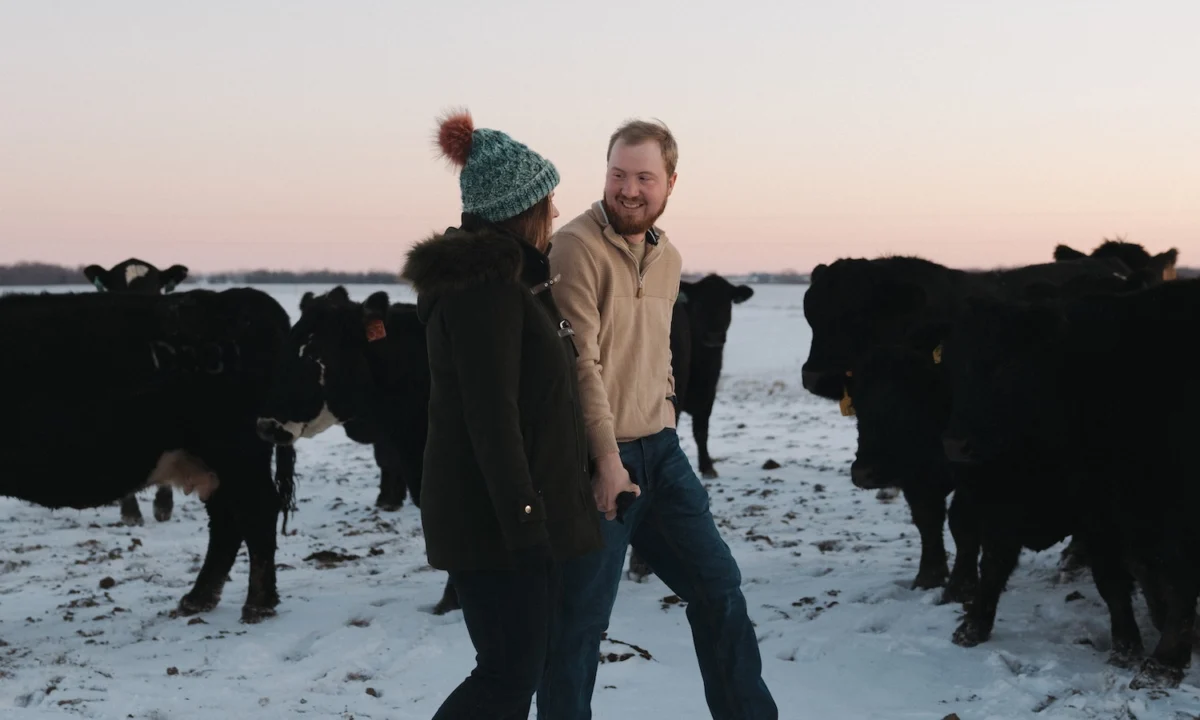
In the rolling, fertile landscapes of southeast Iowa, a quiet agricultural revolution is taking root. For Amos Graber, a 25-year-old farmer and the seventh generation to steward his family’s land, the future of food production is not found in the latest chemical inputs or industrial-scale consolidation. Instead, it is buried deep within the soil.
Graber’s philosophy is rooted in a simple, cyclical truth: "I firmly believe that if I have healthy soil, then I can raise healthier crops, which in turn will mean healthier livestock. And then, really the end goal, all this is healthier food for the consumer."
As the agricultural industry grapples with climate change, topsoil erosion, and economic volatility, Graber Farms represents a growing counter-movement. By rejecting the "get big or get out" mentality that has defined the American Midwest for decades, Graber is proving that a diversified, regenerative approach may be the key to the survival of the independent family farm.
The Foundation: A Holistic Approach to Land Stewardship
The core of Graber’s strategy is the abandonment of the conventional, extractive model of farming. Traditional agriculture often views the soil as a sterile medium for holding plant roots in place, relying on synthetic fertilizers to provide necessary nutrients. Graber, by contrast, views the soil as a living, breathing biological engine.
Regenerative Practices at Work
At Graber Farms, the management of the land is an exercise in long-term investment. Graber is currently implementing several key practices to improve the vitality of his acreage:
- Worm Compost Extract: Rather than relying solely on synthetic chemicals, Graber applies worm compost extract to his corn and soybean fields. This biological amendment is designed to boost the nutrient absorption of the crops, fostering a healthier symbiotic relationship between the roots and the surrounding soil microbes.
- Diverse Crop Rotation: Eschewing the standard corn-soybean duopoly, Graber grows a diverse mix of non-GMO crops, including oats, alfalfa, and clover hay. This diversity breaks pest cycles and replenishes nitrogen levels naturally.
- Livestock Integration: The cattle are not merely a product; they are an integral part of the ecosystem. By grazing on pasture and cover crops, the cattle provide natural fertilization, closing the nutrient loop on the farm.
"We’re not here to just be sustainable in the soil," Graber explains. "We’re trying to make it better." This distinction is critical; while "sustainability" implies maintaining the status quo, "regeneration" implies an active effort to restore the land to a higher state of productivity and resilience.
Chronology: From Tradition to Transformation
The Graber family has been farming this land for seven generations, witnessing the evolution of American agriculture from horse-drawn plows to the era of precision satellite-guided tractors. However, the last decade has seen a deliberate shift in the farm’s trajectory.
The Turning Point
Historically, the farm followed the conventional path—a reliance on monoculture and standard chemical programs. As Amos Graber took on a larger leadership role alongside his father, he began to question the economic and environmental efficacy of these methods.
"Some farmers, they say, ‘Well, this is what my neighbor does, and that’s just the only thing we can do around here,’" Graber notes. Challenging this social pressure, he began experimenting with alternative methods, prioritizing biological health over the convenience of standard industry practices.
The Life-Cycle Difference
A major change in the farm’s operation was the decision to maintain the cattle herd from birth to market. In the conventional Iowa model, cattle are often fragmented across a complex supply chain: cow-calf ranches, backgrounders, feedlots, and finally, packing plants.
Graber Farms has opted to keep their cattle on-site for their entire lives. This not only reduces the stress of transport and diet changes on the animals but also grants Graber complete oversight of the herd’s welfare. By integrating these practices with specialty meat producers like Niman Ranch, he has secured a market that rewards high-welfare, sustainable production rather than just bulk commodity weight.
Supporting Data: The Economics of Diversification
The economic reality for small-to-mid-sized farms is harsh. According to USDA data, the trend of agricultural consolidation has seen the number of farms drop significantly over the last half-century, while the average farm size has ballooned. For independent farmers, the margins on commodity crops like corn and soybeans are often razor-thin, leaving them vulnerable to global market fluctuations.
Moving Beyond the Single Commodity
Graber argues that for young farmers, dependence on a single commodity is a recipe for failure. His business model relies on "stacking enterprises":
- Value-Added Production: By raising high-quality livestock, he captures more of the food dollar than a farmer who only sells raw grain.
- Specialty Markets: Partnerships with networks like Niman Ranch, which represents over 600 independent farmers, provide a buffer against the volatility of the general commodity market. These organizations offer premiums for farmers who adhere to rigorous, humane, and sustainable standards.
- Input Reduction: By feeding cattle a specialized mineral mix—including yeast and essential oils—to boost immunity, Graber avoids the costs and potential long-term complications of synthetic antibiotic use.
The "slow grind" of these practices, as Graber calls it, is an investment in risk mitigation. While conventional farmers might see higher short-term yields, they often face higher costs for inputs and greater susceptibility to weather-related crop failures. A healthy, carbon-rich soil is more drought-resistant and better able to hold water, providing a natural insurance policy against the increasingly erratic climate of the Midwest.
Implications for the Future of Agriculture
The implications of Graber’s work extend far beyond his own fence lines. He represents a cohort of young producers who are increasingly skeptical of the "industrial-first" approach to farming.
Redefining the Farmer’s Role
Graber is an advocate for a new paradigm where the farmer acts as a land manager, an ecologist, and a business strategist simultaneously. He argues that the future of farming depends on rebuilding the broken connections between the soil, the crops, the livestock, and, crucially, the consumer.
"To see people’s minds click, even if it’s just on little things… then people can hopefully see where that health of the livestock and health of the crops and health of the soil comes together," says Graber.
The Limits of Policy
One of the most striking aspects of Graber’s philosophy is his pragmatism regarding government intervention. While policy discussions in Washington often focus on subsidies and trade tariffs, Graber views the path forward as a local, bottom-up endeavor.
"At the end of the day, government’s not going to save anybody," he asserts. "So, it’s up to us as farmers, and the local people, to work together and figure it out."
This sentiment resonates with a growing movement of "agrarian localism," which suggests that true resilience is built through regional food systems, direct-to-consumer relationships, and community-supported farming networks. By creating markets that value environmental health, consumers can play a direct role in incentivizing the practices Graber is championing.
Conclusion: A Vision of Stewardship
Amos Graber’s farm is a laboratory for a more sustainable American agricultural future. It is a place where traditional knowledge meets modern ecological science, and where the goal is not just the extraction of profit, but the building of a legacy.
As he continues to experiment with cover crops, natural supplements, and regenerative soil techniques, Graber remains focused on the bigger picture. He recognizes that the shift will be gradual, yet he is encouraged by the increasing willingness of his peers to question the status quo.
For the seventh-generation farmer, the work is far from finished. It is a long-term project—one that requires patience, a willingness to fail, and an unwavering commitment to the land. In the end, Graber’s story serves as a reminder that the most sophisticated technology in agriculture might just be the health of the soil itself, and the most important asset is the farmer’s resolve to nurture it for the generations to come.



 Siti Muinah
