
 Dwi Wanna
 Nana Wu
 Muslim
 Reynand Wu
 Ammar Sabilarrohman
 Raul Delapena Setiawan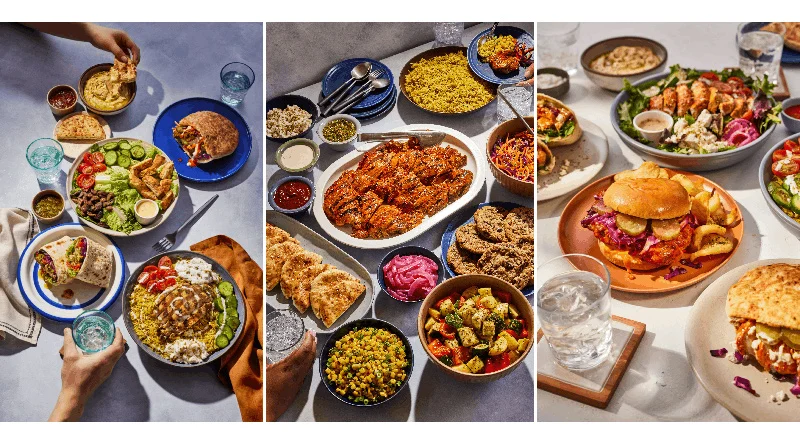
LONDON – In a significant move for the international fast-casual dining sector, the prominent U.S.-based brand Roti Modern Mediterranean has officially announced its expansion into the United Kingdom. Marking its first foray outside of the North American market, the Chicago-founded company has launched three strategic delivery-only hubs across London. This expansion is underpinned by a high-profile partnership with Uber Eats and the inauguration of "Global Roti Day," a brand-led initiative designed to anchor the company’s presence in the competitive British culinary landscape.
The arrival of Roti in the UK signals a growing trend of American "better-for-you" brands seeking growth in European metropolitan hubs, where the demand for health-conscious, customizable, and high-quality "fast-casual" dining continues to outpace traditional fast-food segments.
Main Facts: The Strategic Architecture of the London Launch
Roti Modern Mediterranean has entered the UK market with a focus on operational agility and digital-first accessibility. Rather than traditional brick-and-mortar storefronts, the brand has opted for a "dark kitchen" or "cloud kitchen" model for its initial phase.
Strategic Locations and Delivery Ecosystem
The brand has established its first three kitchens in key London logistical and residential hubs:
- Kentish Town: Serving the residential density of North London and the affluent demographics of Hampstead and Camden.
- Shoreditch: Targeting the "Silicon Roundabout" tech crowd and the vibrant, trend-setting workforce of East London.
- Nine Elms: Tapping into the massive urban regeneration area of South West London, characterized by high-rise luxury apartments and a young professional demographic.
By launching exclusively on Uber Eats, Roti leverages an established logistics network, allowing the brand to focus on food quality and brand awareness without the immediate overhead of high-street real estate. This "asset-light" entry strategy allows for rapid scaling and data collection on local consumer preferences before potential physical expansions.
The Product Offering: Modern Mediterranean Customization
The UK menu mirrors the brand’s successful U.S. blueprint, centered on the "Modern Mediterranean" philosophy. This includes:
- Curated Chef Bowls: Pre-designed combinations that balance proteins, grains, and fresh vegetables.
- Customizable Bowls: Allowing diners to build their meals from a base of greens or grains, adding proteins like spicy lamb, harissa chicken, or falafel, and topping them with various Mediterranean-inspired sides and sauces.
- Health-Forward Focus: Emphasizing transparency in ingredients, dietary inclusivity (gluten-free, vegan, and keto-friendly options), and bold, spice-forward flavour profiles.
Chronology: From Chicago Roots to Global Ambitions
The journey of Roti Modern Mediterranean to the streets of London is a story of steady evolution and a post-pandemic pivot toward global scalability.
2007–2019: Foundation and Domestic Growth
Roti was founded in Chicago in 2007, entering a market that was just beginning to embrace the fast-casual revolution led by brands like Chipotle. However, Roti carved out a niche by focusing specifically on the "Mediterranean Diet"—consistently ranked by health experts as one of the world’s healthiest eating patterns. Over the next decade, the brand expanded across major U.S. markets, including Washington D.C., New York City, and Minneapolis.
2020–2022: The "Roti 2.0" Transformation
Like much of the hospitality industry, Roti faced significant challenges during the COVID-19 pandemic. Under the leadership of CEO Justin Seamonds and a refined executive team, the brand underwent a visual and culinary "refresh." This era, often referred to internally as "Roti 2.0," saw the introduction of more vibrant branding, an updated menu with more "adventurous" Mediterranean flavours, and a heavy investment in digital ordering infrastructure.
2023–Early 2024: International Feasibility and UK Selection
Recognizing that London’s food scene shares many characteristics with New York and Chicago—specifically a high demand for lunch-time convenience paired with health-consciousness—Roti’s board approved the UK expansion. The choice of London as the first international site was calculated, given the city’s sophisticated delivery infrastructure and its status as a global trendsetter in the food and beverage industry.
May 2024: The Official UK Launch and Global Roti Day
On May 19, 2024, the brand officially went live in its three London locations. To galvanize interest, the brand synchronized this launch with the first-ever "Global Roti Day." The promotional window, extending through May 31, was designed to lower the barrier to entry for new customers, offering Buy-One-Get-One (BOGO) deals and "bounce-back" incentives to encourage repeat business.
Supporting Data: The Economic and Nutritional Context
The entry of Roti into the UK is supported by several macro-economic and consumer behavior trends that suggest a fertile ground for Mediterranean fast-casual dining.
The Rise of the UK Delivery Market
According to industry reports from Lumina Intelligence, the UK delivery market has remained resilient despite the cost-of-living crisis. Consumers are increasingly opting for "affordable luxuries," where they may skip expensive sit-down dinners but are willing to pay a premium for high-quality, healthy delivery meals. By partnering exclusively with Uber Eats, Roti taps into a platform that holds a significant share of the UK’s £13 billion delivery market.
The "Better-for-You" Consumer Segment
Market research indicates that 62% of UK consumers are actively trying to lead a healthier lifestyle, with a specific focus on increasing vegetable intake and reducing processed sugars. The Mediterranean diet, which Roti champions, aligns perfectly with these goals. In the U.S., Roti’s "Better-for-You" positioning helped it recover faster than traditional fast-food outlets post-pandemic, a trend they aim to replicate in London.
Competitive Landscape Analysis
London is already home to several successful healthy-casual brands, such as Leon, Itsu, and more recently, Farmer J and Atis. However, Roti’s specific "Modern Mediterranean" niche—combining Middle Eastern, North African, and Southern European flavours with a high degree of customization—provides a unique selling proposition (USP) that distinguishes it from the more "British-farmhouse" or "Asian-fusion" styles of its competitors.
Official Responses: Insights from Leadership
The leadership at Roti has expressed high confidence in the brand’s ability to translate its American success into the British market.
Matthew Walls, Chief Strategy Officer at Roti, emphasized the fundamental principles that guide the brand’s expansion:
"What makes Roti work is simple: bold flavours, real hospitality, and consistency. We’ve seen strong momentum in the US, and London is an exciting next step for the brand as we introduce our modern Mediterranean offering to a new audience. Our goal is to prove that ‘fast’ food doesn’t have to be ‘junk’ food. By focusing on the quality of our spices, the freshness of our produce, and the reliability of our delivery, we believe we can become a staple in the Londoner’s weekly diet."
Somia Farid Silber, President of Roti, highlighted the cultural fit between the brand and the London lifestyle:
"Roti is resonating strongly with guests who want flavourful, better-for-you food that fits into their lifestyle. Launching in the UK allows us to bring that experience to one of the world’s most dynamic food markets. We aren’t just selling bowls; we are providing a solution for the busy professional or the health-conscious family who refuses to compromise on taste. London is a melting pot of cultures, much like the Mediterranean itself, making it the perfect home for our first international expansion."
Implications: The Future of Fast Casual in a Post-Digital Era
The arrival of Roti Modern Mediterranean in London carries several long-term implications for the UK’s food and beverage industry and the brand’s global trajectory.
1. The Validation of the "Digital-First" Entry Model
Roti’s decision to bypass the traditional "flagship store" model in favour of delivery-only kitchens suggests a shift in how international brands test new markets. This approach significantly reduces the capital expenditure (CapEx) required for international expansion. If successful, it could provide a blueprint for other U.S. mid-sized chains to enter the UK market without the massive risk associated with high-street leases.
2. Diversification of the Mediterranean Category
While "Mediterranean" food has always been popular in the UK (via independent kebab shops or Greek tavernas), Roti represents the "Americanized" version of this cuisine—highly standardized, branded, and optimized for nutrition tracking. This could lead to a "Chipotle effect" in the Mediterranean space, where a new category of "premium-casual Mediterranean" becomes a dominant force in the lunch-trade market.
3. Global Brand Synchronization
The creation of "Global Roti Day" indicates that the company is thinking as a global entity rather than a collection of regional branches. By synchronizing promotions across the U.S. and the UK, Roti is building a unified brand identity. This suggests that further international expansion—potentially into markets like Canada, Western Europe, or the Middle East—may be on the horizon.
4. Pressure on Local Competitors
The entry of a well-capitalized U.S. brand with a sophisticated digital marketing engine will likely force local UK players to innovate. We may see an increase in loyalty program sophistication and menu experimentation from UK-based healthy-casual chains as they defend their market share against the new transatlantic challenger.
Conclusion
Roti Modern Mediterranean’s London debut is more than just a new delivery option on an app; it is a calculated bet on the convergence of health, convenience, and globalized taste. As the promotion for "Global Roti Day" concludes at the end of May, the industry will be watching closely to see if Londoners’ appetite for modern Mediterranean flavours is enough to sustain Roti’s ambitious growth plans in the United Kingdom and beyond. For now, the residents of Shoreditch, Kentish Town, and Nine Elms have a new, vibrant player in their daily dining rotation, promising a taste of the Mediterranean by way of Chicago.

 Suro Senen
 Pevita Pearce