
 Dwi Wanna
 Nana Wu
 Muslim
 Reynand Wu
 Ammar Sabilarrohman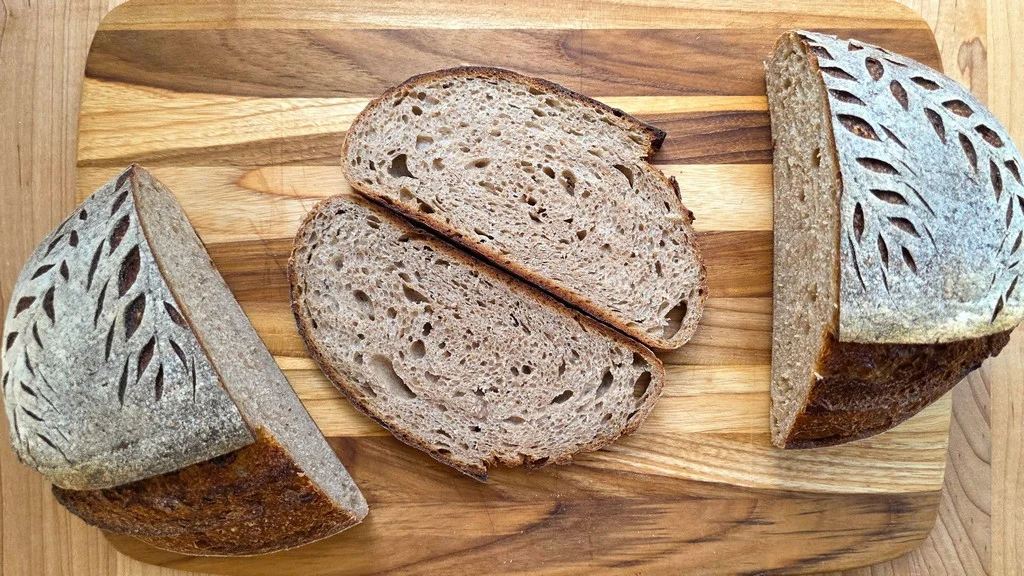
In an era defined by convenience, the modern grocery store aisle has become a landscape of illusions. We are surrounded by thousands of products that, while aesthetically pleasing and expertly marketed, bear little resemblance to the nourishment our ancestors relied upon. At the heart of this shift is the proliferation of Ultra-Processed Foods (UPF)—items engineered in laboratories rather than grown in fields.
While there is no "magic button" to guarantee a long, healthy life, the mounting evidence suggests that the most powerful tool for longevity sits right in our kitchens: the ability to return to the basics of nutrition, starting with the bread we eat.
The Industrialization of Sustenance: A Chronology of Decline
To understand how our dietary landscape shifted from whole, nutrient-dense ingredients to shelf-stable "starch blobs," one must look at the evolution of food technology over the last century.
The Cereal Precedent (1900s–1950s)
The transition began in earnest with the industrialization of breakfast cereals. Companies discovered a lucrative formula: take a whole grain, strip it of its nutritional complexity, extrude it into a recognizable shape, and fortify it with synthetic vitamins to mask the loss of natural nutrients. By printing "whole grain" on the box, corporations effectively rebranded a hollowed-out product as a health food.
The Proliferation Phase (1960s–1990s)
The success of the cereal template created a blueprint for the rest of the supermarket. The same industrial logic—prioritizing shelf-stability, cost-reduction, and consumer addiction—was applied to yogurt, snacks, and eventually, the staple of human civilization: bread. Bread, which historically consisted of just four ingredients (flour, water, salt, and yeast or sourdough culture), was reformulated with emulsifiers, preservatives, and conditioners designed to ensure that a loaf could sit on a shelf for months without going stale.
The Ultra-Processed Era (2000s–Present)
We are now living in the aftermath of this "cereal precedent." Data from the National Institutes of Health (NIH) suggests that nearly 60% of the average American’s caloric intake now comes from ultra-processed foods. As author Mike Lee aptly notes in his exploration of "The Enshittification of Big Food," we are not merely dealing with poor dietary choices; we are dealing with a systemic "con" where the silhouette of food is sold in place of its actual substance.
Supporting Data: The Nutritional Deficit
The distinction between "real" bread and industrial loaves is not merely a matter of taste; it is a fundamental difference in biological impact.
The Glycemic Impact
Real, artisanal bread—particularly sourdough—undergoes a slow fermentation process. This biological transformation breaks down starches and phytates, making the nutrients more bioavailable and lowering the glycemic index. In contrast, mass-produced bread is often loaded with added sugars and refined flours that cause rapid spikes in blood glucose, contributing to the epidemic of metabolic syndrome and Type 2 diabetes.
The Microbiome Connection
Recent studies published in Nature and The Lancet have linked the consumption of UPFs to a depleted gut microbiome. The stabilizers and chemical additives found in commercial bread—often used to maintain texture in the absence of real food integrity—have been shown to alter the gut lining, potentially leading to chronic inflammation.
The Cost of Convenience
The economic argument for industrial food is equally deceptive. While a loaf of mass-produced bread may cost significantly less than a home-baked loaf, the "hidden costs" to the individual—expressed in healthcare expenses, reduced vitality, and chronic illness—are staggering. When one accounts for the quality of fuel the body receives, the "cheap" option is, in reality, the most expensive.
Official Perspectives and the Shift in Public Discourse
The scientific and medical communities have begun to shift their tone regarding UPFs. Once viewed merely as "empty calories," these products are now being scrutinized for their addictive nature and their role in global morbidity.
Prominent nutritionists and researchers, such as those at the Harvard T.H. Chan School of Public Health, have emphasized that the problem is not just what is in the food, but what is missing from it. By removing the fiber, the essential oils, and the enzymes found in whole grains, Big Food has turned a vital source of energy into a metabolic stressor.
Public health advocates are increasingly calling for stricter labeling laws, yet the momentum remains with the consumer. The decision to reject the "enshittification" of our food supply is a personal, individual choice that manifests every time one decides to bypass the supermarket bread aisle in favor of the flour bin.
Implications: The Radical Act of Baking
The act of baking bread at home is, by its very nature, an act of defiance against a corporate model that treats human health as a secondary concern to quarterly revenue equations.
Reclaiming Agency
When you bake your own bread, you regain total control over your inputs. You decide the quality of the grain, the length of the fermentation, and the presence of additives (which, in a healthy kitchen, are zero). This is the literal application of the adage, "You are what you eat." By choosing to engage in the slow, tactile process of baking, you are choosing to fuel your body with substances that have evolved alongside human physiology for millennia.
The Culinary and Sensory Experience
Beyond the health benefits, there is the undeniable truth that real bread tastes vastly superior to its industrial counterparts. The Maillard reaction—the chemical process that occurs when high-quality crust browns—creates a complexity of flavor that can never be replicated by the industrial preservatives used to extend shelf life.
The Long-Term Outlook
Longevity is a game of probability. While we cannot control every variable of our health, we can significantly tilt the odds in our favor by opting for nutrient-dense, whole-food diets. If the "cereal precedent" was the beginning of a decline in public health, then the resurgence of home baking and the demand for real, artisanal products is the beginning of a necessary correction.
Conclusion: A Call to the Kitchen
We live in a time where the "enshittification" of our food supply has become normalized. We have become accustomed to products that can sit on a shelf for months without degradation—a clear sign that they contain nothing that nature intended to be eaten.
To reverse this trend, we do not need a magic pill or a complex medical intervention. We need a return to the hearth. By choosing to bake, by supporting local mills, and by demanding transparency in the food we consume, we are doing more than just making a meal; we are actively investing in our future. The shift away from Big Food is not just a culinary trend; it is a movement toward reclaiming our health, our vitality, and, quite literally, the very substance of our lives.


 Nana Muazin
 Evan Lee Salim