

 Dwi Wanna
 Nana Wu
 Muslim
 Reynand Wu
 Ammar Sabilarrohman
 Suro Senen
Listen to This Article:
For aspiring chefs and culinary entrepreneurs, the journey into the professional kitchen begins long before the first mise en place. It starts with a pivotal decision: where to hone your craft. This choice of culinary institution profoundly shapes not only the foundational skills you acquire and the advanced techniques you refine, but also the professional community you cultivate and the doors that open throughout your career.
The landscape of culinary education presents two primary pathways: the accessible, often community-focused culinary programs offered by local colleges, and the specialized, industry-integrated training provided by dedicated culinary schools. Each option presents distinct advantages, catering to different aspirations and circumstances. Should an individual opt for the familiar and potentially more affordable environment of a community college, or is the comprehensive training, extensive networks, and national recognition of a dedicated culinary school a more strategic investment for a broader career trajectory?
This article delves into the critical distinctions between these two educational models, offering a comprehensive comparison to guide prospective students in aligning their academic choice with their long-term professional ambitions. From resource allocation and instructor expertise to industry connections and career advancement opportunities, understanding these nuances is essential for charting a successful course in the dynamic world of gastronomy.
Navigating the Culinary Crossroads: Community College vs. Dedicated Institutions
The decision between a community college culinary program and a dedicated culinary school is a fundamental crossroads for any aspiring culinarian. While both can impart essential cooking skills, their underlying philosophies, resource structures, and career outcomes are designed for distinct goals. Community colleges frequently serve students seeking localized opportunities and maximum affordability, often providing a robust entry point into the culinary arts within a familiar community setting. Conversely, institutions like the Auguste Escoffier School of Culinary Arts position themselves as comprehensive training grounds, offering immersive experiences, structured externships, and a nationally or even internationally recognized credential designed to facilitate career mobility across diverse markets.
To make an informed choice, a detailed examination of key features is imperative:
Resource Allocation and Program Focus
At the heart of the distinction lies the allocation of resources. Community colleges, by their very nature, are multidisciplinary institutions. Their culinary programs often compete for funding, state-of-the-art equipment, and dedicated instructional space with dozens of other academic departments, from nursing to automotive technology. This can sometimes lead to limitations in the scope of facilities, the frequency of equipment upgrades, or the depth of specialized ingredients available for student use.
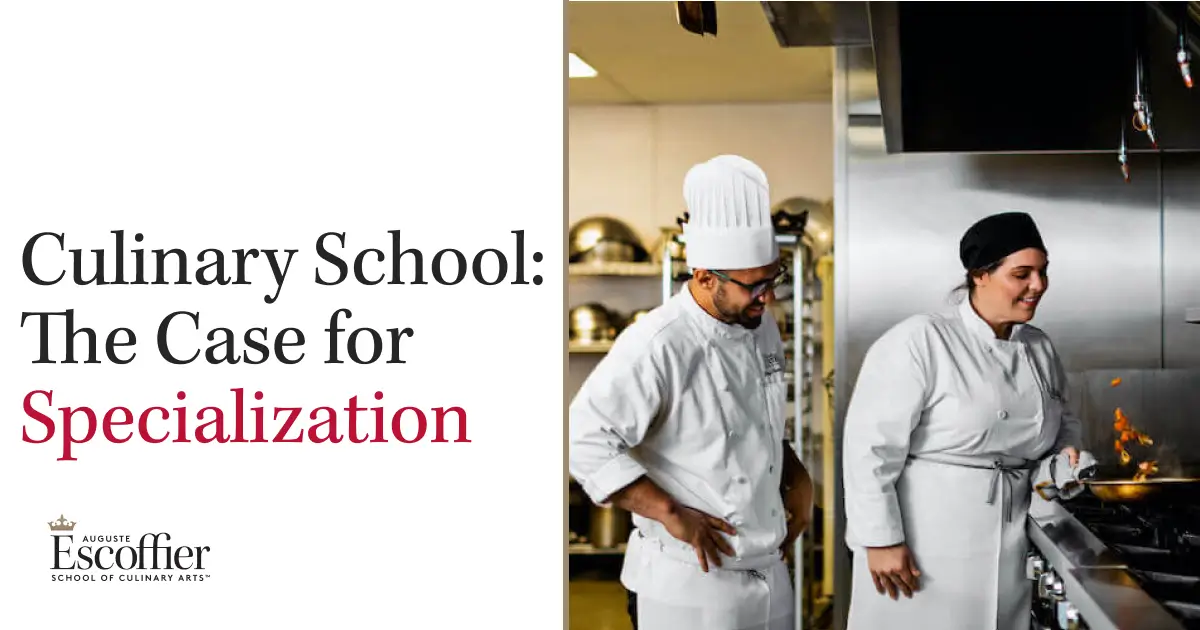
In stark contrast, a dedicated culinary school channels virtually every institutional resource—facilities, administrative staff, and curriculum—exclusively towards culinary and hospitality education. This singular focus ensures that kitchens are equipped with industry-standard tools, teaching labs are designed for specific culinary disciplines (e.g., pastry, butchery, farm-to-table), and instructional budgets prioritize high-quality ingredients and specialized guest instructors. The entire ecosystem is engineered to support the culinary student’s journey, fostering an environment where innovation and practical skill development are paramount. This concentrated approach often translates into a more immersive and cutting-edge learning experience.
The Breadth of Curriculum: General Education vs. Specialized Training
Another significant differentiator is the curriculum structure. Community college culinary programs may often necessitate broader general education coursework spanning subjects not directly related to a culinary career, such as English composition, mathematics, or social sciences. While these courses contribute to a well-rounded education, they can extend the program length and divert focus from intensive culinary training.
Dedicated culinary schools, on the other hand, typically feature fewer general education requirements, with the vast majority of coursework directly tied to culinary and pastry arts. This allows students to immerse themselves more deeply in practical cooking techniques, culinary theory, kitchen management, and business acumen pertinent to the food industry. The streamlined curriculum is designed to maximize relevant skill acquisition, enabling graduates to enter the workforce with a highly specialized and immediately applicable skillset. As one Escoffier graduate noted, this focused environment means "you can focus most of your attention on studying skills that will help you in your culinary career."
Instructor Expertise: Varied Backgrounds vs. Industry Veterans
The caliber and experience of Chef Instructors are paramount to a student’s learning outcome. In community college settings, instructors may sometimes teach across a broader spectrum of hospitality or nutrition subjects, and their individual industry experience can vary widely. While many are undoubtedly skilled and passionate educators, the depth of their high-level industry experience might not always match that of instructors in dedicated institutions.
Dedicated culinary schools actively recruit and employ Chef Instructors with extensive, often decades-long, real-world experience in acclaimed restaurants, resorts, hotels, and food service operations. Many bring 20 to 40 years of industry tenure, holding prestigious certifications, awards, and having managed significant culinary operations. Imagine learning from a three-time Gourmand Award winner like Chef Albert Schmid, whose professional career includes cooking for U.S. Surgeon Generals and Olympic gold medalists, or a Certified Master Baker like Chef Colette Christian, who has owned multiple successful food businesses. These instructors not only teach techniques but also impart invaluable insights into kitchen culture, leadership, and the realities of the culinary profession. As Chris Marhevka, an Escoffier Boulder Culinary Arts Graduate, observed, "[Chef Instructors are] more than willing to stay after class, or meet before class, and have discussions. Because they care about food. They care about students." This direct mentorship from industry veterans is a cornerstone of the dedicated culinary school experience.
Information may not reflect every student’s experience. Results and outcomes may be based on several factors, such as geographical region or previous experience.
Industry Connections and Experiential Learning
Practical experience is non-negotiable in the culinary world. While community colleges may offer internship options, these are often limited in scope or primarily focused on local establishments. The structure and breadth of these opportunities can vary significantly.

Dedicated culinary schools, recognizing the critical importance of hands-on application, integrate structured industry externships as a core component of their programs. These externships often involve partnerships with top culinary employers, ranging from Michelin-starred restaurants and luxury resorts to major cruise lines and national restaurant groups. For example, Escoffier students have the opportunity to undertake hands-on externships that supplement theoretical knowledge with real-world experience in high-caliber establishments. The school’s Career Services staff works proactively with students to match them with externship sites that align with their career aspirations, providing invaluable real-world exposure and networking opportunities before graduation. The embedded video showcasing Escoffier extern Reshmanth’s journey at Lilac Tiger in Chicago exemplifies this commitment to practical, industry-leading experience.
The Power of Networks: Alumni and Career Services
Post-graduation support and professional networks are crucial for launching and sustaining a culinary career. Community colleges typically house a general career office that supports students across a multitude of majors and industries. While helpful, their focus is broad, and their employer network may be stronger ties to local and regional businesses. Similarly, alumni networks tend to be concentrated near the campus region.
In contrast, dedicated culinary schools offer Career Services departments focused exclusively on culinary, pastry, and hospitality roles. This specialization allows staff to build deep, industry-specific relationships with a wide array of employers—from national brands to international operations. Patricia Beckwith, VP of Student and Career Services at Escoffier, notes, "As employers look to hire students, the most attractive thing about Escoffier students is their skill level and their commitment to the industry. This is not just a part-time job; they’re trying to commit to a lifestyle and to a career." This focused support extends to resume building, interview preparation, job search assistance, and long-term career guidance.
Furthermore, dedicated culinary schools boast broad alumni networks that can span multiple states and international employers. These connections are invaluable for mentorship, job referrals, and collaborative ventures. For instance, Escoffier graduate Michael Fields was hired by world-renowned barbecue expert Aaron Franklin after an introduction from one of his Chef Instructors, illustrating the tangible benefits of a dedicated school’s network. As Fields recounts, "I’ve had people ask, did you even need to go to culinary school, because you’re doing barbecue? And I say, first of all, I would never have gotten the opportunity [to work at Franklin Barbecue]. They would never have hired me straight off the street, ever. And what it took was, at Escoffier the Chef Instructors notice when you care, and you show up, and you follow the instructions. If you put in that effort, they go out of their way for you." These personal endorsements and established networks can often be the pathway to highly coveted positions.
Information may not reflect every student’s experience. Results and outcomes may be based on several factors, such as geographical region or previous experience.
Reputation and Recognition: Local Presence vs. Global Acclaim
The name recognition of a culinary institution can significantly impact a graduate’s career prospects. Community college programs are often recognized at a local or regional level, which is perfectly adequate if one intends to remain within that specific market.
However, dedicated culinary schools like Escoffier often cultivate a national and international reputation, backed by rankings and industry awards. For example, Cozymeal rated Escoffier as the #1 culinary school in the world in 2026, and Newsweek awarded it a 5-Star Award for America’s Top Online Learning Schools in 2025. This prestige is a powerful signal to potential employers, instilling confidence in the skills and professionalism a graduate is likely to bring to their kitchen. Chef Marion Lancial, Head Chef at a French gastropub in Belfast and an Escoffier online Pastry Arts graduate, encapsulated this sentiment: "It was Escoffier or nothing. Coming from France, Escoffier is obviously a classic name referred to excellence, elegance, classic… if you want to be free in your art, you have to start with the base and you have to have a strong foundation. And I think this is exactly what Escoffier is." A well-known name signals high training standards, potentially opening doors to international companies, major cruise lines, and renowned restaurants and resorts globally.

The Financial Equation: Tuition and Return on Investment
Undoubtedly, one of the most significant considerations for any student is tuition cost. Community colleges are widely known for their lower per-credit-hour tuition rates, making them an attractive and affordable entry point into higher education, including culinary arts. This cost-effectiveness is often a primary factor for students seeking to minimize financial commitment.
However, a holistic evaluation extends beyond the sticker price to encompass the overall return on investment (ROI). While dedicated culinary schools typically have higher tuition, this investment is often justified by the specialized training, robust career services, extensive industry networks, and national recognition they provide. These elements are designed to maximize a graduate’s earning potential and career mobility in the long run.
The enhanced name recognition, coupled with tailored career support and a broad alumni network, can significantly influence employment opportunities, starting salaries, and career trajectory. For students who aspire to work in high-profile establishments, pursue leadership roles, or even launch their own ventures with a strong industry foundation, the perceived higher cost of a dedicated school may translate into a more accelerated and rewarding career path.
It is also crucial to remember that financial aid, scholarships, and grants are often available for those who apply and qualify at accredited culinary schools. For instance, 85% of Austin students and 80% of Boulder students who entered postsecondary education for the first time received some financial assistance in 2023-24 at Escoffier. Exploring these options can significantly mitigate the upfront cost difference, making a dedicated culinary education more accessible than it might initially appear. Prospective students should never let perceived pricing be an insurmountable obstacle to pursuing the education that truly aligns with their ambitions.
When a Community College Culinary Program Shines
While the advantages of dedicated culinary schools are compelling for many, community college culinary programs remain an excellent choice for certain students, depending on individual goals and circumstances.
Affordability and Accessibility: For those prioritizing the lowest possible tuition and seeking to explore culinary arts without a substantial financial commitment, community colleges offer an invaluable entry point. This affordability can make it easier to test the waters, gauge genuine interest, and acquire foundational skills before committing to a more intensive and costly program.
Local Focus and Community Ties: If a student is unequivocally committed to building their culinary career within a specific local market, community college programs can be highly effective. Many community colleges foster strong relationships with nearby restaurants, hotels, and food businesses, providing valuable local connections and internship opportunities that can lead directly to employment within that region. Their alumni networks, though geographically concentrated, can be exceptionally strong within the immediate community.

General Education and Transferability: For students interested in earning general education credits alongside culinary coursework, or those who envision potentially pursuing a four-year degree in hospitality management or a related field further down the line, community colleges offer transferable credits. This pathway can be strategic for individuals who desire a broader academic foundation in addition to their culinary training.
The key determinant for choosing a community college is a clear understanding of personal priorities. If affordability, staying local, and the flexibility of transferable credits are paramount, a community college culinary program offers a practical and solid starting point for a culinary journey.
The Strategic Advantage of a Dedicated Culinary Institution
For those with ambitious culinary aspirations, a dedicated culinary school frequently presents a strategic advantage, offering a comprehensive ecosystem designed to propel careers forward. These institutions excel in providing:
- Unwavering Focus: Every resource is channeled into culinary and hospitality education, ensuring state-of-the-art facilities, specialized ingredients, and an environment optimized for skill development.
- Elite Instruction: Students learn from experienced Chef Instructors with extensive, high-level industry backgrounds, offering not just technical expertise but also invaluable mentorship and real-world insights.
- Global Recognition: A national or international reputation opens doors to diverse employment opportunities, signaling a high standard of training to employers across different markets and even continents.
- Structured Experiential Learning: Integrated externship programs with top-tier industry partners provide crucial hands-on experience and networking opportunities, bridging the gap between classroom theory and professional practice.
- Specialized Career Support: Dedicated career services teams with deep industry connections offer tailored job search assistance, resume development, and interview preparation, focused solely on culinary and hospitality roles.
- Expansive Alumni Networks: A broad network of graduates and instructors provides lifelong connections for mentorship, collaboration, and future employment prospects.
These combined elements equip graduates with not just culinary skills, but also the professional polish, industry connections, and confidence required to navigate and thrive in competitive culinary environments.
Crafting Your Culinary Future: A Personalized Decision
Ultimately, both community colleges and dedicated culinary schools serve as viable springboards into a culinary career. The "right" choice is not universal but deeply personal, contingent upon your individual goals, financial considerations, and long-term career vision.
If your ambition extends to working in diverse markets, collaborating with top chefs, opening nationally recognized establishments, or simply gaining a comprehensive, internationally recognized credential, a dedicated culinary school like Auguste Escoffier School of Culinary Arts may offer a more direct and robust pathway. Its focused resources, seasoned instructors, and expansive industry networks are designed to provide a distinct advantage in a highly competitive field.
Conversely, if affordability, local employment, and a broader academic foundation are your primary drivers, a community college program can provide an excellent foundation and a practical entry into the culinary world.

Prospective students are encouraged to conduct thorough research: compare curricula, investigate instructor credentials, explore externship and career services offerings, and assess the strength of alumni networks. Take virtual tours of campuses, speak with current students and graduates, and critically evaluate what each institution can offer in relation to your personal aspirations. Your culinary journey is unique, and the institution you choose will be a foundational chapter in your professional story.
Ready to explore your options? Consider visiting the Austin or Boulder campuses virtually, learning more about online programs, or contacting an admissions advisor to discuss which path best aligns with your culinary dreams.
FAQs
Q: What is the main difference between a dedicated culinary school and a community college culinary program?
A: Dedicated culinary schools focus all their resources – facilities, faculty, career services, and curriculum – exclusively on culinary and hospitality education. Community colleges, in contrast, distribute resources across numerous departments. This singular focus in dedicated schools often leads to stronger industry connections, more specialized instruction, and career support tailored specifically to the food and hospitality sectors, distinguishing them from broader community college offerings.
Q: Is it better to go to a dedicated culinary school or a community college?
A: The "better" choice depends entirely on your individual goals. Dedicated culinary schools typically offer greater name recognition, highly experienced Chef Instructors, and career services specialized in the culinary industry. Community colleges, however, often have lower tuition and strong local connections. For some students, a community college may suffice, especially if staying local is a priority, while those seeking broader opportunities and a nationally recognized credential may benefit more from a dedicated culinary institution.
Q: Does going to a respected culinary school make a difference in your career?
A: Yes, it can significantly impact your career. An accredited culinary school like Escoffier provides a learning environment solely dedicated to culinary education, seasoned Chef Instructors, and specialized career services. Employers familiar with a school’s reputation often have greater confidence in a graduate’s skills and professionalism. A well-known culinary school can also open doors to exclusive externships and job opportunities with high-profile employers – connections that might be harder to access through programs with limited name recognition beyond their immediate region.
Q: What should I look for when choosing a culinary school?
A: Key factors to consider include accreditation, the experience and qualifications of Chef Instructors, the quality and structure of externship opportunities, the level of career services support, and the school’s overall reputation within the culinary industry, particularly in your target market. Evaluating alumni networks and post-graduation support is also crucial, as these connections can play a vital role in securing your first job and advancing throughout your career.
Q: How do culinary schools help with job placement after graduation?
A: Culinary schools often provide comprehensive career services to assist students and graduates with job searches, resume writing, interview preparation, and networking. At institutions like Escoffier, career services staff specialize exclusively in culinary and hospitality roles. This allows them to cultivate deep employer networks, potentially connecting graduates with opportunities they might not discover independently, and providing targeted support that general career offices cannot match.

Q: Is the higher tuition of a dedicated culinary school worth it?
A: While community college tuition is generally lower, the "worth" of culinary school extends beyond the upfront cost. The name recognition, instructor credentials, extensive externship partnerships, and specialized career services offered by dedicated culinary schools can profoundly influence long-term employment outcomes, earning potential, and career trajectory. Financial aid, scholarships, and grants are often available at accredited culinary schools, which can make the cost difference less significant than it initially appears, ultimately making the investment worthwhile for many aspiring professionals.


 Iffa Jayyana
 Ali Ikhwan