Azzam Bilal Chamdy
 Neng Nana
 Nana Muazin
 Dwi Wanna
 Raul Delapena Setiawan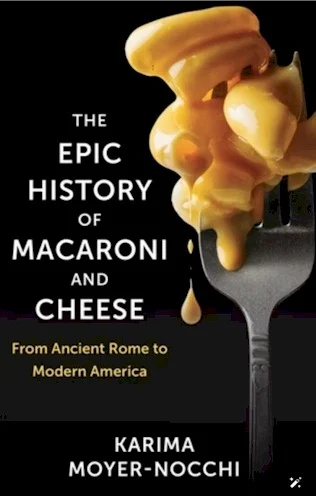
Date: April 25, 2026
Subject: A Deep Dive into the Culinary Evolution of an Iconic Dish
Keynote Speaker: Karima Moyer-Nocchi, PhD
At first glance, a bowl of macaroni and cheese is the quintessential comfort food—a simple, nostalgic marriage of pasta and molten dairy. Yet, for culinary historian Karima Moyer-Nocchi, this dish serves as a profound prism through which to view the complexities of human civilization. On Saturday, April 25, 2026, the Culinary Historians will host a landmark virtual presentation featuring Moyer-Nocchi, who will deconstruct the "tidy origin stories" that have long obscured the true, sprawling history of this global staple.
This event, held in a rare joint session with the Culinary History Enthusiasts of Wisconsin (CHEW), promises to challenge the common perception of macaroni and cheese as a purely American invention, revealing instead a narrative arc that spans empires, centuries, and systemic global change.
The Main Facts: A Journey from Ancient Rome to the Modern Pantry
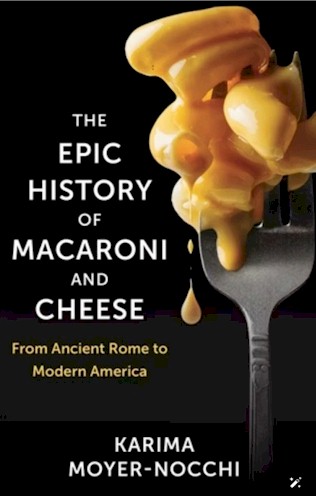
The upcoming presentation focuses on Moyer-Nocchi’s latest monograph, The Epic History of Macaroni and Cheese: From Ancient Rome to Modern America. The book is not merely a collection of recipes; it is a scholarly excavation of the socio-economic forces that allowed a basic combination of grain and cheese to become a worldwide phenomenon.
Moyer-Nocchi argues that to understand macaroni and cheese is to understand the history of foodways under the pressures of colonization, labor migration, and the industrialization of the kitchen. While many modern consumers associate the dish with box-mix convenience or Southern American traditions, its roots extend far deeper, reaching back to the early Roman experiments with boiled dough and local curd.
The lecture will examine how the dish traveled across the Atlantic, how it was reshaped by the hands of enslaved people in early America, and how it was eventually commodified into the cultural icon that sits on grocery shelves today.
A Chronological Perspective: The Evolution of a Staple
To appreciate the gravity of Moyer-Nocchi’s research, one must look at the timeline of the dish’s transformation.
The Classical Foundations
Contrary to popular belief, the concept of pasta combined with cheese was not a localized Italian invention. Moyer-Nocchi traces early iterations back to ancient Roman practices. In these early eras, the dish was a reflection of the agrarian resources available to the Roman populace. It was not the "macaroni" we recognize today, but rather a functional, nutrient-dense meal that served as a caloric staple.
The Colonial Migration
The transition of the dish into the Americas is one of the most contentious and important chapters of its history. Moyer-Nocchi examines how European colonists brought pasta-making techniques to the New World, where they collided with the culinary expertise of enslaved African Americans. It was within this crucible of forced labor and cultural exchange that the dish began to take on the specific textures and flavor profiles that would eventually define the "American" style of the meal.
Industrialization and Myth-Making
By the 19th and 20th centuries, the dish underwent a radical transformation. As industrial food production rose, macaroni and cheese moved from the hearth to the factory. This era, which Moyer-Nocchi explores in detail, saw the solidification of myths surrounding the dish’s origin. These stories—often simplified to highlight specific nationalistic pride—ignored the nuance of labor, trade routes, and the complex cross-cultural borrowing that actually allowed the dish to flourish.
Supporting Data: Scholarly Rigor and Field Research
Karima Moyer-Nocchi’s work is underpinned by a decade of rigorous academic inquiry. A professor at the University of Siena, Moyer-Nocchi has spent over 35 years as a resident of Italy, immersing herself in the authentic foodways of the Mediterranean. Her previous works, Chewing the Fat: An Oral History of Italian Foodways from Fascism to Dolce Vita and The Eternal Table: A Cultural History of Food in Rome, established her as a preeminent voice in the field of culinary history.
To research The Epic History of Macaroni and Cheese, Moyer-Nocchi was granted prestigious fellowships at:
- The International Center for Jefferson Studies: Providing insight into the influence of Thomas Jefferson’s European travels on American culinary tastes.
- The Smithsonian Institution: Allowing for an exhaustive review of food artifacts and historical records related to the mid-Atlantic foodways.
- The George Washington Presidential Library at Mount Vernon: Enabling the examination of colonial-era kitchen practices and the roles of domestic laborers in the 18th century.
This multi-institutional approach ensures that her findings are not anecdotal, but are instead supported by archival evidence that spans multiple continents.
Official Responses and Perspectives
The upcoming event has generated significant buzz within the culinary research community. "The collaboration between the Culinary Historians and CHEW represents a high-water mark for our organizations," said a spokesperson for the event organizers. "Having a scholar of Moyer-Nocchi’s caliber walk us through the intersection of industrial history and culinary art is a rare opportunity for our members."
In preliminary statements regarding her work, Moyer-Nocchi has emphasized that the dish is not a "static" object. "It is a living document," she noted. "When we look at a plate of macaroni and cheese, we aren’t just looking at dinner; we are looking at the remnants of trade routes, the forced migrations of people, and the evolution of the domestic sphere."
Implications: Why This History Matters
Why should we care about the history of a dish that is, for many, a simple weeknight meal? The implications of Moyer-Nocchi’s research are twofold:

Challenging Cultural Exceptionalism
By tracing the dish through its various iterations, Moyer-Nocchi dismantles the notion that any single culture can "own" a culinary invention. The dish is a hybrid, a testament to the fact that food history is, by definition, a global history. This realization is crucial for modern scholars who aim to move away from Eurocentric or nationalist histories of food.
Understanding Labor and Identity
The dish acts as a mirror for class and labor. From the anonymous cooks who perfected the creamy textures in the American South to the factory workers who fueled the 20th-century boom of shelf-stable pasta, the story of macaroni and cheese is the story of the working class. Moyer-Nocchi’s work ensures that these often-uncredited architects of our modern diet receive the historical recognition they deserve.
Event Details and Access
The virtual presentation will be held on Saturday, April 25, 2026, at 10:00 AM Central Time.
For those unable to attend the live Zoom session, the Culinary Historians have confirmed that a high-definition recording of the talk will be uploaded to their official YouTube channel within 24 hours of the event’s conclusion.
Participation Instructions:
- Registration: Interested parties are encouraged to reach out as soon as possible to secure a spot.
- Inquiries: For questions regarding the presentation or to request a secure meeting link, please contact the organizers directly via email at: [email protected]
As the global food landscape continues to evolve, presentations like this serve as a vital reminder that our relationship with what we eat is inextricably linked to the history of where we have been and who we are. By peeling back the layers of a simple pasta dish, Karima Moyer-Nocchi invites us all to look at our dinner plates with a newfound sense of curiosity and historical respect.


 Lina Irawan