Suro Senen
 Laily UPN
 Sagoh
Sagoh
 Pevita Pearce
 Dwi Wanna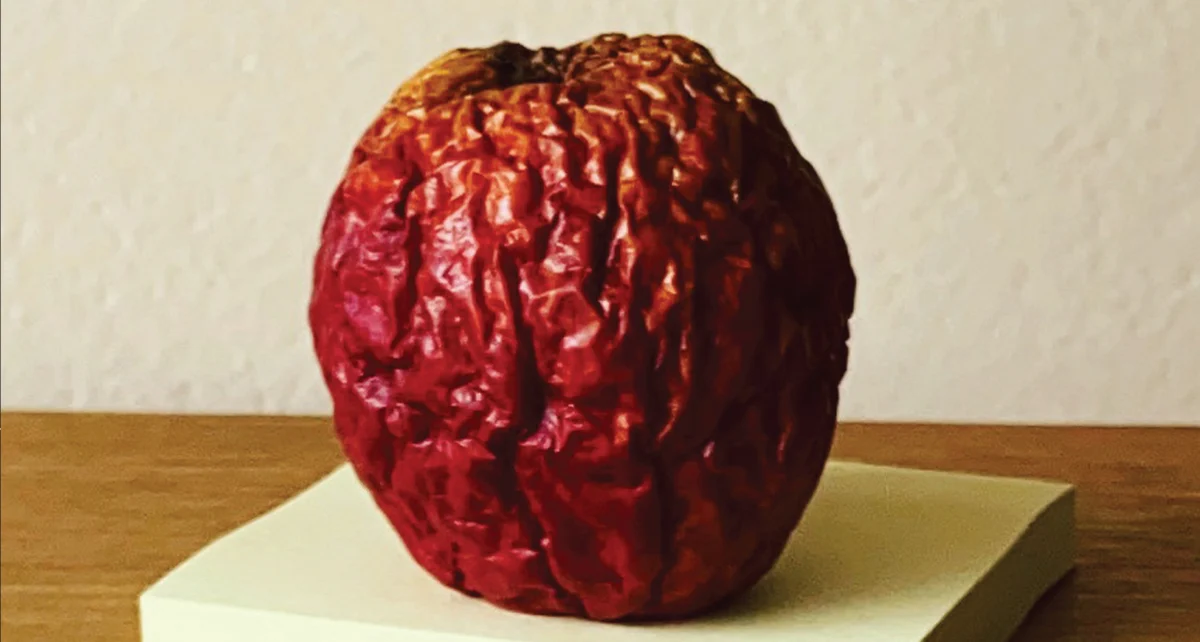
In the autumn of 2025, Gastronomica: The Journal for Food Studies released its latest volume (25.3), centering on a profound, often overlooked question: When does a recipe fail, and what does that failure reveal about our social and biological survival? In an introductory essay that serves as both a manifesto and a scholarly inquiry, Robert T. Valgenti, writing for the Gastronomica Editorial Collective, suggests that recipes are not merely instructions for the kitchen; they are the fundamental architecture of human knowledge transmission.
The issue explores the delicate intersection of authorship, application, and sustainability, positing that when a recipe fails, it forces a reckoning not just with a ruined dinner, but with the very networks—cultural, environmental, and historical—that sustain human life.
The Anatomy of Recipe Failure: Authorship vs. Application
At the heart of the current Gastronomica issue lies a diagnostic challenge: Why do recipes fail? Valgenti categorizes these failures into two distinct realms: application and authorship.
The Failure of Application
We are all familiar with the "kitchen mishap." The cook lacks the proper technique, the timing is off, or a crucial ingredient is substituted with something unsuitable. In these instances, the recipe itself remains sound; the failure rests squarely on the performer. This is a failure of execution, a gap between the potential of the text and the reality of the plate.
The Failure of Authorship
More insidious, however, is the failure of the recipe itself. This occurs when instructions are logically flawed, measurements are unbalanced, or steps are omitted. Yet, Valgenti introduces a more complex category: the "sound but invalid" recipe—a set of instructions that might be perfectly written but produces a dish that simply misses the mark.
When the author of a recipe is absent, the reader must step into a role of "co-authorship." This is particularly difficult with unfamiliar cuisines where no "taste referent" exists to guide the cook. Here, the act of cooking becomes a creative, philosophical, and social endeavor, requiring the cook to bridge the gap between their own culinary imagination and the intent of the original writer.
Chronology: From Ancient Cycles to Modern Sustainability
The articles collected in this issue of Gastronomica trace a historical and thematic arc, exploring how different cultures have used recipes to navigate crises of identity, survival, and history.
- The Biological Cycle (Noha Fikry Ismail): Moving from Egypt’s domestic practices, Ismail explores the cycle of "feed and food." By examining tarbiyya (raising living beings) and mish-making (fermentation), the research highlights how cultures repurpose "leftovers" to create life. Here, rotting is not death, but a necessary stage of transformation, suggesting that the most sustainable recipes are those that view food as a living, breathing participant in our lives.
- The Agricultural Test (Caitlin Bradley Morgan): Looking at the twenty-year legacy of Essex Farm, Morgan evaluates the "recipe" for a full-diet Community Supported Agriculture (CSA) model. The study finds that the success of such an enterprise depends on more than just agricultural skill; it requires a complex balancing of social and economic environments to mitigate the "ravages of time."
- The Historical Hermeneutic (Koby Song-Nichols): Song-Nichols treats historical recipes as more than artifacts. By focusing on the craft of bao, the author argues that cooking from the past is an act of negotiation. It is a way of treating history not as a static record, but as an "alternative present" that demands modern rigor and care.
- The National Identity (M. Paulina Hartono): In the 1960s, Indonesia faced a crisis of self-reliance. The commissioning of the national cookbook Mustikarasa by President Sukarno represents a pivotal moment in culinary history. It was a collective, state-sponsored effort to standardize a national diet, trading economic dependence on imported rice for a consolidated identity rooted in local culinary diversity.
Supporting Data: Philosophizing the Kitchen
The issue concludes with a special section dedicated to short philosophical essays on food, building on a forty-year intellectual tradition. The editorial team emphasizes the work of Lisa Heldke, whose 1988 foundational text, Recipes for Theory Making, remains a touchstone for food scholars.
Heldke argued that "thoughtful practice" in the kitchen is akin to philosophical inquiry. When a cook modifies a recipe, they are not just making a meal; they are engaging in a dialectic with the author. This supports the Gastronomica thesis that the dichotomy between "author" and "cook" is a false one. Both are engaged in a shared task: the preservation of knowledge through the medium of sustenance.
Official Perspectives: The Sustainability of Knowledge
The Gastronomica Editorial Collective, led by Robert T. Valgenti, posits that recipes are "sustainable" only as long as the connection between the author and the reader remains intact.
The Break in Transmission
Valgenti offers a sobering warning: "Recipes are no longer sustainable when the relation between author and reader is broken and no common basis for understanding remains." He argues that if we ever reach a point where we can no longer troubleshoot our recipes—where historical, cultural, and personal ingenuity all fail—we will have reached a terminal point in human society.
"We cannot separate our shared human existence from the grip of recipes," the editorial notes. "They sustain us, and more importantly, they remind us that knowledge is never simply transmitted but actively cooked and transformed through its authorship and application."
Implications: A Call for "Co-Authorship"
The implications of this research are significant for both the culinary arts and the humanities. By framing the recipe as a "living document," Gastronomica moves the conversation away from rigid adherence to tradition and toward a model of dynamic engagement.
The Future of Culinary Scholarship
The journal’s ongoing project, "Translating the Foods of the World," encourages scholars and home cooks alike to uncover and revitalize culinary texts that have been silenced by language barriers or historical neglect. This project functions as an open call for "co-authorship," asking readers to do more than read; it asks them to "cook" these histories into the present.
Societal Resilience
The research suggests that the recipes we use to sustain our biological bodies are intrinsically linked to the recipes we use to sustain our social bodies. Whether it is a recipe for fermented cheese or a recipe for a national identity, the criteria for success remain the same:
- Shared Conditions: Does the recipe reflect the environmental and social reality of the reader?
- Room for Failure: Does the system allow for interpretation and adjustment?
- Active Transmission: Is the knowledge being transformed by the next generation, or is it merely being stored?
In an era of rapid globalization and environmental uncertainty, Gastronomica 25.3 serves as a timely reminder. We are all, in every kitchen, authors of the future. The sustainability of our communities—and perhaps our species—depends on our ability to keep these recipes alive, not by repeating them verbatim, but by engaging with them as living, evolving dialogues that feed both our bodies and our collective aspirations.
For those interested in the full essays, including the special section on food philosophy and the ongoing call for papers on translated culinary texts, the complete issue of Gastronomica 25.3 is now available through the University of California Press.

 Lina Hope
 Lina Irawan