Siti Muinah
 Asro
Asro
 Basiran
 Jia Lissa
 Lina Irawan
 Muslim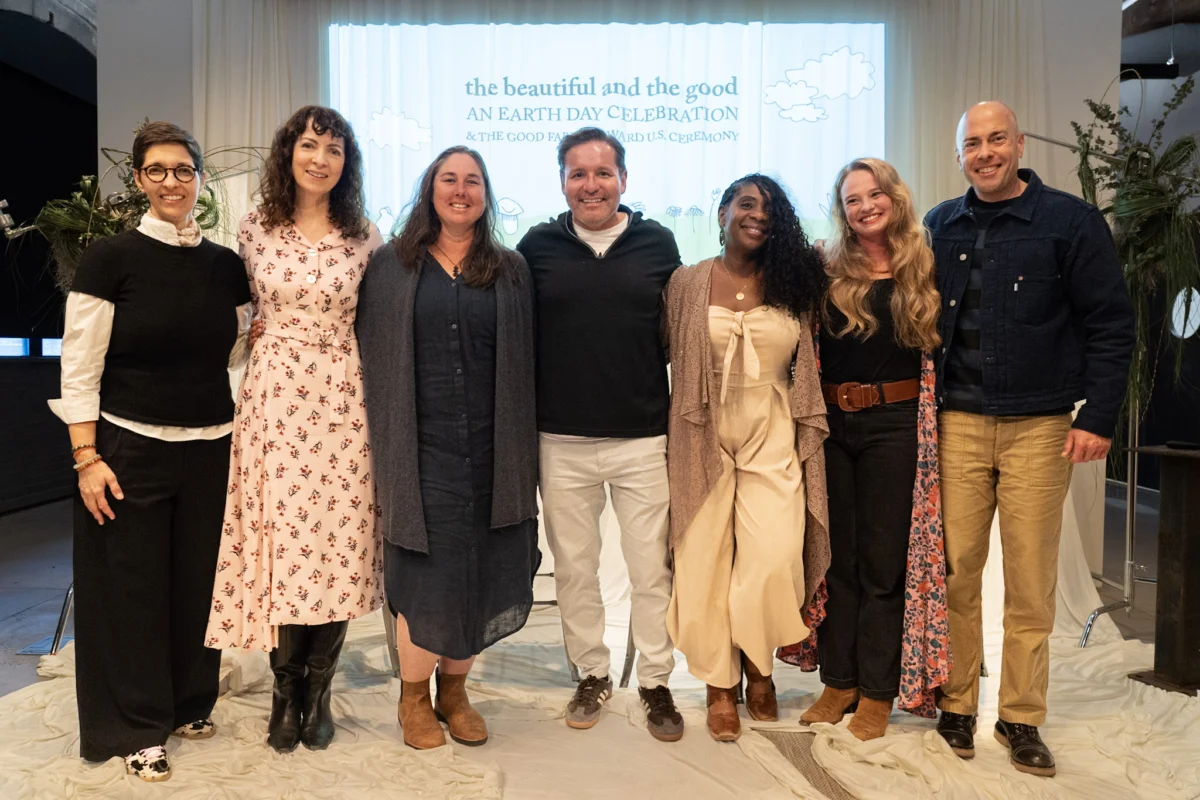
KUTZTOWN, PENN. — In an era defined by climate volatility and the urgent need for sustainable food systems, the search for agricultural innovation has turned its gaze toward the most unlikely of places: the high desert. This Earth Day, April 22, 2026, the Rodale Institute and the Davines Group announced that Rachel Kulchin, the visionary founder of Blue Heron Farm in Bishop, California, has been named the second annual recipient of The Good Farmer Award U.S.
The award, which honors farmers who demonstrate exceptional commitment to regenerative organic practices, social equity, and community-based food security, highlights a growing movement of agricultural pioneers who are proving that the most arid landscapes can become hubs of biodiversity and abundance.
A New Model for the High Desert
Blue Heron Farm, a ten-acre operation nestled in the Eastern Sierra, has rapidly become a beacon for sustainable agriculture. In a region where agricultural infrastructure is notoriously fragile and the vast majority of food is imported from thousands of miles away, Kulchin has established a thriving, mixed-orchard, and vegetable system.
Within just one year of operation, Blue Heron Farm has cultivated over 1,000 fruit trees and a diverse array of vegetable crops. More impressive than the output—which totaled over 47,000 pounds of food in its inaugural season—is the model of community engagement. By implementing a U-Pick system, Kulchin has invited the residents of Bishop to directly engage with the land, transforming the act of grocery shopping into a collaborative, educational, and restorative experience. Over 3,000 customers participated in the farm’s first season, establishing Blue Heron as the primary source of diversified local produce for the surrounding valley.
"Rachel embodies the resilient, systems approach that regenerative organic agriculture demands," said Jeff Tkach, CEO of Rodale Institute. "Her work proves that small farms can be economically viable and ecologically sound, even in the most challenging climates. She is not just growing food; she is reimagining what is possible for local food security."
Chronology of a Regenerative Vision
The trajectory of Blue Heron Farm is a testament to the power of intentional design. While the farm is in its infancy, its impact is the result of years of research and a deep commitment to soil health.
- 2025: The Rodale Institute and Davines Group launch the second cycle of the Good Farmer Award U.S., casting a wide net to find early-career farmers (those with 10 years or less experience) who are redefining the landscape.
- Early 2025: Rachel Kulchin establishes Blue Heron Farm in Bishop, California, focusing on water conservation techniques and soil-first practices to combat the high desert’s inherent dryness.
- Late 2025: Blue Heron concludes its first harvest season, producing 47,000 pounds of food and serving 3,000 local customers, effectively bridging the gap between isolated food production and community demand.
- April 2026: The judging panel—comprised of sustainability experts, researchers, and regenerative farmers—selects Kulchin for the top honor among a competitive pool of 118 applicants from 25 states.
- April 22, 2026: Kulchin is officially honored at the Davines Group House in Brooklyn, N.Y., alongside runners-up Nia Kiara Cole and Nailah Marie Ellis.
Supporting Data: The Impact of Regenerative Practices
The selection process for the Good Farmer Award is rigorous. Applicants are evaluated based on their ability to enhance biodiversity, increase climate resilience, and foster environmental stewardship. The 2026 applicant pool, numbering 118, represented a diverse array of backgrounds and agricultural methodologies, signaling a significant shift in how the next generation of farmers approaches the land.
Kulchin’s success is anchored in specific, data-driven strategies:
- Water Conservation: A significant portion of her $10,000 award grant is earmarked for advanced irrigation systems, designed to maximize water efficiency in an arid climate where every drop is a precious commodity.
- Soil Health: By prioritizing the biological activity of the soil, Kulchin has improved the water-holding capacity of her 10-acre plot, allowing the land to remain productive despite the desert heat.
- Community Integration: The 47,000-pound production figure represents a direct reduction in the "food miles" associated with the local community’s diet, effectively lowering the carbon footprint of the Eastern Sierra region.
The runners-up for the award also highlight the diversity of the regenerative movement. Nia Kiara Cole of Kin & Flo Farm in North Carolina was recognized for her work in reclaiming ancestral land and training BIPOC farmers in Afro and Indigenous restorative practices. Meanwhile, Nailah Marie Ellis of Blessed Up Blooms in Georgia was honored for her "soil-first" model, which brings high-quality produce to food-insecure urban areas across Atlanta.
Official Responses: A Global Perspective on Local Change
The partnership between the Rodale Institute and the Davines Group reflects a shared belief that the future of beauty and the future of agriculture are inextricably linked.
Davide Bollati, Chairman of the Davines Group, emphasized the importance of this synergy. "We are delighted to welcome Rachel to Italy and to guide her through our European Regenerative Organic Center (EROC)," Bollati stated. "This year’s award demonstrates why Davines continues to partner with Rodale Institute—not only to source regenerative organic ingredients for our products but to learn from the Institute’s rigorous research and farmer-first expertise."
As part of her prize, Kulchin will travel to Parma, Italy, to visit the EROC, a 17-hectare research center that stands as the first of its kind in Europe dedicated to regenerative organic agriculture. This international exchange of knowledge is intended to provide Kulchin with insights that she can bring back to the high desert, further cementing her farm’s role as a laboratory for climate-resilient farming.
The Broader Implications for Global Agriculture
The success of Blue Heron Farm and the other Good Farmer Award finalists signals a shift in the global agricultural narrative. For decades, the dominant model of industrial agriculture focused on scale and chemical reliance. Today, the focus is shifting toward "meaningful, systemic change."
Food Sovereignty in Isolated Regions
One of the most profound implications of Kulchin’s work is the proof-of-concept for food sovereignty in rural or isolated regions. By demonstrating that small-scale, regenerative operations can meet the needs of their immediate neighbors, she offers a blueprint for regions across the globe that rely on fragile supply chains.
The Role of Corporate Responsibility
The collaboration between the Davines Group, a certified B Corporation, and the Rodale Institute represents a new paradigm in corporate-nonprofit partnerships. By supporting farmers directly, corporations are moving beyond carbon offsetting toward direct investment in the health of the planet’s topsoil. This "farmer-first" approach ensures that the people doing the hardest work on the ground have the resources they need to innovate.
Climate Resilience as a Necessity
The selection of a high-desert farm for this year’s top prize is a deliberate statement. As global temperatures rise and water becomes increasingly scarce, the "challenging climates" of today will become the norm for many agricultural regions tomorrow. Kulchin’s refusal to see the desert as an impediment—and her insistence on seeing it as an ecosystem capable of restoration—is the exact mindset required to navigate the coming decades of climate change.
"I am standing behind a belief that feels both stubborn and bold," Kulchin said during the award ceremony. "Our goal is not just to grow food, but to demonstrate that regenerative agriculture can thrive in challenging climates and build the resilience our valley desperately needs."
Looking Ahead
As Rachel Kulchin returns to Bishop, California, with the resources to upgrade her irrigation and expand her educational programming, the impact of the 2026 Good Farmer Award will continue to ripple outward. The Rodale Institute’s 78-year history of research has long championed the idea that organic farming is essential to human survival. In 2026, that message is being amplified by the work of farmers like Kulchin, who are taking those foundational truths and planting them in the harshest soils on earth.
The future of agriculture, it seems, is not merely about surviving the climate crisis—it is about restoring the earth to a state of health that allows both the land and its people to flourish. Through the efforts of Blue Heron Farm and the continued support of organizations like the Rodale Institute and the Davines Group, that future is beginning to take root, one acre at a time.

 Rifan Muazin