Pevita Pearce
 Siti Muinah
 Azzam Bilal Chamdy

 Nana Muazin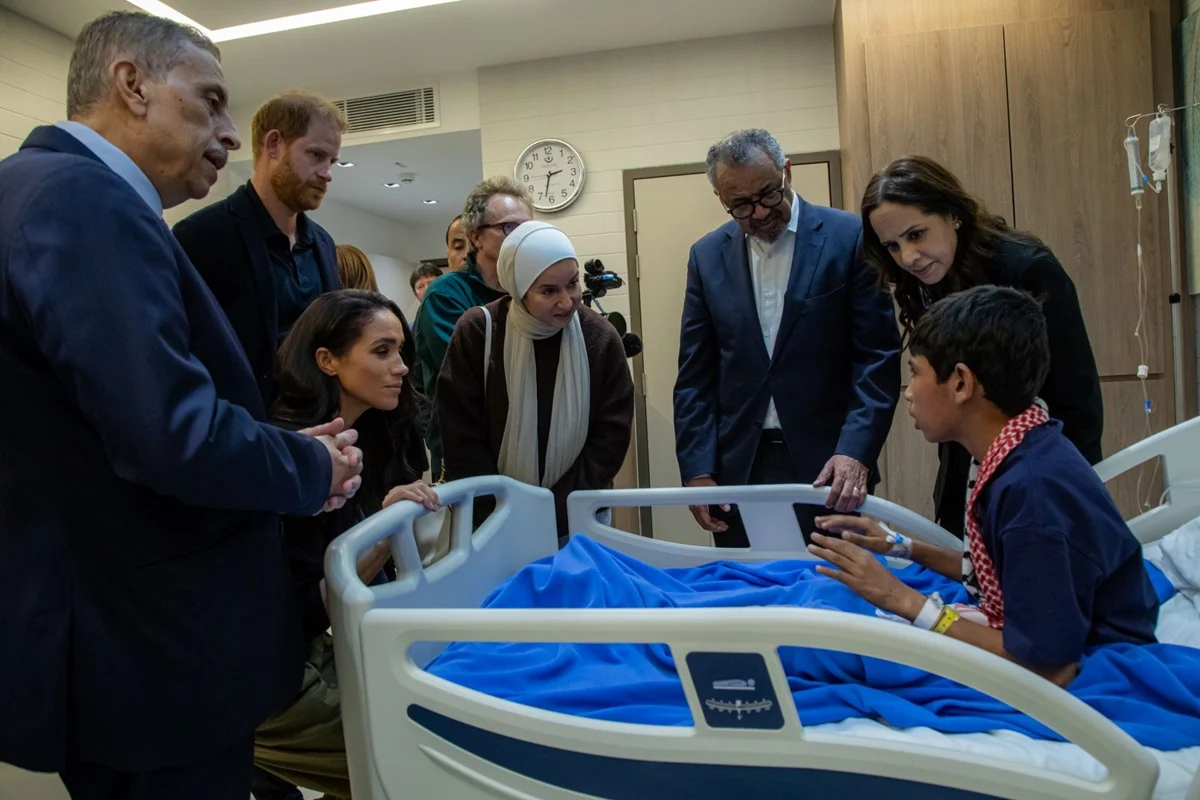
AMMAN, Jordan – The Director-General of the World Health Organization (WHO), Dr. Tedros Adhanom Ghebreyesus, concluded a pivotal two-day state visit to the Hashemite Kingdom of Jordan this week, marking a significant milestone in the partnership between the UN health agency and the Jordanian government. The visit, characterized by high-level diplomatic engagement and on-the-ground assessment, underscored Jordan’s role as a beacon of humanitarian stability and a model for health system resilience in a volatile region.
The visit served as a platform to address the compounding crises of regional conflict, the ongoing need for universal health coverage (UHC), and the integration of mental health services into primary care. Accompanied by the Duke and Duchess of Sussex, Prince Harry and Meghan, the delegation emphasized the urgent need for international solidarity in sustaining life-saving medical corridors.
I. Main Facts: A Partnership Built on Resilience
The core objective of Dr. Tedros’s visit was to consolidate the strategic partnership between the WHO and Jordan. With Jordan hosting over three million refugees—primarily from Syria and Gaza—the nation stands as one of the world’s most significant humanitarian hosts per capita.
The visit focused on three pillars:
- Universal Health Coverage (UHC): Jordan’s commitment to expanding health access to both its citizens and its refugee population.
- Humanitarian Medical Corridors: Specifically, the efficacy of Jordan’s "Medical Corridor" initiative, which facilitates the evacuation of critically ill and injured children from Gaza.
- Mental Health Integration: The institutionalization of psychological support within Jordan’s primary health care system, supported by the Director-General’s Special Initiative for Mental Health.
II. Chronology of the State Visit
Day One: Diplomatic Engagement and Frontline Reality
The visit commenced with a high-level audience with His Majesty King Abdullah II. The discussion centered on the strategic importance of regional health security. King Abdullah II has long been a proponent of health as a fundamental pillar of national security, and the meeting served to align WHO’s global policy goals with Jordan’s on-the-ground operational capabilities.
Following the royal audience, Dr. Tedros visited a specialized hospital designated for the care of children evacuated from Gaza. The visit was deeply personal; the Director-General met with young patients undergoing treatment for cancer, trauma, and chronic conditions. This encounter highlighted the stark contrast between the geopolitical instability of the region and the humanitarian imperative of care.
Later in the day, Dr. Tedros convened a summit of international stakeholders, including UN agencies, donor nations, and private philanthropists. The agenda addressed the financing gaps that currently threaten the sustainability of Jordan’s health infrastructure. The message was clear: without sustained international investment, the capacity of Jordan to act as a regional medical hub could be severely compromised.
Day Two: Addressing the Full Spectrum of Care
The second day shifted focus toward long-term systemic health. Dr. Tedros visited the National Center for Rehabilitation of Addicts, an institution that exemplifies the WHO’s push for integrated medical and psychological care. He also engaged with the Jordanian Hashemite Fund for Human Development to discuss women’s health and community-led initiatives. The visit concluded with a tour of the King Hussein Cancer Center, a regional leader in oncology, where discussions focused on expanding regional collaboration to improve cancer outcomes across the Middle East.
III. Supporting Data: The Magnitude of the Challenge
Jordan’s healthcare system currently faces immense pressure. The country serves as a sanctuary for millions who have fled war, often arriving with complex medical needs.
- The Refugee Burden: Jordan provides health services to more than three million refugees. This is a monumental task that requires not only domestic resources but consistent international fiscal support.
- The Medical Corridor: The Medical Corridor initiative has become a lifeline. By facilitating the transit of children needing specialized surgical or oncology care that is currently unavailable in Gaza, Jordan is fulfilling a critical regional duty.
- Mental Health Statistics: Conflict-affected populations face a higher prevalence of PTSD, anxiety, and depression. By integrating these services into primary care, Jordan is setting a global benchmark, moving away from the stigmatized, centralized mental health models of the past.
IV. Official Responses and Advocacy
The visit was bolstered by the participation of the Duke and Duchess of Sussex, whose work through Archewell Philanthropies has long aligned with WHO objectives.
Dr. Tedros Adhanom Ghebreyesus
In his address, Dr. Tedros praised the Kingdom’s leadership. "Jordan continues to show the world what it truly means to put health and humanity first," he stated. He emphasized that the partnership between the WHO and Jordan is a model for how host nations and international organizations should collaborate to manage humanitarian crises while simultaneously building resilient, long-term health systems.
Prince Harry, Duke of Sussex
Prince Harry, speaking on the importance of mental health, stated, "Mental health is fundamental to recovery, dignity and long-term peace." His participation underscored the necessity of addressing the "invisible wounds" of war. Through Archewell, the Sussexes have sought to highlight that mental health support is not a luxury, but a basic human right, particularly for those living in conflict zones or displacement camps.
V. Implications for Global Health Policy
The implications of this visit extend far beyond the borders of Jordan. The outcomes of this state visit suggest three key shifts in global health diplomacy:
1. Decentralization of Mental Health Care
The successful integration of mental health services into Jordan’s primary care clinics—supported by the WHO—provides a scalable blueprint for other nations. The global health community is moving toward a model where psychological screening and treatment are as routine as vaccinations or primary medical checkups.
2. The Necessity of "Health Diplomacy" in Conflict
Jordan’s role as a medical hub proves that, even amidst intense geopolitical conflict, health can serve as a bridge. The Medical Corridor initiative is a prime example of "Health Diplomacy," where medical necessity transcends political boundaries to save lives. This model is likely to be promoted by the WHO in other conflict-ridden regions to ensure that patient care is not entirely halted by warfare.
3. Sustainable Financing for Host Nations
The high-level meeting with donors signaled a shift in how the international community approaches refugee health. There is a growing consensus that supporting host countries like Jordan is more effective than creating parallel, unsustainable temporary health systems. The WHO is now advocating for "system-strengthening" grants—investments that improve a host country’s permanent infrastructure, thereby benefiting both the refugees and the local host population in the long term.
Conclusion: A Call for Continued Solidarity
As the two-day visit concluded, the message from the delegation was one of gratitude, but also of urgency. The achievements of the Hashemite Kingdom of Jordan in the face of overwhelming odds are commendable, yet they remain vulnerable to the fluctuations of regional instability and the shifting priorities of international donors.
Dr. Tedros’s visit has successfully re-centered Jordan as a critical partner in the global health architecture. By highlighting the successes of the Medical Corridor and the integration of mental health services, the WHO has provided a compelling argument for increased investment. The path forward requires a renewed commitment from the international community to ensure that Jordan, and indeed all nations serving as regional anchors of health, have the resources necessary to continue their life-saving work.
In the words of the Director-General, the partnership between the WHO and Jordan is a "testament to the power of compassion." As the region navigates the complexities of the 21st century, this collaboration stands as a vital defense against the erosion of human dignity in the face of conflict. The world now looks to Jordan—not just as a host, but as a leader in defining the future of humanitarian health action.


 Reynand Wu