

 Nana Wu

 Dwi Wanna
 Suro Senen

 Evan Lee Salim

 Sagoh
The British hospitality sector has breathed a collective sigh of relief as the latest NIQ RSM Hospitality Business Tracker reveals that September 2026 was the industry’s most robust month of sales growth this year. For an industry that has spent the better part of two years navigating a volatile landscape of inflationary pressure, labor shortages, and shifting consumer habits, the data offers a vital, if cautious, sign of recovery.
Managed hospitality groups saw like-for-like sales climb 2.7% compared to September 2025. This performance marks a significant acceleration from the 0.8% growth recorded in August and constitutes the fifth consecutive month of positive figures. While the headline growth provides a much-needed morale boost, industry leaders remain tempered in their optimism, noting that the sector has yet to achieve true "real-terms" growth—an indicator of long-term health that has remained elusive since the spring of 2025.
The Chronology of Recovery: A Year in Flux
To understand the significance of September’s figures, one must look at the trajectory of 2026. The year began with a somber tone; the first half was defined by a cost-of-living squeeze that saw households drastically curtail their discretionary spending, particularly regarding dining out. Restaurant groups, in particular, suffered through a winter and spring of stagnant footfall as consumers prioritized essential spending over luxury experiences.
The mid-year period saw a shift in momentum. July provided a temporary stimulus for the pub sector, buoyed by the cultural phenomenon of the men’s football World Cup, which brought patrons into bars and pubs in record numbers. However, this peak was followed by the typical August slump, where growth cooled to just 0.8%.
September, however, defied the seasonal cooling pattern. A warm, extended start to the autumn season helped keep outdoor seating areas occupied and encouraged spontaneous spending. This "Indian summer" effect, combined with a gradual easing in consumer caution, has created a foundation that operators hope will serve as a springboard for the all-important final quarter of the year.
Supporting Data: A Deep Dive into the Segments
The NIQ RSM Hospitality Business Tracker provides a granular breakdown of how different corners of the industry are faring, revealing a nuanced picture of the British hospitality landscape.
Restaurants: A Modest Revival
Restaurant groups recorded year-on-year growth of 2.6%, marking their strongest performance since November 2024. For a sector that has been forced to contend with aggressive price competition and rising ingredient costs, this uptick suggests that consumers are beginning to return to restaurants with more regularity. It is a critical reversal for a segment that spent much of the first half of 2026 fighting for relevance in a budget-conscious market.
Pubs and Bars: The Tale of Two Channels
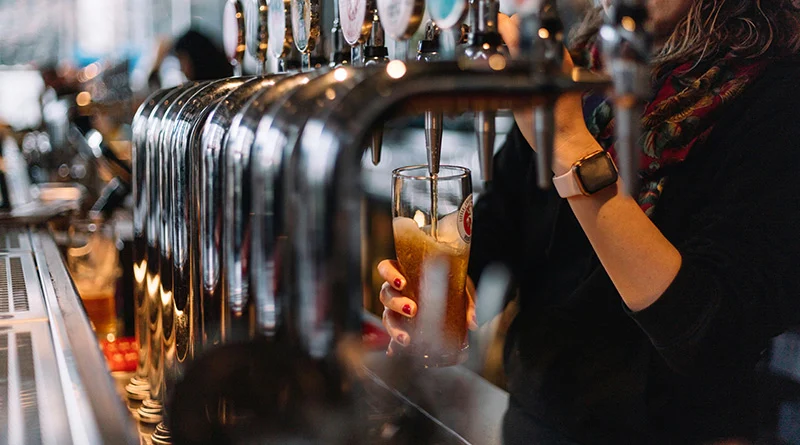
The pub sector continues to be the engine room of industry growth, with sales rising by 3.8%—a figure that finally outpaces the UK’s current rate of inflation. This marks the second-best month for pubs in 2026, trailing only the football-fueled heights of July. Conversely, the bar sector continues to struggle, recording a 1.7% drop in year-on-year sales. While this remains in negative territory, it is paradoxically the best performance for the bar industry since the beginning of 2025, suggesting that the long, painful decline of the night-time economy may finally be bottoming out.
Total Sales vs. Like-for-Like
It is important to distinguish between "like-for-like" sales—which measure the performance of established venues—and "total sales," which include the contribution of new site openings. On a total sales basis, the industry grew by 6.2%. This discrepancy highlights a crucial trend: while established businesses are struggling to grow in real terms, the industry continues to invest in expansion, with new openings acting as a primary driver of total revenue growth across the UK.
Regional Divergence: London vs. The Provinces
The data also paints an interesting geographical picture. Trading within the M25 (Greater London) was softer, showing a 2.3% increase, compared to the 2.8% growth recorded across the rest of the country. This suggests that the cost-of-living pressure remains more acute in the capital, or perhaps that the "flight to value" is more pronounced in high-rent urban environments where price points are inherently higher.
Official Responses: Calls for Fiscal Responsibility
The industry’s response to these figures has been a blend of pride in the sector’s resilience and a direct appeal to the government. With the UK Budget looming, stakeholders are using the September data as evidence that the sector is worth investing in.
Karl Chessell, director of hospitality operators and food, EMEA at NIQ, emphasized the fragility of the current situation. "September’s trading figures provide hospitality with a much-needed shot of confidence," Chessell stated. "However, many groups are still finding it difficult to carve out real-terms sales growth, while intense pressure on key costs like taxes, ingredients, labor, and energy are making profitability even tougher."
Chessell’s warning is clear: the positive momentum of September is not a guarantee of a strong Christmas. It is a "springboard," he argues, but one that requires the right fiscal environment to avoid snapping.
Saxon Moseley, head of leisure and hospitality at RSM UK, took a broader, socio-economic approach to the data. Moseley highlighted the unique role of hospitality as a "force for good," particularly in the context of the UK’s youth unemployment crisis.
"With nearly one million young people currently not in education, employment, or training (NEET), hospitality is uniquely positioned to help solve this national crisis," Moseley argued. He urged the government to reconsider policies that he deems "damaging," specifically calling out National Insurance contribution policies and proposed pay harmonisation for under-21s. For Moseley, the Budget is not just about tax margins; it is about protecting the infrastructure that allows the sector to act as a gateway to employment for the country’s youth.
Implications: The High-Stakes Final Quarter
As the industry enters the final quarter of 2026, the implications of September’s data are twofold.
First, there is the immediate challenge of the festive season. The "Golden Quarter"—comprising October, November, and December—is traditionally when hospitality businesses generate the bulk of their annual profit. The fact that the industry is entering this period with five months of positive momentum is objectively good news. It suggests that consumer confidence is at its highest point in nearly two years.
Second, the structural issues remain unresolved. The fact that September’s 2.7% growth is still below the national inflation rate is a sobering reality. For many businesses, "growth" is currently an accounting illusion; while revenue is higher, the cost of doing business—fuel, food, labor, and tax—has risen faster. Without a significant shift in government policy, many businesses are essentially running faster just to stay in the same place.
The upcoming Budget has become the focal point of the industry’s collective anxiety. If the government opts to increase the tax burden on businesses, the "green shoots" identified by RSM could be trampled before they have a chance to bloom into a sustained recovery. Conversely, a pro-growth budget that addresses the specific labor and cost pressures identified by Chessell and Moseley could unleash a period of genuine expansion.
In conclusion, September 2026 will be remembered as a turning point, not necessarily because of the magnitude of the growth, but because of what it represents: a sector that has endured the worst of the economic headwinds and emerged with its capacity for growth intact. Whether that growth remains a flickering light or becomes a roaring fire will depend heavily on the decisions made in the corridors of power over the coming weeks. For now, the hospitality industry has proven its resilience; the question remains whether the government is prepared to reward it.