

 Ammar Sabilarrohman
 Ali Ikhwan
 Dwi Wanna
 Neng Nana
 Siti Muinah
 Laily UPN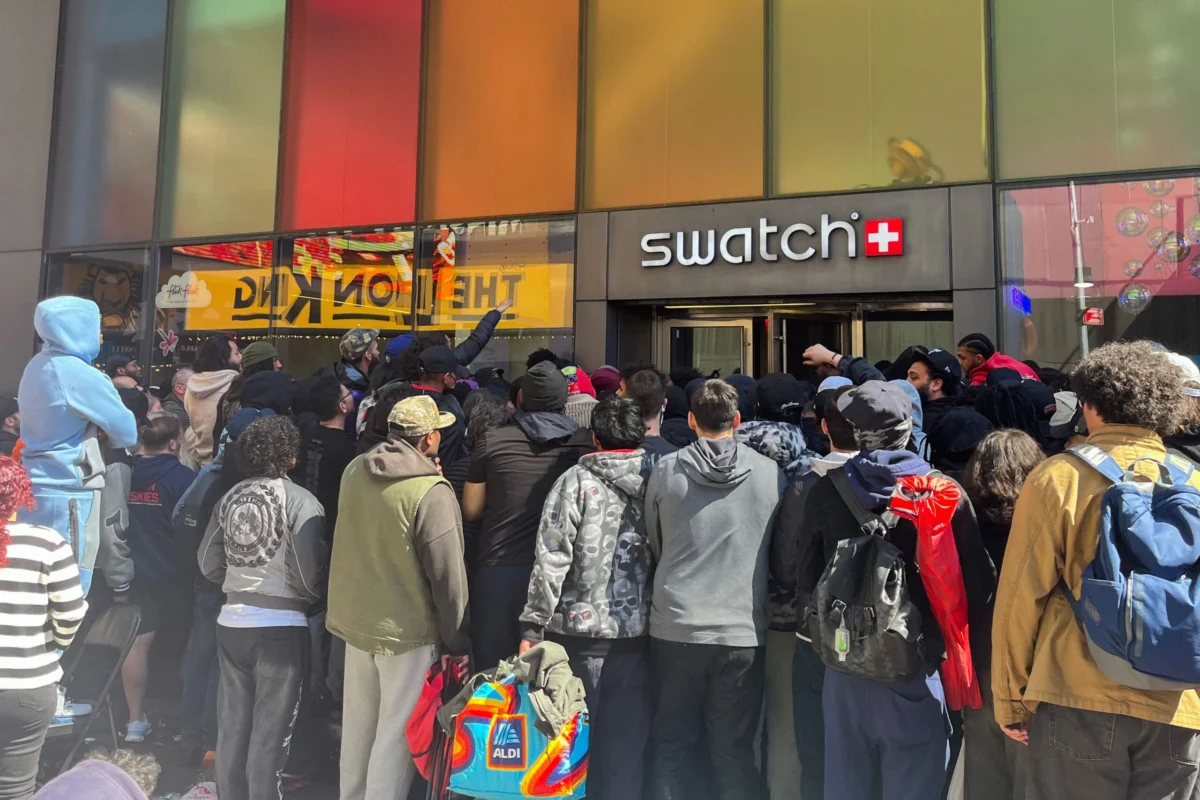
On May 16, the luxury watch world witnessed a spectacle that blurred the lines between high-end retail and public disorder. As Swatch stores flung their doors open to launch the “Royal Pop” collection—a collaboration with horological titan Audemars Piguet—what was intended to be an exercise in brand synergy descended into a global logistical catastrophe.
From the streets of London to the malls of Mumbai, the launch played out as a carbon copy of the 2022 MoonSwatch pandemonium. Yet, unlike the inaugural MoonSwatch release, which many executives excused as an “unforeseeable” phenomenon, the Royal Pop chaos was a predictable failure—a systemic breakdown in crowd management that has left retail experts, local authorities, and even the collaborators themselves questioning the ethics of modern “hype culture.”
The Anatomy of the Chaos: A Global Timeline
The trouble began in Singapore, where the VivoCity branch was forced to shutter before the doors even opened. By the time the sun rose in Europe and the Americas, the blueprint for the day’s unrest was firmly established.
The Morning Ripple
In London’s Carnaby Street, the shop lasted a mere 30 minutes before police were summoned to manage a volatile crowd. By midday, reports of violence began to emerge globally. In New York, rumors of a stabbing ignited fights within the queue. In Birmingham, UK, reports of knife-wielding individuals and drug-related incidents forced authorities to intervene. Across the English Channel, the situation was no less dire: police in Düsseldorf and Paris were forced to deploy tear gas to disperse crowds of hundreds, while brawls erupted in the streets of Milan.
The Afternoon Escalation
As the day progressed, the situation in the United States mirrored the European volatility. Stores in Miami, Houston, and Chicago were forced to close their gates as staff proved unable to maintain safety. In Long Island, the scene reached a nadir when security and law enforcement were forced to utilize pepper spray to regain control of a surging mob. By the time Swatch issued a statement on Instagram at 2:00 PM ET—a staggering 17 hours after the initial warning signs in Singapore—the damage to the brand’s reputation was already profound.
The company’s plea—asking fans not to rush stores and warning that queues of more than 50 people would not be tolerated—was met with a firestorm of digital vitriol. With over 45,000 comments on the post, the consensus was clear: the brand had prioritized manufactured scarcity over the safety of its customers and employees.
Supporting Data: The Price of Negligence
The core of the issue lies in the severe disparity between supply and demand. Most locations were allocated fewer than 200 watches. This extreme scarcity, coupled with the "resale economics" of the watch market, created an environment where scalpers dominated the queues. Within minutes of the first sales, these plastic-cased timepieces were appearing on secondary markets like eBay, priced at thousands of dollars—a massive markup from their retail price.
Retail analysts point to this as a failure of operational strategy. By relying on the “drop” model—a tactic perfected by streetwear brands—without the infrastructure to support it, Swatch invited an inevitable clash between legitimate collectors and opportunistic resellers.
Official Responses: A Study in Deflection
When approached by WIRED, Swatch’s communication team in Switzerland largely bypassed accountability, opting to place the burden on the shopping malls hosting their stores.
"The Royal Pop Collection has been phenomenal worldwide, and demand is extremely high," the company stated. "In around 20 Swatch stores out of a total of 220, challenges arose because the queues were exceptionally long, and the organization of some shopping malls was not sufficient to handle this level of turnout."

The company further attempted to reframe the narrative by highlighting the “success” of the campaign, noting that the collaboration had generated over 11 billion social media views. To the company, the chaos was merely a symptom of "captivating the entire world."
Audemars Piguet (AP), the high-end partner in this venture, appeared significantly more uncomfortable with the fallout. In a measured response, AP stated: "We understand the questions around the Royal Pop launch experience. As retail operations are handled by Swatch and their local teams, Swatch is best placed to comment… From AP’s perspective, safety and a positive experience for clients and teams remain the priority." The company notably declined to confirm whether it viewed the launch as a "positive experience."
Implications: The Death of the “Surprise” Drop?
The failure of the Royal Pop launch has sparked a wider conversation about the responsibility of luxury houses. Kate Hardcastle, author of The Science of Shopping and advisor to global brands, argues that the "surprise, scarcity, and frenzy" strategy is fundamentally flawed when applied to modern physical retail.
"Retailers are already dealing with heightened tensions around theft and aggression," Hardcastle explains. "Once a brand has experienced scenes involving crowd surges and police intervention, the obligation shifts from reacting to proactively engineering a safer experience."
The "Avoidable" Failures
Experts like Hardcastle and Neil Saunders, Managing Director of Global Data, highlight a variety of standard industry solutions that were conspicuously absent from the Swatch playbook:
- Staggered Collection Windows: Distributing pickups over several days to prevent massive daily gatherings.
- Verified Appointment Systems: Using digital platforms to ensure only those with a confirmed slot attend the store.
- Geo-ticketing: Using technology to limit store access to verified local customers.
- Private Client Previews: Moving the "hype" into a controlled, invitation-only environment.
"They could have pre-dropped more inventory online to reduce the tension at physical locations," Saunders notes. "Swatch should also make stock levels clear. There is a tension here—they want to create a story of scarcity because it drives interest—but when you lose control, it becomes damaging to the brand image."
The Verdict: Retail Theatre vs. Reality
The most damning criticism of the Royal Pop launch is that it was not a first-time error. The 2022 MoonSwatch launch provided a clear, documented, and public case study in what happens when a popular product is released with zero crowd-control infrastructure. By choosing to repeat the exact same strategy four years later, Swatch signaled to the industry that it prioritized the "theatre" of the launch over the safety of its staff and patrons.
As Saunders observes, "The bottom line is that while Swatch and Audemars Piguet have gotten a lot of free publicity from this, it isn’t a good look."
The industry is now at an inflection point. As consumers become increasingly wary of the dangers associated with "drops," brands that rely on artificial scarcity will likely face increased scrutiny from local authorities, who are tired of subsidizing private company marketing campaigns with public police resources.
Ultimately, the Royal Pop launch serves as a stark reminder: in the world of high-end retail, excitement is a commodity, but safety is a prerequisite. When a brand loses sight of that, the resulting chaos is not a sign of success—it is a sign of a fundamental failure in leadership. For Swatch and Audemars Piguet, the lesson is expensive and clear: if you are going to invite the world to your party, you had better be prepared to manage the crowd. If you cannot do that, perhaps it is time to stop the music.


 Evan Lee Salim
 Sagoh
Sagoh