

 Dwi Wanna
 Nana Wu
 Muslim
 Reynand Wu
 Ammar Sabilarrohman
 Lina Irawan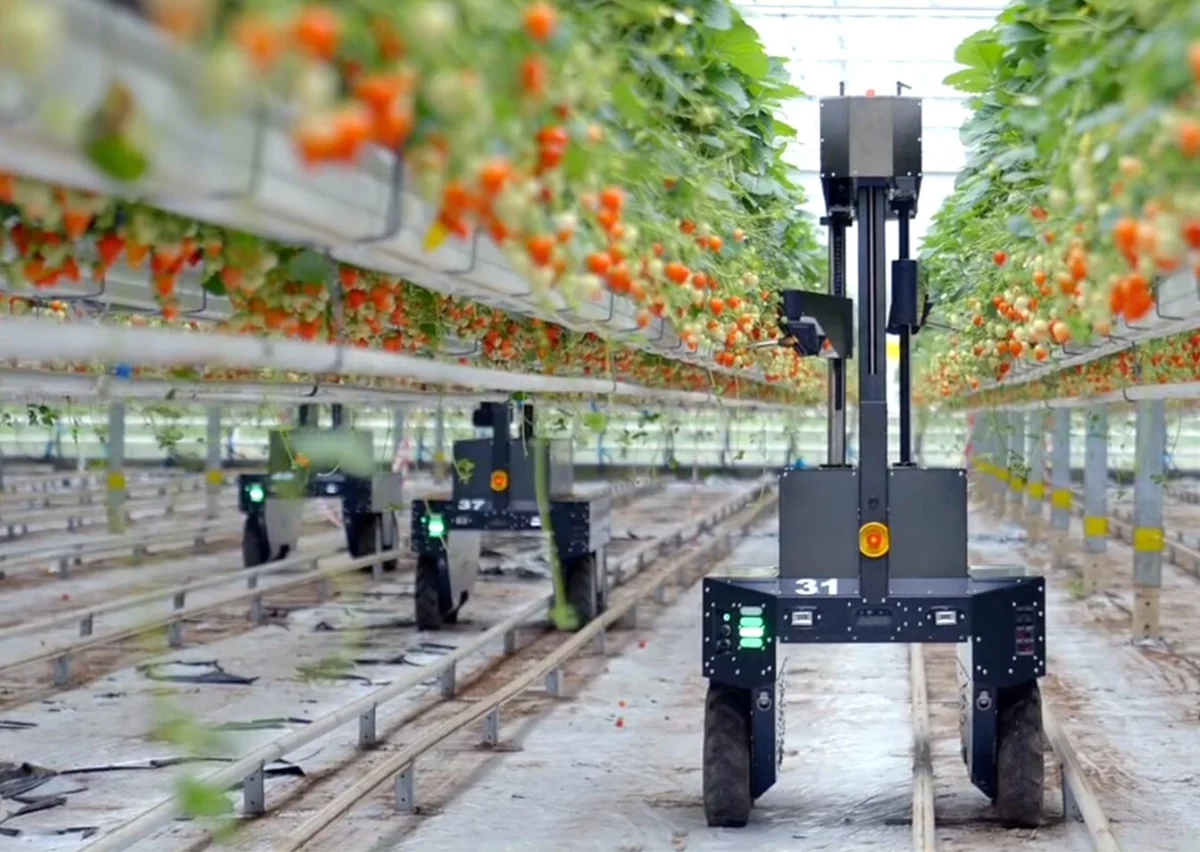
In an industry littered with the wreckage of once-celebrated unicorns, Oishii—the New Jersey-based vertical farming pioneer—has emerged as a rare outlier. This week, the company announced the first close of a $150 million Series C funding round, a significant milestone that brings its total capital raised to $370 million.
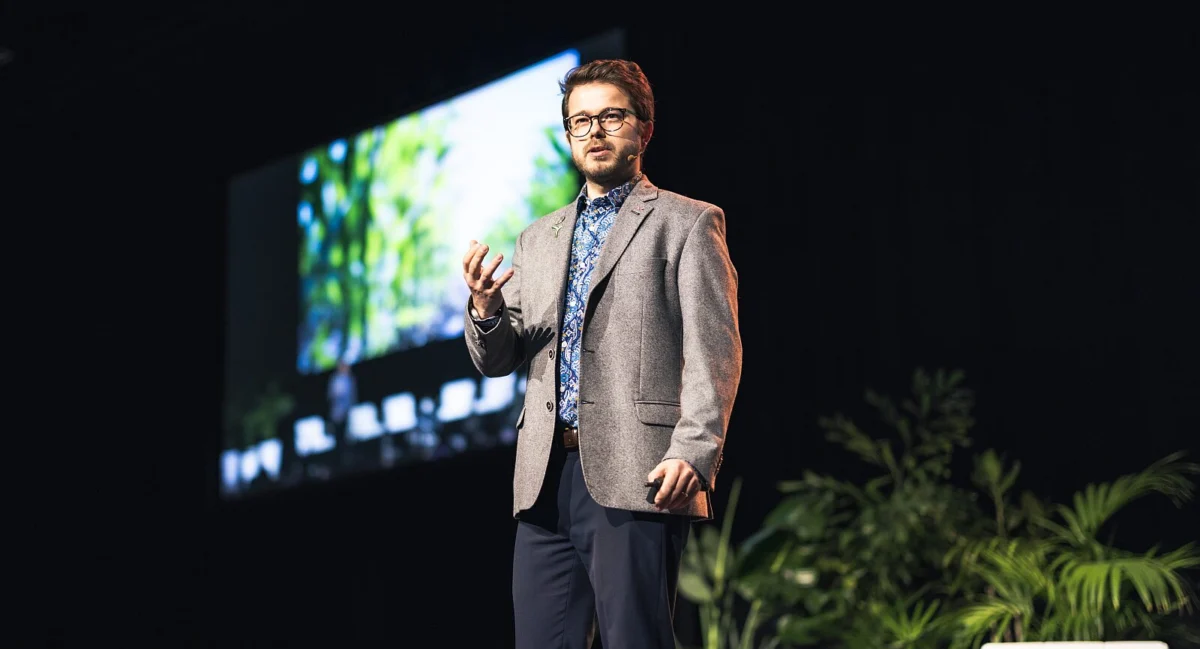
While the broader vertical farming sector has faced a brutal "market correction" over the past three years—characterized by bankruptcies, shuttered facilities, and a sharp decline in investor confidence—Oishii has managed to buck the trend. According to founder and CEO Hiroki Koga, the secret to this success lies in a radical departure from the industry’s "grow fast, break things" mentality, favoring instead a disciplined focus on unit economics and premium product differentiation.
The Main Facts: A Strategic Pivot to Profitability
The $150 million infusion, led by SPARX Asset Management and Resilience Reserve, marks a turning point for Oishii. Unlike its peers, which often prioritized rapid expansion into commodity crops like baby kale and arugula, Oishii focused from the outset on a high-value, highly differentiated category: strawberries.
"Ultimately, many companies in the sector struggled to raise capital because they couldn’t convincingly prove their unit economics to investors," Koga explained in an interview with AgFunderNews. "We crossed that chasm, which is why we were able to successfully raise our Series C."
The funding will be deployed to scale production capacity, expand farm infrastructure, and deepen the company’s R&D capabilities in both the United States and Japan. By choosing to master a crop notoriously difficult to grow consistently in indoor environments, Oishii effectively insulated itself from the price wars that decimated competitors like Bowery Farming and Aerofarms, who found themselves unable to compete with the low margins of traditional field-grown greens.
A Chronology of Resilience: From Concept to Scale
Oishii’s journey has been defined by a methodical approach that contrasts sharply with the "blitzscaling" model popular in Silicon Valley during the 2020-2022 period.
- The Foundational Phase: Oishii began by introducing the world to its "Omakase" strawberry, a luxury product that initially retailed for $5 per berry. While the price tag grabbed headlines, the goal was never just luxury—it was to prove that a vertical farm could produce a superior, pesticide-free product that commanded a premium price, thereby covering the high energy costs inherent in indoor agriculture.
- The "Plant Factory" Lessons: Koga, having observed the rise and fall of Japan’s "plant factory" craze a decade before it arrived in the U.S., viewed the recent market downturn with a sense of inevitability. He built Oishii with the knowledge that simple automation wasn’t enough; the biological output had to be market-leading.
- Technological Integration (2023–2024): The company began aggressively integrating advanced robotics, culminating in the acquisition of the IP assets and engineering team of Tortuga AgTech. This move allowed Oishii to automate the delicate process of berry picking, a task previously reliant on manual labor.
- Geographic Expansion (2024–2025): The company expanded its distribution footprint to 18 U.S. states and entered the Canadian market. Simultaneously, it announced the establishment of a state-of-the-art R&D innovation center in Japan, bridging Japanese agricultural tradition with American deep-tech infrastructure.
- The Series C Milestone (2026): With the support of institutional heavyweights like Nomura Real Estate Development, MISUMI Group, and Mizuho Bank, Oishii secured its latest round, signaling a maturation of the business model.
Supporting Data: Why the Unit Economics Matter
The failure of several major vertical farming players was rooted in a fundamental disconnect: the cost of electricity, labor, and depreciation of expensive LED lighting systems far exceeded the revenue generated by low-margin crops like salad greens.
Oishii’s strategy has been to flip this equation. By focusing on strawberries—a crop with a much higher price point—the company ensured that the "premium" paid by the consumer covers the overhead of the technology.
Furthermore, the company’s decision to vertically integrate its core technology has been a primary driver of its efficiency. By developing its own proprietary automation and robotics, Oishii has reduced its reliance on third-party vendors, allowing for rapid iteration. When a problem arises on the farm floor, the engineering team—which now includes the former Tortuga AgTech experts—can pivot the hardware and software in real-time. This agility is a key competitive moat that most legacy vertical farms, which relied on "off-the-shelf" automation, failed to build.
Official Responses: The Philosophy of "Patient Capital"
The choice of investors for the Series C round was deliberate. Rather than seeking out generalist venture capital, which Koga notes is often easily distracted by the latest trends in AI or crypto, Oishii sought partners with a long-term vision.
"Investors like SPARX and Resilience Reserve, who understand deep tech and the long-term value of sustainable technology, can be extremely helpful," Koga said. "Indoor agriculture takes a different mindset. Capital must recognize the long-term value that is possible through differentiated technology, proprietary assets, and operational excellence. In that sense, patient capital remains critical for the category."
The participation of Japanese financial giants like Mizuho Bank and Nomura Real Estate suggests a broader belief that vertical farming is not merely a tech play, but a real-estate and infrastructure play. These investors are looking for sustainable, long-term yield rather than the "hockey stick" growth that defined the failed startups of the last decade.
Implications: The Future of Indoor Agriculture
Oishii’s success holds several critical implications for the future of the agtech sector:
1. The Death of the "One Size Fits All" Model
The industry has learned that you cannot grow every crop the same way. Companies that tried to apply the same vertical farming methodology to lettuce, tomatoes, and berries simultaneously often spread their resources too thin. Oishii’s success reinforces the need for specialization. By becoming the best in the world at growing a specific, high-demand, high-margin product, the company has created a brand that consumers recognize and value.
2. Deep Tech is the Only Path Forward
Labor remains one of the largest expenses in agriculture. Oishii’s investment in the Tortuga AgTech team confirms that the future of indoor farming is not just about lights and water; it is about robotics. The ability to automate the harvest and handling of delicate crops is the final hurdle for the sector to achieve true price parity with traditional agriculture.
3. The Geographic Arbitrage of Innovation
Oishii’s hybrid identity—born in the U.S. but deeply rooted in Japanese agricultural wisdom—serves as a template for future agtech firms. By tapping into Japanese innovation centers while maintaining a foothold in the massive U.S. consumer market, Oishii has secured a unique operational advantage. They are not just importing a concept; they are synthesizing two different cultures of farming and technology.
4. A New Standard for Sustainability
The "vertical farming correction" was a necessary purge of companies that were essentially selling "energy-intensive salad." Oishii’s survival signals that the market is finally ready to reward firms that can prove their sustainability through efficiency. As the climate becomes more volatile, the need for indoor agriculture will grow, but it will only be the companies with rigorous, data-driven unit economics that will be left standing to provide it.
Conclusion: A Blueprint for Maturity
As Oishii moves into its next phase, the focus will shift from proving the model to scaling it. With $370 million in total funding and a robust technological foundation, the company is no longer just an experiment; it is an industrial operator.
For the rest of the vertical farming industry, Oishii’s Series C serves as both a rebuke and a roadmap. It proves that the "plant factory" concept is not dead, but it must be executed with the patience and discipline of a traditional manufacturer, not the reckless abandon of a software startup. As Hiroki Koga continues to steer the company toward the future, the message to the market is clear: if you focus on the product, the profit, and the long-term, the capital will follow.

 Laily UPN
 Pevita Pearce