 Dwi Wanna
 Nana Wu
 Muslim
 Reynand Wu
 Ammar Sabilarrohman
 Suro Senen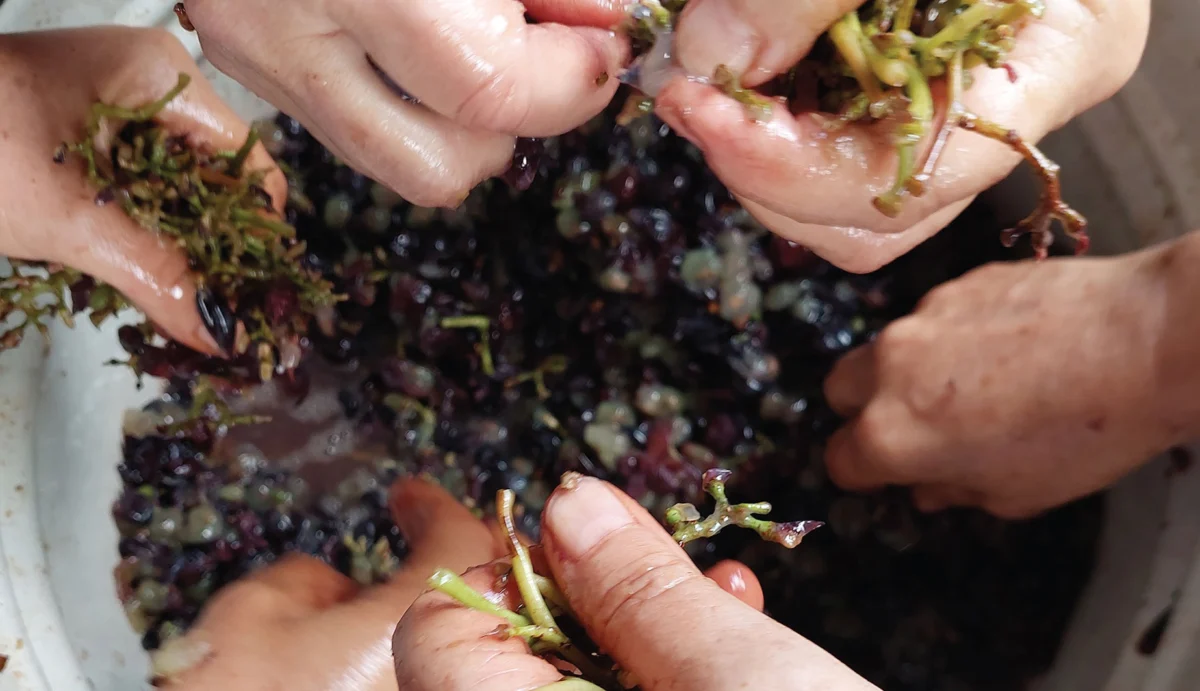
In 1952, the pharmaceutical titan Parke, Davis and Company unveiled a portrait by Robert Thom titled Louis Pasteur. The image was part of a sweeping propaganda project, "Great Moments in Medicine," designed to frame the Cold War as a battlefield where Western science and American industrial might would triumph over the "unruliness" of nature. In the painting, Pasteur stands as a secular saint, holding two flasks to the light, his wife Marie watching from a doorway—a tableau of domesticity and scientific mastery.
For over a century, this image of the chemist—combating, persisting, and ultimately conquering microbes—has defined our global food system. However, a new special edition of Gastronomica (Vol. 26.1) challenges this long-standing narrative. By exploring the "post-Pasteurian" moment, researchers are moving away from a paradigm of microbial eradication toward one of collaboration, complexity, and cohabitation.
Main Facts: The End of Microbial Erasure
The central thesis of the Gastronomica special section, introduced by Maya Hey and Sarah Elton, is that microbes are the "invisible center of food systems." For decades, the Western approach to food safety has been governed by a desire for sterility. We have designed food institutions and regulatory frameworks that aim to keep microbes at arm’s length.
Yet, as the contributors argue, this is an illusion. Microbes organize the very taste, regulation, and power structures of our food. They are not merely contaminants to be fought; they are co-constitutive agents in the materiality of our bodies and our diets. The issue brings together a multidisciplinary cohort—anthropologists, geographers, philosophers, and environmental scientists—to trace the shift from the Pasteurian regime of control to a more nuanced, "probiotic" engagement with the microbial world.
A Chronology of Control
To understand the current "microbial moment," one must look at the historical trajectory of our relationship with the invisible:
- 1948–1964: The height of the Parke-Davis "Great Moments in Medicine" era. Science is marketed as a tool of American geopolitical supremacy, casting microbes as enemies in a "battle" to be won.
- The Late 20th Century: The maturation of industrial food systems. Technologies of pasteurization and refrigeration allow consumers to live in a state of "microbial amnesia," largely unaware of the bacterial landscapes that sustain their food.
- The 21st Century: The "Post-Pasteurian" turn. Influenced by scholars like Heather Paxson, whose work on American cheesemaking challenged the binary of "clean/sterile vs. dirty/raw," researchers begin identifying the benefits of microbial presence.
- 2026: The publication of Gastronomica 26.1, formalizing the study of "microbiopolitics"—the way power and politics are exercised through the management of microbial life.
Supporting Data: Case Studies in Microbiopolitics
The journal’s special section highlights several critical sites where these shifts are taking place, ranging from industrial dairies to high-tech vertical farms.
The Cyborg Politics of Milk
Annie Sandrussi’s research into the "cyborg politics of milk" reveals how gendered norms dictate microbial management. In the production of milk, cheese, and precision-fermented dairy, the "natural" body is treated as a site of potential contamination. Sandrussi demonstrates that the more a product is associated with the feminized body, the more intense the technoscientific control becomes. Prevention is prioritized over coexistence, maintaining a strict boundary between the "natural" and the "unruly."
The Biodynamic Resistance
In stark contrast, Nikolai Siimes, Nick Lewis, and Emma L. Sharp profile biodynamic wine producers who have adopted "probiotic" approaches. These farmers reject the "eradicatory ethics of violence" common in conventional viniculture. By working with microbial communities rather than against them, these growers foster terroir that is defined by multispecies collaboration. However, the authors note that this is not a utopian vacuum; these farmers must still navigate the harsh economic realities of the Anthropocene, balancing ecological symbiosis with the need for financial viability.
Vertical Farming and the Illusion of Control
Perhaps the most ironic finding comes from Lukáš Senft, Tereza Stöckelová, and Varvara Borisova, who studied vertical farms and aquaponics. These technologies aim to optimize food production by removing the unpredictability of nature. Yet, even in these sterile, indoor environments, "new human-microbial natures" inevitably emerge. The attempt to control the microbial landscape is, according to the authors, ultimately a futile endeavor—a productivist logic that fails to account for the fact that we cannot ever truly exist apart from our microbial counterparts.
Official Responses and Theoretical Shifts
The contributors to Gastronomica are not simply calling for a return to "the wild." Rather, they advocate for a move beyond the binary of control versus chaos.
A recurring concept throughout the issue is "digestive belonging," a term explored by Overstreet. This framework suggests that our bodies are physically and immunologically "anchored" to the places where we consume food. When we eat locally fermented foods or raw products, we are not just consuming nutrients; we are entering into a biological partnership with the microbes of that specific farm or region.
This challenges traditional notions of terroir. Historically, terroir referred to the soil, climate, and geography of a wine or cheese. Now, scholars are expanding this to include the "microbial terroir"—the specific constellations of bacteria, human hands, and animal life that constitute a food’s identity.
Implications: The Future of the "Microbial Moment"
The implications of this research are profound for how we structure our food systems, our public health policies, and our understanding of the environment.
The Politics of Food Freedom
In the volume’s standalone pieces, Phoebe Mitchem tackles the current trend of "food freedom." While modern diet culture often presents this as a liberation from the "control" of strict diets, Mitchem—who lives with severe food allergies—argues that this is a hollow concept for many. Instead, she proposes "food fascination," a balanced, rational engagement with what we ingest. This mirrors the broader theme of the journal: we do not need to choose between total control (Pasteurian) and total abandonment (an unrealistic "freedom"). We need a sophisticated, informed symbiosis.
Cold War Anxieties and the Cake
The journal also bridges the gap between biological and geopolitical control. Rebecca Burditt’s study of "Sweet Ruin" shows how Cold War anxieties were mirrored in the culture of cake mixes. The promise of an easy, perfect cake served as a proxy for the American desire for easy, perfect technological solutions to complex global problems. This historical context reminds us that our current discomfort with microbes is not just scientific—it is a cultural legacy of an era that demanded order, predictability, and dominance.
A New Framework for the Anthropocene
The final takeaway from Gastronomica 26.1 is that "flourishing with microbes" cannot be achieved through a single, static lens. As we face the climate crisis, the "microbial moment" serves as a crucial point of reflection. We must move away from the "Great Moments in Medicine" approach—where we view ourselves as heroes fighting a war against the invisible—and toward a model of adaptable, open-ended responsiveness.
By acknowledging the "messy, ambivalent entanglements" between humans and microbes, we may finally learn to live not as masters of our environment, but as one participant in a vastly larger, microbial whole. As the researchers suggest, we are at a crossroads: we can continue to pursue the illusion of total control, or we can embrace the complex, co-constitutive reality that defines our existence on this planet. The future of food, it seems, is not in the sterilization of the flask, but in the recognition of the life that thrives within it.

 Lina Hope
 Lina Irawan