

 Azzam Bilal Chamdy
 Neng Nana
 Nana Muazin
 Dwi Wanna
 Raul Delapena Setiawan
 Layla Zulfa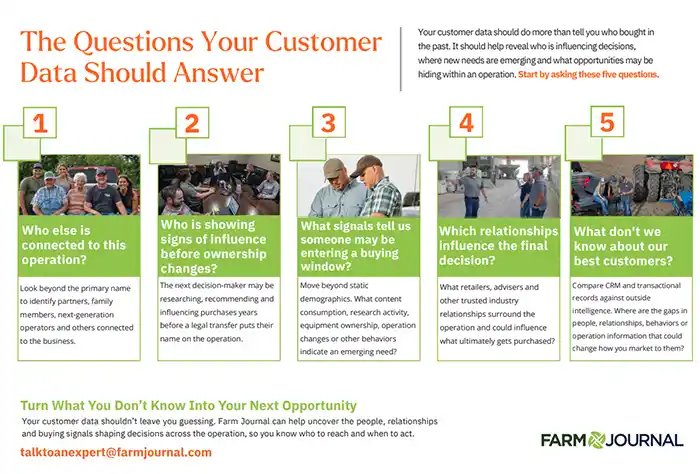
Introduction: The Paradigm Shift in Ag-Marketing
For decades, the playbook for agricultural marketing was relatively consistent: build brand awareness through broad-reach media, track engagement via click-through rates, and rely on traditional funnel metrics to justify annual budgets. However, the landscape has shifted beneath the feet of industry professionals. Today, agricultural marketers are facing an unprecedented convergence of economic headwinds, technological disruption, and a fundamental breakdown of legacy data tracking.
In the current climate, finance departments are no longer satisfied with vanity metrics like impressions or website traffic. They are demanding granular evidence of return on investment (ROI). With budgets tightening across the agricultural sector due to fluctuating commodity prices and rising input costs, every dollar spent must be defended with empirical proof of impact. As artificial intelligence accelerates the speed of campaign execution and the deprecation of third-party cookies renders historical data infrastructure less reliable, the industry is forced to confront a new reality: digital performance can no longer be judged by reach and clicks alone. Success now hinges on the quality, integrity, and actionable nature of the signals behind every marketing decision.
Main Facts: The New Metrics of Success
The core of the current marketing crisis is a disconnect between outdated measurement tools and modern business requirements. Historically, digital marketing in agriculture relied heavily on "top-of-funnel" metrics. While reach and frequency remain important for brand equity, they are increasingly disconnected from the bottom-line results that C-suite executives require.
The transition moving forward involves a shift toward "Signal-Based Marketing." Unlike broad-brush metrics, signal-based marketing prioritizes first-party data, intent-based behaviors, and closed-loop reporting. This means moving away from simply counting how many people saw an ad and toward understanding how specific digital interactions correlate with regional sales patterns, dealer inquiry volume, and long-term customer lifetime value (CLV).
Key industry shifts include:
- The Erosion of Third-Party Data: Regulatory changes and browser updates have degraded the efficacy of traditional tracking pixels, making first-party data capture (via CRM, loyalty programs, and direct digital engagement) the new gold standard.
- The AI Acceleration: AI tools now generate content and deploy campaigns at breakneck speeds. However, this creates a "content deluge," where the volume of digital noise is higher than ever, forcing marketers to focus on relevance rather than sheer output.
- Economic Accountability: With farm margins tightening, marketing is being shifted from an "expense center" to a "profit-driven engine" in the eyes of CFOs.
Chronology: The Evolution of Agricultural Marketing
To understand how we arrived at this inflection point, it is necessary to view the evolution of the sector through a chronological lens.
2010–2015: The Digital Awakening
During this period, agricultural companies began moving their budgets from print-heavy strategies to digital display and email marketing. The primary goal was "presence." If a company had a website and a presence on emerging social media platforms, they were considered "digitally forward." Measurement was rudimentary, focusing almost exclusively on clicks.
2016–2020: The Era of Precision Targeting
The industry embraced programmatic advertising and data-driven segmentation. Marketers started using geofencing to target specific farm operations and began integrating CRM systems with digital ad platforms. This was the peak of "tracking everything," with cookies providing a false sense of security regarding the customer journey.
2021–2023: The Data Privacy Reset
The introduction of stricter data privacy laws and the deprecation of third-party cookies created a "black hole" in measurement. Marketers lost the ability to easily track users across domains. Simultaneously, the pandemic accelerated the digitalization of the farm, with growers becoming more comfortable purchasing inputs online and researching products digitally.
2024–Present: The Quality Signal Era
We are currently in the era of "Proven Impact." With the integration of Generative AI, the barrier to creating marketing material has vanished. The new challenge is not creation; it is validation. The focus has shifted to proprietary data lakes, predictive analytics, and proving that digital touchpoints lead directly to agricultural sales.
Supporting Data: Why "Reach" is No Longer Enough
Recent industry surveys and data benchmarks highlight the growing disconnect between traditional reporting and executive expectations.
- The Attribution Gap: According to recent marketing performance audits, nearly 60% of agricultural marketers report that their current CRM data is not fully integrated with their digital advertising platforms, leading to a significant "blind spot" in tracking the path from ad click to final sale.
- Budgetary Pressures: A 2024 analysis of agribusiness marketing spend shows that while digital spend is increasing, the "cost per acquisition" (CPA) has risen by 22% over the last 24 months, driven by increased competition for digital ad inventory and higher costs for premium, intent-rich placements.
- The Trust Deficit: Finance teams report that less than 30% of marketing reports provided to them contain data that directly correlates with regional sales revenue. This lack of correlation is the primary driver behind the demand for more sophisticated, signal-based reporting.
Official Responses and Industry Perspectives
Leading voices in agricultural marketing are signaling a massive pivot in strategy.
"We are moving past the age of ‘vanity metrics,’" says Sarah Jenkins, a lead digital strategist for a global crop protection firm. "Our finance team doesn’t care about a 5% increase in click-through rates. They want to see how our digital investment is shortening the sales cycle for our retail channel partners. If we can’t prove that, we don’t get the budget."
Conversely, technology providers argue that the issue isn’t the lack of data, but the lack of synthesis. "Ag marketers have a data problem, not a volume problem," says Marcus Thorne, a specialist in AI-driven CRM integration. "The industry has silos everywhere—the equipment side doesn’t talk to the seed side, which doesn’t talk to the chemical side. When you unify these data streams into a single source of truth, the ‘proof of impact’ becomes automated."
There is a growing consensus among industry analysts that marketing departments that fail to integrate their data infrastructure will see their budgets slashed by 15-20% over the next two years, as firms prioritize "performance-first" operations over legacy brand-building exercises.
Implications: The Future of the Ag-Marketer
The implications of this shift are profound, affecting everything from talent acquisition to technological investment.
1. The Rise of the "Marketing Scientist"
The traditional "creative" marketer is being replaced by the "marketing scientist." Future teams will require personnel skilled in data architecture, SQL, and predictive analytics. Understanding the creative aspect of an ad will remain important, but understanding the data trail that ad creates will be the prerequisite for advancement.
2. Investing in Proprietary Data
Companies will shift their focus from buying third-party audience data to cultivating their own first-party data assets. Expect to see increased investment in loyalty programs, farm-management software integrations, and direct-to-grower digital platforms. The company that owns the relationship with the grower—and the data that comes with it—will dominate the market.
3. AI as a Utility, Not a Strategy
While AI is currently being hyped as a transformative force, its true value in agriculture will be as a utility for data cleaning, pattern recognition, and rapid experimentation. The companies that win will not be those who use AI to write the most emails; they will be those who use AI to analyze the most complex datasets to identify which specific digital touchpoints actually drive crop input purchases.
4. The Integration of Sales and Marketing
The wall between "Marketing" and "Sales" is crumbling. In the new reality, digital performance will be measured by "Revenue Operations" (RevOps). Marketing will be held accountable for the health of the pipeline, and sales teams will rely on marketing to provide "high-intent signals" that prioritize which leads to call first.
Conclusion: Adapting to the New Reality
The changing agricultural market is unforgiving, but it is also rewarding for those who can navigate the complexity. The era of "big reach" is yielding to the era of "big signals." For the agricultural marketer, the task is no longer to simply be seen; it is to be understood, measured, and proven.
By moving away from superficial metrics and embracing a rigorous, data-centric approach, marketing leaders can protect their budgets and, more importantly, prove their value as an engine for business growth. In a world of increasing digital noise, the loudest voice no longer wins—the one with the most accurate, actionable signal does. The future of agricultural marketing belongs to the precise, the analytical, and the transparent. Those who adapt to these new realities will not just survive the current market volatility; they will define the next generation of industry leaders.



 Siti Muinah
