

 Azzam Bilal Chamdy
 Neng Nana
 Nana Muazin
 Dwi Wanna
 Raul Delapena Setiawan
 Asep Darmawan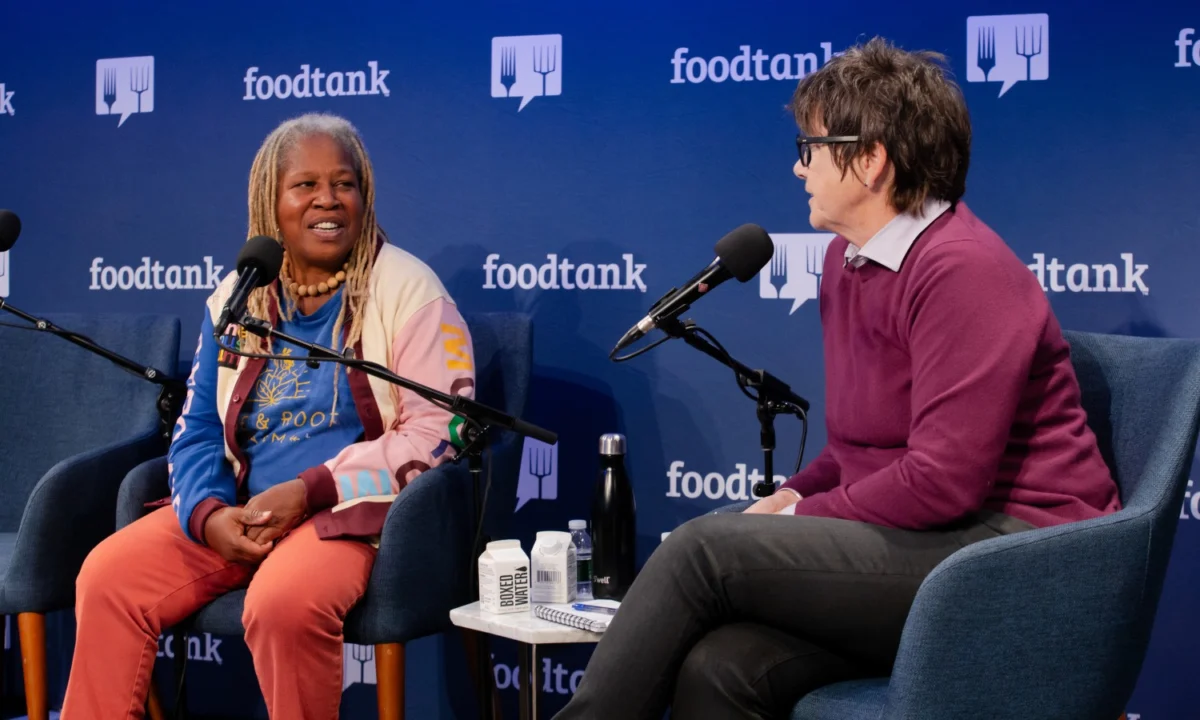
During the recent Climate Week NYC, a collective of educators, farmers, chefs, and policy advocates gathered for the "Future of Food Education" Summit. The event, presented in partnership with Pilot Light and supported by Nielsen Massey, challenged the traditional boundaries of the school curriculum, arguing that the food system is not merely a logistical necessity, but a profound pedagogical tool capable of teaching everything from mathematics to climate advocacy.
As global concerns regarding food security, environmental sustainability, and public health intensify, the summit served as a rallying cry to transform how we teach the next generation about the origins of their sustenance. The core thesis of the event was clear: by integrating food systems into the classroom, we empower students to become critical thinkers, informed consumers, and proactive agents of climate change.
The Pedagogical Power of Food
For decades, food in schools has been relegated to the cafeteria, viewed strictly through the lens of nutrition and caloric intake. The speakers at the summit argued for a radical shift: treating the entire food system as a "living laboratory."
"You can teach any subject through food," noted Alexandra DeSorbo-Quinn, Executive Director of Pilot Light. "Food makes learning relevant."
This philosophy posits that abstract concepts in science, history, and economics become tangible when mapped onto the food we consume. For instance, a lesson on multiplication or division—as demonstrated by educator Amanda Torres at P.S. 072 Dr. William Dorney—becomes far more engaging when applied to scaling a recipe or calculating the yield of a school garden. By contextualizing academic subjects within the framework of food, educators are finding that student engagement spikes, and the "real-world" applicability of their studies becomes self-evident.
Establishing a Common Language
One of the most significant barriers to integrating food education has been the lack of a standardized framework. To address this, Pilot Light has spearheaded the development of the United States’ first-ever Food Education Standards. These benchmarks provide a roadmap for educators, outlining how to weave food systems into curricula across various grade levels and disciplines.
Taylor Meredith, Education Policy Advisor at Pilot Light, emphasized the necessity of these standards during the summit. "We think of those standards as a common language that we can all speak," she explained. "When everybody is speaking the same language in the classroom, that’s when we have impact in the broader community."
These standards are not meant to add more work to an already overburdened teaching staff; rather, they provide a framework that grants teachers the "permission to be creative." Caitlin Arens, Food Education Fellowships Director at Pilot Light, noted that teaching itself is a form of "food system action," a quiet revolution that starts with a lesson plan and ends with a more informed citizenry.
The Garden as a Classroom
Beyond the four walls of the schoolhouse, the summit highlighted the transformative potential of outdoor learning. Farms and school gardens serve as vital spaces for experiential learning, where the connection between the earth, the harvest, and the plate is solidified.
Lyndsey Waugh, Executive Director of the Sprouts Healthy Communities Foundation, spoke to the emotional and social weight of these spaces. "The power of bringing people together for shared experiences is transformational," she said. "Human connections spark around food."
This sentiment was echoed by Rev. Linda Carmen Bryant, co-founder of the San Antonio Million Gardens Project. For Rev. Bryant, the garden is a site of spiritual and practical growth. "If we can eat better, we can teach the next generations to love the garden and the harvest," she remarked. Her work in Texas focuses on the infectious nature of this enthusiasm; once children are excited about the process of growing food, they become the primary drivers of change within their own households and communities.
The Economic Reality of the Next Generation
While enthusiasm is a necessary spark, the summit organizers were quick to acknowledge that passion alone cannot sustain a food system. Preparing the next generation for careers in agriculture requires a rigorous focus on business acumen, financial literacy, and the navigation of complex bureaucratic landscapes.
Gerardo Martinez, Founder of Wild Kid Acres and a Marine Corps Veteran, raised a sobering point about the future of farming. "There’s power in the fact that your kids are the next generation," Martinez observed. "I am not too scared about the next generation of producers; what I am scared about is their ability to access resources."
This concern was contextualized by Karen Washington, a veteran farmer and food justice advocate. She noted that land has become increasingly commoditized, creating a high barrier to entry for young farmers. "The solution cannot simply be to give them land without also making sure they can afford access to water, electricity, equipment, and agricultural inputs," she argued.
Washington advocated for a shift toward collective ownership and cooperative models, which allow for shared costs and resources. "Now is the time to organize," she urged. "People are forming ecosystems, cooperatives, and collaborative organizations. The remedy is: know your local farmer."
Turning the Cafeteria into a Classroom
Perhaps the most accessible point of intervention is the school cafeteria itself. For many students, the cafeteria is the first and only place they encounter fresh, locally sourced, or nutritionally dense foods.
Jeremy Walter, Executive Director of Food & Nutrition Education for New York City Public Schools, described efforts to turn these spaces into hubs of education. By collaborating with students to get feedback on menus, the district is not just feeding children, but teaching them to be discerning consumers.
Nancy Easton, Executive Director and Founder of Wellness in the Schools, reinforced this idea, noting that they are "more and more trying to optimize the cafeteria as a classroom." When students are given a voice in what they eat—and when they understand the labor and ethics behind that food—the cafeteria ceases to be a passive environment and becomes an active site of public health and civic engagement.
Looking Forward: A Call to Agency
The summit concluded on a note of urgent empowerment. While the flaws of the current food system are well-documented, the speakers rejected a narrative of despair in favor of one of active participation.
"The food system is flawed; it’s no secret," said Shanon Morris of Harlem Grown. "It’s important to remind ourselves—and our kids—that they are a part of a change. It’s important that we plant those seeds."
This message was distilled by Amanda Torres, whose classroom practice serves as a microcosm for the broader movement. By teaching students to value their own voices and to recognize their power, she is cultivating more than just academic proficiency—she is cultivating agents of change.
"People talk about the past and talk about the future, but what we’re doing now matters," Torres said. "We all have the power to change. Don’t wait on anyone to change for you."
As Climate Week NYC underscored, the future of food education is not a destination, but a continuous process of connection—connecting the soil to the classroom, the farmer to the eater, and the present actions of students to the sustainable future they will inherit. Through standardized metrics, experiential learning, and a focus on collective economic power, the movement for food literacy is shifting from the margins to the mainstream, ensuring that the next generation is not only fed, but fundamentally equipped to sustain the planet.



 Siti Muinah
