 Laily UPN
 Suro Senen
 Muslim
 Raul Delapena Setiawan
 Layla Zulfa
 Nana
Date: October 14, 2026
Reporting by: Julie Littman
Krispy Kreme, the iconic global doughnut brand, is aggressively reshaping its operational footprint as part of a multi-year turnaround strategy aimed at achieving sustainable, profitable growth across the United States. The company recently announced significant expansion initiatives, including a deepened partnership with long-time franchisee Original Entrepreneurs. This move underscores the brand’s transition toward an asset-light business model, a pivotal shift designed to optimize capital allocation, reduce debt, and leverage the localized expertise of proven operating partners.
As of mid-2026, the company is successfully executing a strategy that pivots away from company-owned heavy operations toward a more agile, franchise-led architecture. By empowering partners like Original Entrepreneurs—who have successfully navigated the hyper-competitive Northeast corridor since 2017—Krispy Kreme is signaling a departure from its historical reliance on corporate-run shops in favor of a model that emphasizes regional agility and operational excellence.
Main Facts: The Shift to an Asset-Light Model
The cornerstone of Krispy Kreme’s current corporate strategy is the transition to an "asset-light" framework. In practical terms, this means the company is offloading the capital-intensive burden of owning and maintaining real estate and daily shop operations to experienced franchisees.
By offloading these assets, Krispy Kreme is not only shrinking its balance sheet but also significantly reducing its debt exposure. A primary example of this initiative was the divestiture of its Japanese assets earlier this year, a transaction that yielded $65 million. This liquidity infusion, combined with the strategic refranchising of domestic units, has allowed CEO Josh Charlesworth to focus the corporate office on brand equity, supply chain optimization, and national marketing initiatives rather than the granular details of local shop management.
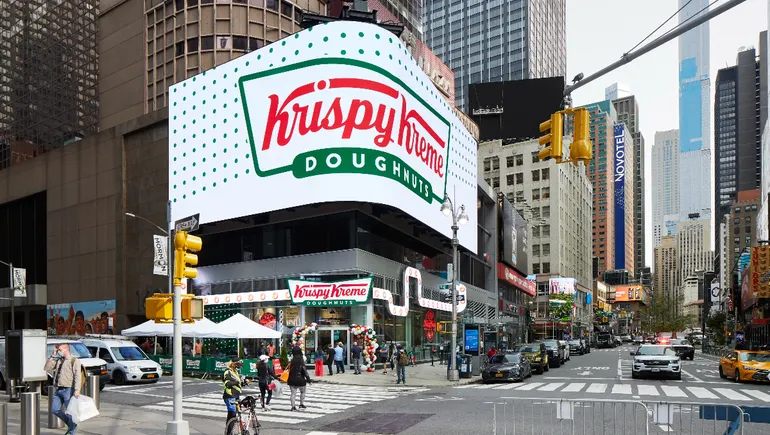
The partnership with Original Entrepreneurs serves as the archetype for this growth. Having entered the Krispy Kreme ecosystem in 2017, the group has demonstrated a unique capability to thrive in the demanding markets of New York and New Jersey. With a portfolio that includes major hubs such as Jersey City, Springfield, East Rutherford, Paramus, and Lakewood, Original Entrepreneurs has become the operational engine for the brand’s high-density expansion in the Northeast.
Chronology: A Roadmap of Strategic Transformation
The journey toward this current structure did not happen overnight. It is the result of a deliberate, phased execution plan:
- 2017: Original Entrepreneurs opens its inaugural "Hot Light Theater" shop, marking the beginning of a key partnership that would eventually cover multiple states.
- 2024–2025: Krispy Kreme initiates a comprehensive review of its global assets, identifying markets where franchising offers superior margins compared to direct ownership.
- November 2025: The company executes a major menu overhaul, increasing its core daily doughnut selection from 10 to 16 varieties to drive customer engagement and unit volume.
- Early 2026: The company accelerates the sale of international and domestic assets to bolster its cash position.
- August 2026: During the Q2 earnings call, CEO Josh Charlesworth reports that franchise-generated sales have surged to 42% of systemwide sales, up from just 25% the previous year.
- October 14, 2026: The company formally updates its expansion strategy, solidifying the role of key franchisees in the brand’s long-term growth trajectory.
Supporting Data: Scaling Through Franchising
The metrics underpinning Krispy Kreme’s transition tell a compelling story of fiscal discipline. As of August 2026, the percentage of systemwide sales attributed to franchisees reached 42%. This represents a rapid ascent from the 25% reported in 2025.
The corporate goal is clear: the leadership team aims for franchisees to account for 50% of systemwide sales by early 2027. This shift is not merely about shifting the burden of ownership; it is about scaling the brand’s reach. By utilizing the capital of franchisees, Krispy Kreme can expand its "Hot Light" footprint—the company’s most effective tool for driving foot traffic—at a pace that would be prohibitive if funded solely by the corporate parent.
Furthermore, the diversification of the menu has proven to be a critical lever for increasing average check sizes. By moving to a 16-doughnut core menu, supplemented by five distinct seasonal collections per year, the company has created a "steady cadence" of traffic-driving events. This constant rotation of limited-time offers ensures that the brand remains relevant in a crowded quick-service restaurant (QSR) environment.

Official Responses: Insights from Leadership
CEO Josh Charlesworth has been transparent about the necessity of this shift. During the company’s recent earnings call, he emphasized that the current transformation is about balancing "profitable growth" with the agility required to survive in an unpredictable economic landscape.
"The partnership with Original Entrepreneurs allows us to expand through an operator that has deep expertise building and operating Krispy Kreme shops in a competitive market," Charlesworth stated in a press release. He noted that this specific partnership is a model for how the company intends to interact with its franchise network moving forward: providing the brand and the process, while letting the operators provide the local market intelligence and on-the-ground management.
Regarding the debt reduction strategy, Charlesworth noted that the proceeds from the Japanese asset sale and the ongoing domestic refranchising efforts were instrumental in stabilizing the company’s financial position. The management team’s message is consistent: the brand is no longer trying to be a landlord; it is trying to be a global platform for a premium consumer product.
Implications: The Future of the "Hot Light" Experience
What does this mean for the consumer and the competitive landscape?
For the consumer, the transition promises a more consistent, high-quality experience. Original Entrepreneurs’ track record of maintaining the "Hot Light Theater" format in New Jersey and New York indicates that the company is prioritizing the brand’s unique experiential marketing. When a customer walks into a Krispy Kreme, the sensory experience of watching doughnuts being glazed is the brand’s primary differentiator against competitors like Dunkin’ or independent gourmet bakeries.

For the QSR industry, Krispy Kreme’s pivot is a case study in how heritage brands can evolve to avoid stagnation. By offloading assets, the company is insulating itself from the volatility of real estate markets and labor fluctuations in local jurisdictions. Instead, it is shifting its focus to digital channels and fresh delivery partnerships—the modern pillars of QSR revenue.
As Krispy Kreme moves toward the 50% franchise threshold, the primary challenge will be maintaining brand consistency. While Original Entrepreneurs has proven capable, the broader network must ensure that the quality of the 16-core-menu items remains uniform across thousands of locations.
The successful integration of these strategic initiatives by early 2027 will likely define the next decade for Krispy Kreme. If the company can maintain its current trajectory of debt reduction and franchise-led expansion, it will have successfully transformed from a traditional retail chain into a modern, asset-light, and highly scalable consumer brand. The "Hot Light" is not just signaling fresh doughnuts—it is signaling a fresh start for the company’s financial future.

 Nana Wu
 Asro