

 Nana Wu

 Dwi Wanna

 Suro Senen

 Evan Lee Salim

 Nila Kartika Wati
In a world increasingly defined by climate volatility and ecological instability, a stark new warning has emerged from the World Wide Fund for Nature (WWF). Their latest Living Planet Report serves as both a final wake-up call and a roadmap for survival. While the data paints a sobering picture of a planet losing its biological wealth at an unprecedented rate, the report arrives with a counterintuitive message: nature’s recovery is not just a theoretical possibility—it is an achievable reality, provided we are willing to fundamentally restructure our global food systems.
Main Facts: The State of Our Global Life Support System
The Living Planet Report is the most comprehensive assessment of its kind, tracking over 35,000 populations across 5,700 species of mammals, birds, fish, reptiles, and amphibians. The core finding is unequivocal: the natural world is under siege.
"Nature underpins our economies; it is our life support system," explains Kirsten Schuijt, Director General of WWF International. Despite this reality, Schuijt warns that the biosphere "continues to be degraded at an alarming scale." The degradation is not uniform, but it is pervasive. The report highlights that while biodiversity loss is currently accelerating most rapidly in Latin America and the Caribbean, followed closely by the African continent, no corner of the globe is immune.
The report identifies the global food and agriculture sector as the single largest driver of habitat loss, degradation, and overexploitation. By placing the onus on how we produce, consume, and waste our food, the WWF shifts the conversation from abstract conservation goals to the tangible, daily mechanics of human survival.
Chronology: Understanding the Baseline of Decline
To understand the current crisis, one must look at the historical context of biological measurement. Critics sometimes point to regions like North America and Europe as having more "stable" biodiversity trends in recent decades. However, Andrew Terry, Chief Conservation Officer for the Zoological Society of London, clarifies that this is a matter of perception rather than health.
"The results don’t mean regions like North America and Europe haven’t seen significant population decline," Terry explains. "Rather, the biggest drop-off took place before 1970."
- Pre-1970 (The Baseline): The year 1970 serves as the scientific baseline for the Living Planet indices. In the Western world, the industrial revolution and subsequent agricultural expansion caused massive habitat fragmentation long before modern conservation data was formalized.
- 1970–2000 (The Acceleration): As globalization expanded, the pressure on tropical and subtropical ecosystems began to mirror the historical trends of the West, leading to a rapid loss of biodiversity in regions that had previously remained more intact.
- 2000–Present (The Crisis Point): The current era is defined by the intersection of climate change and industrial agriculture. The report notes that we are now seeing a feedback loop where the climate crisis accelerates habitat loss, which in turn reduces the planet’s ability to sequester carbon.
Supporting Data: The Mechanics of Collapse
The scale of the crisis is best understood through the specific pressures placed on terrestrial and aquatic ecosystems. According to Rebecca Shaw, Lead Author of the report and Chief Scientist at WWF, the numbers are as staggering as they are specific:
- Terrestrial Threat: Habitat loss, driven primarily by agricultural expansion, now threatens over 80 percent of all terrestrial bird and mammal species.
- Marine Ecosystems: In the oceans, overfishing remains the primary driver of biodiversity loss. This is compounded by excessive water extraction for agricultural irrigation, which dries up vital freshwater habitats.
- Pollution: Runoff from industrial farming—containing pesticides, herbicides, and excess fertilizers—is responsible for a staggering 50 percent of all freshwater biodiversity loss.
These metrics demonstrate that biodiversity loss is not merely a side effect of human development; it is a direct result of how we manage our food supply. From the clearing of rainforests for cattle ranching to the nitrogen loading of rivers from monoculture farming, the current food system acts as an engine of extinction.
Official Responses and the "Bright Spots" of Hope
Despite the grim statistics, the WWF maintains a stance of measured optimism. "Nature can rebound, especially when we work together," says Kirsten Schuijt. The report bolsters this claim with concrete "bright spots"—cases where human intervention reversed the tide of extinction.
The Green Sea Turtle
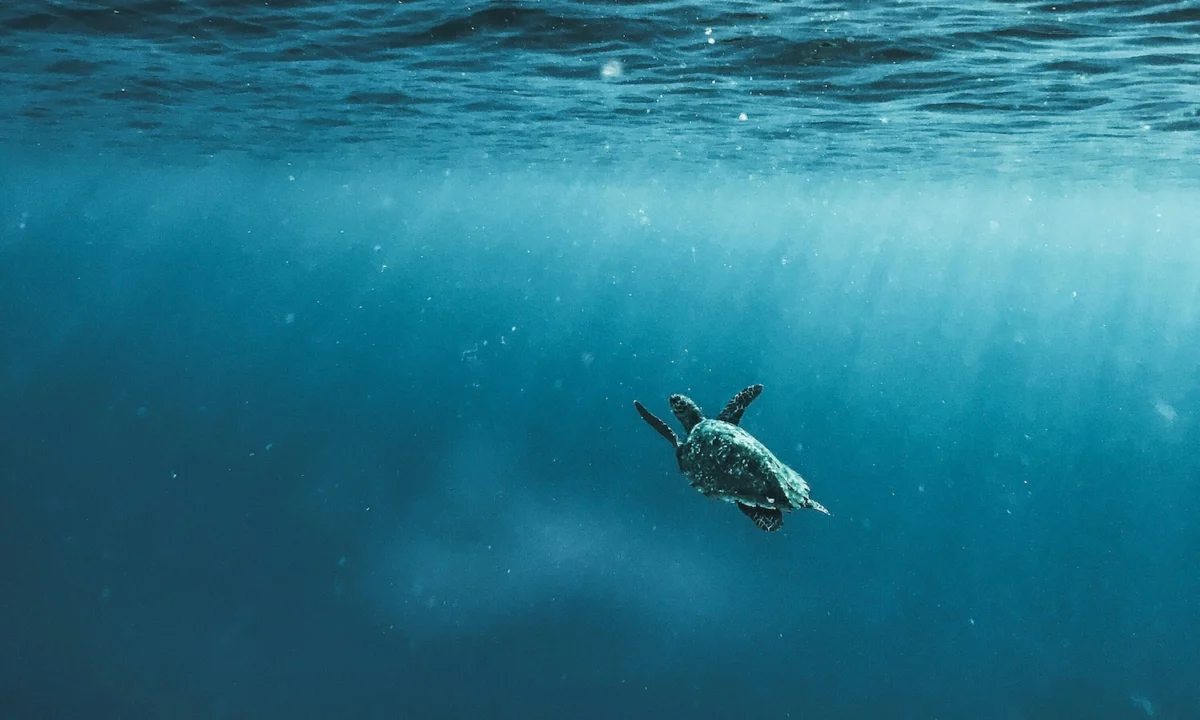
For decades, the green sea turtle was a symbol of marine vulnerability. However, after 50 years of collaborative, multi-national conservation efforts spanning 80 countries, the species has been officially downgraded from "Endangered" to "Least Concern." This transition marks the first time a marine turtle has moved up the conservation scale, proving that long-term, cross-border cooperation is effective.
The Bluefin Tuna
Similarly, the Atlantic and Pacific bluefin tuna populations were once considered to be on the brink of commercial and biological collapse due to relentless overfishing. Through the implementation of strictly enforced quotas, international monitoring, and habitat protection, these populations have recovered to the point where they are no longer categorized as threatened.
"Targeted conservation action works, and it works really well," notes Rebecca Shaw. "But it can’t overcome the threats to nature alone." The lesson here is that while localized protection is necessary, it is insufficient if the underlying system—the global economy and its appetite for resources—remains unchanged.
Implications: A Three-Pronged Path Forward
The Living Planet Report argues that to reach a "positive tipping point," we must move beyond incremental change and embrace systemic reform in three critical areas:
- Nature-Positive Farming: We must transition away from high-input industrial agriculture toward regenerative practices that restore soil health, increase biodiversity on farms, and prioritize ecosystem services like pollination and natural pest control.
- Sustainable Diets: Shifting global consumption patterns toward diets that are less resource-intensive—specifically those that reduce the reliance on land-heavy protein sources—would significantly alleviate pressure on global habitats.
- Eliminating Waste: With roughly one-third of all food produced for human consumption currently lost or wasted, the efficiency gap is massive. Reducing food waste at every stage of the supply chain is the most immediate way to reduce the need for further agricultural land conversion.
The Financial and Energy Imperative
Beyond the farm gate, the report emphasizes the necessity of a total energy transition. Renewable energy must replace fossil fuels at an accelerated pace to prevent the climate-driven shifts in habitats that make current conservation efforts harder. Furthermore, the report calls for a radical realignment of global finance. Currently, trillions of dollars are invested in systems that actively degrade ecosystems. Redirecting these funds toward regenerative, circular economies is the only way to make the transformation possible.
Conclusion: Hope as a Scientific Strategy
Perhaps the most significant takeaway from the WWF report is the reframing of "hope." In the context of environmental science, hope is often dismissed as naive. Kirsten Schuijt disagrees, stating, "Hope is not an abstract thing. It’s based in science."
By demonstrating that population declines can be halted and even reversed, the report provides a rational basis for action. For the next generation, this distinction is vital. As Schuijt notes, "Young people need to feel they can still contribute to a better future." By shifting the narrative from inevitable decline to manageable recovery, the report provides the agency required to mobilize global action.
The path ahead is undoubtedly narrow and steep. It requires a complete rethink of how we grow our food, how we power our lives, and how we value the natural world. However, the data confirms that when humanity acts in concert with nature rather than against it, the planet possesses a remarkable capacity for resilience. The Living Planet Report is a reminder that while the clock is ticking, the tools to stop it are already in our hands.

 Asep Darmawan

 Layla Zulfa

