Ammar Sabilarrohman


 Nana Wu
 Sagoh

 Azzam Bilal Chamdy
Royal Caribbean Group (RCG) is setting its sights on a transformative evolution of the travel industry, aiming to capture a significantly larger share of the global tourism market. By pivoting from a pure-play cruise operator to a comprehensive vacation lifestyle brand, the company is leveraging its recent financial success to fuel an ambitious diversification strategy—most notably through a landmark planned acquisition of a 50% stake in the iconic Sandals Resorts and Beaches Resorts brands.
This strategic maneuver is designed to solidify customer loyalty and extend the company’s reach into the daily lives of travelers. According to internal projections, Royal Caribbean currently captures between 20% and 25% of its guests’ total annual vacation spending. By integrating high-end, all-inclusive land-based resorts into its portfolio, RCG anticipates doubling this share to nearly 50%, effectively turning the cruise line into a holistic provider of both sea and sand experiences.
The Financial Engine: A Record-Breaking Third Quarter
The impetus for this expansion stems from a position of profound financial strength. In its third-quarter earnings report released this week, Royal Caribbean Group surpassed market expectations, prompted by robust consumer demand and strong pricing power across its fleet.
Key Financial Highlights:
- Surpassing Guidance: The company outperformed its initial third-quarter projections, driven by high demand for European itineraries and a surge in last-minute "close-in" bookings.
- Upward Revision: Bolstered by the momentum of the summer season and strong bookings for the upcoming winter, the company raised its full-year 2024 guidance.
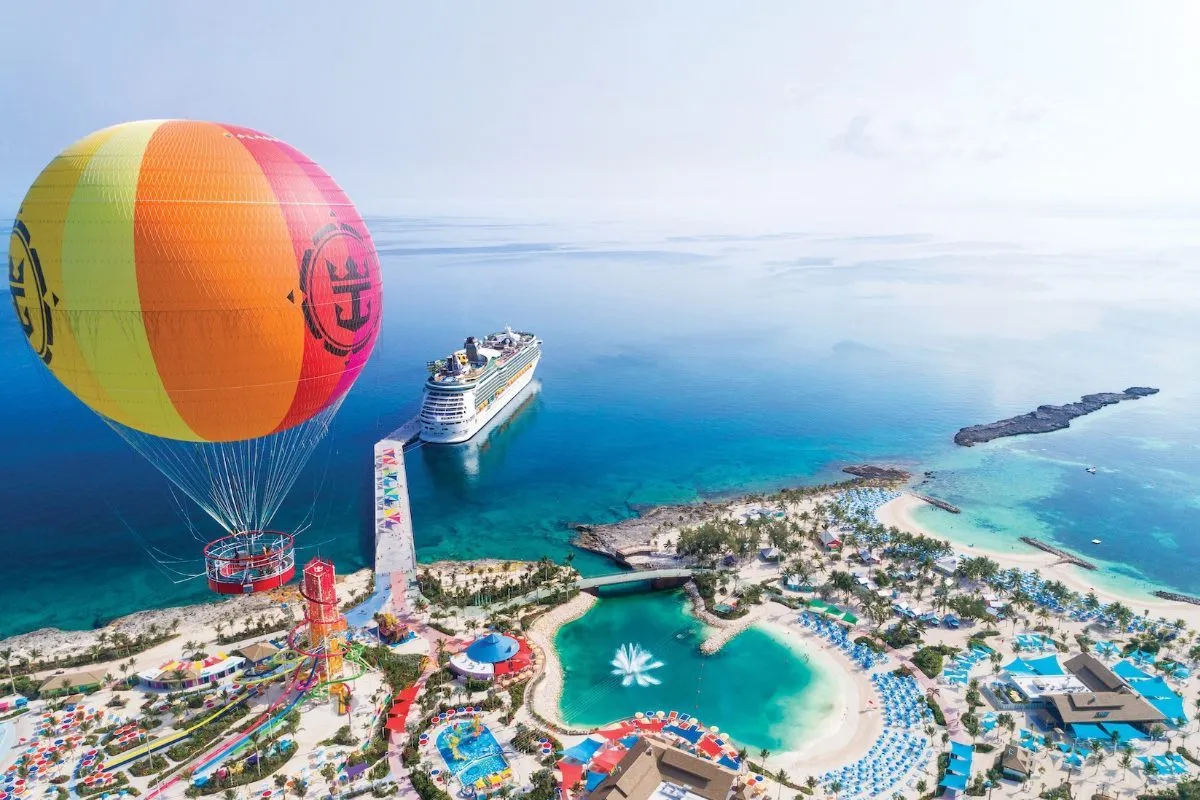
- The Power of Loyalty: Nearly 50% of the company’s guests this year are repeat customers, a testament to the efficacy of the brand’s loyalty program and its private-island experiences, such as CocoCay.
The company’s ability to drive "yields"—a key cruise industry metric measuring revenue per available cabin—has been bolstered by the successful launch of new vessels like the Icon of the Seas. By consistently raising the bar for onboard entertainment, dining, and private destination experiences, Royal Caribbean has managed to move away from deep discounting, instead focusing on premium pricing models that appeal to both families and luxury travelers.
Chronology of a Strategic Pivot
The path to Royal Caribbean’s current "ecosystem" strategy was not an overnight development. It represents the culmination of a decade-long evolution in how the company views the consumer journey.
2014–2019: The Private Destination Era
Royal Caribbean began investing heavily in its own "destinations." The transformation of CocoCay in the Bahamas from a quiet stopover into a massive, multi-million dollar "Perfect Day" island was the first step in keeping guests within the company’s bubble. By controlling the guest experience from ship to shore, RCG realized it could increase secondary spending significantly.
2020–2022: The Resilience Test
The global pandemic served as a crucible for the cruise industry. While many competitors faced existential threats, Royal Caribbean focused on liquidity and operational efficiency. This period solidified the necessity of a diversified portfolio; the company learned that relying solely on ship-based revenue was a vulnerability in a volatile global climate.
2023–2024: The Ecosystem Ambition
Post-pandemic, RCG shifted its focus toward "Vacation Ecosystems." The company began analyzing the data on where its cruisers spent the rest of their vacation budget. The realization—that a significant portion of their loyalists were spending their land-based vacations at competitive all-inclusive resorts—led to the current pursuit of a 50% stake in Sandals and Beaches.
Supporting Data: Capturing the "Wallet Share"
The economic logic behind Royal Caribbean’s push into land-based resorts is rooted in "share of wallet" analysis. In the travel sector, customer acquisition costs are high. Convincing a traveler to choose a brand for the first time is expensive; retaining them for multiple vacations is the primary driver of profitability.
The Math of Expansion
- Current State: A guest spends, on average, $5,000 per year on vacations. If they cruise with Royal Caribbean once ($2,000) and spend the rest at independent hotels or on other travel brands, RCG only captures 40% of that specific trip, and roughly 20–25% of the annual total.
- Future State: If that same guest takes a cruise, then spends their subsequent land-based vacation at a Royal Caribbean-affiliated Sandals resort, the company captures revenue from both trips. This synergy increases the "customer lifetime value" (CLV) exponentially.
Furthermore, by connecting the loyalty programs of the cruise line with the resort brands, Royal Caribbean creates a "sticky" ecosystem. A guest who earns points on a Caribbean cruise can redeem them for a honeymoon at a Sandals resort, creating a circular flow of spending that keeps the customer within the brand family for years.
Official Responses: The Vision of Jason Liberty
During the recent earnings call, CEO Jason Liberty articulated the philosophy behind this aggressive expansion. His remarks underscored a shift in how the company views the competition.
"If a Royal Caribbean customer goes on a competitive cruise brand, I think that’s a fail," Liberty stated clearly. "Having connected loyalty and delivering these incredible experiences should keep our customer inside of our ecosystem."
Liberty’s sentiment reflects a broader industry trend toward consolidation and vertical integration. For RCG, the cruise ship is no longer just a vessel for transit; it is a platform for a total lifestyle experience. By adding Sandals—a brand synonymous with the Caribbean luxury resort experience—Royal Caribbean is effectively de-risking its business. If cruise demand were to soften due to geopolitical instability or fuel price volatility, the land-based resort portfolio provides a stable, predictable revenue stream that operates on a different economic cycle.
Implications: A New Era for the Travel Industry
The potential acquisition and the ongoing push for a broader ecosystem carry significant implications for the travel industry at large.
1. Market Consolidation
Should the Sandals/Beaches deal reach full integration, it sets a precedent for other cruise lines to follow. We may see a wave of M&A activity where cruise lines acquire hotel chains, theme parks, or tour operators to create "travel super-apps" and closed-loop vacation systems.
2. The Death of the "Independent" Traveler
For the consumer, this trend presents a trade-off. While the convenience of a unified loyalty program and seamless travel experiences is attractive, it risks centralizing power among a few mega-corporations. Smaller, independent travel providers may find it increasingly difficult to compete with the marketing budgets and data-driven personalization capabilities of a company like Royal Caribbean.
3. Pricing and Value
Royal Caribbean’s move suggests that the future of travel pricing is dynamic and bundled. Expect to see "Vacation Bundles" that allow consumers to pay a subscription or a flat fee for access to a mix of cruise and land-based resorts. While this may offer better value for the loyal customer, it could also lead to higher barrier-to-entry prices for the occasional traveler.
4. Competitive Pressure on Peers
Competitors like Carnival Corporation and Norwegian Cruise Line Holdings will be forced to respond. Will they pursue their own acquisitions in the hotel space? Or will they double down on their cruise-only models, hoping that their specific brand identities remain strong enough to counter Royal Caribbean’s ecosystem play?
Conclusion: The Road Ahead
Royal Caribbean Group is no longer just a cruise line; it is a vacation conglomerate in the making. By raising its guidance and signaling a shift toward land-based integration, the company has signaled that it is no longer satisfied with being a part of a traveler’s life—it wants to be the primary architect of their leisure time.
As the company moves forward with its 50% stake in Sandals and continues to refine its "Perfect Day" island concepts, the travel industry is watching closely. The success of this strategy will depend on whether Royal Caribbean can maintain the high-quality, distinct service culture of its cruise ships while successfully managing the complex operational demands of high-end resorts.
For now, the strategy is paying dividends. Investors are pleased, the loyalty base is growing, and the vision of a seamless "Royal Caribbean lifestyle" is becoming increasingly tangible. As the company continues to tighten its grip on the travel wallet, one thing is certain: the competition is on notice, and the definition of a "cruise vacation" is undergoing its most significant change in a generation.