Evan Lee Salim

 Lina Irawan

 Asro
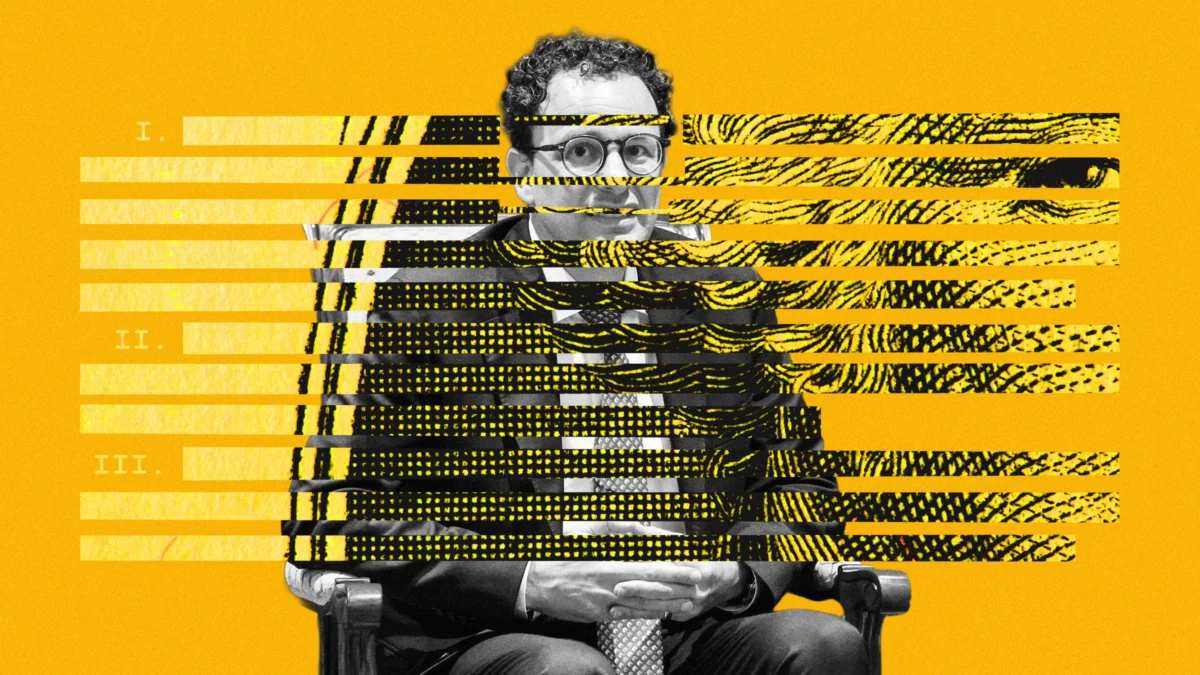
In a move that marks a definitive chapter in the maturation of the artificial intelligence sector, Anthropic—the research-heavy AI powerhouse behind the Claude model—officially filed its long-awaited S-1 prospectus with the U.S. Securities and Exchange Commission (SEC) this past Monday. The filing serves as a gateway to the company’s impending public debut, offering the first real glimpse into the financial engine, strategic maneuvers, and existential risk profile of a company currently racing to dominate the global enterprise AI market.
However, for investors and analysts hungry for clarity, the document is as much a study in what is missing as it is in what is disclosed. Spanning hundreds of pages, the prospectus is punctuated by notable redactions and blank spaces where critical financial figures should be, fueling a debate about the transparency—and the volatility—of the nascent AI industry.
Main Facts: A Billion-Dollar Bet on Compute
Anthropic’s prospectus underscores a central, undeniable reality: modern AI is a game of scale, and scale is synonymous with silicon. The company candidly admits that its primary operating cost is "compute"—the massive, energy-intensive infrastructure required to train and run increasingly sophisticated large language models.
The S-1 highlights a staggering financial footprint. In a move that signals the company’s intent to dominate, it has secured long-term compute and infrastructure leases with future minimum payment obligations totaling approximately $808 billion. This figure, while eye-watering, is contextualized by the company’s view of the landscape. Anthropic explicitly states that its investments must appear “irresponsibly large” at first glance to satisfy the computational demands of future model iterations.
The company is effectively creating a “single, fungible pool” of compute resources sourced from a trifecta of strategic giants: Amazon, Google, Nvidia, and AMD. These partnerships are not merely transactional; they are fundamental to Anthropic’s survival, as the firm balances the high-stakes risk of “undersupply” (which could lead to obsolescence) against the risk of “overinvestment” (which could cripple the balance sheet).
Chronology of a Public Debut
The path to this filing has been one of meteoric growth.
- Early 2023: Anthropic achieves its commercial launch, transitioning from a research-focused organization to a market-facing entity.
- 2023–2026: Claude experiences what the prospectus describes as the “fastest enterprise adoption of any technology in history.”
- September 30, 2026: The close of the company’s most recent fiscal quarter. This date serves as a critical junction in the S-1, as the filing leaves the actual revenue figures for this specific period redacted.
- October 2026: The filing of the S-1. The proximity of the filing date to the quarter’s end is a primary justification for the missing financial data.
- Mid-November 2026 (Projected): According to SEC regulations, if Anthropic remains in the pre-IPO phase beyond this window, it will be legally obligated to update its filing with finalized third-quarter financials, potentially shedding light on the redacted revenue metrics.
Supporting Data: The Cost of Intelligence
While the company has withheld specific revenue figures for the quarter ended September 30, 2026, the footnotes of the S-1 provide a window into the sheer scale of the firm’s capital commitments.
The figures are, by any measure, unprecedented:
- $417 Billion: The aggregate future minimum payment obligation for "compute and infrastructure" leases entered into since December 31, 2025.
- $245 Billion: The additional amount added to these obligations since June 30 of this year.
- $125 Billion to $150 Billion: Potential additional capital earmarked for commercial agreements that have not yet been fully finalized.
- $21 Billion: Short-term commitments with non-cancelable payment structures.
These numbers illustrate a company moving at breakneck speed. The total commitment of $808 billion serves as a testament to the capital-intensive nature of the AI arms race. For investors, the question is not just whether these investments will pay off, but whether the infrastructure being leased today will remain relevant in a field that evolves on a monthly, rather than yearly, basis.
Expert Perspectives and Official Responses
The reception to the filing among academic and industry experts has been a blend of pragmatism and skepticism. Michael Dambra, an accounting and law professor at the University at Buffalo School of Management, suggests that the redactions are largely procedural rather than malicious.
“Closing the books for a company of this size takes time,” Dambra notes, explaining that the proximity of the September 30 close to the filing date makes it difficult to have fully vetted, audited numbers ready for public consumption. Furthermore, he emphasizes that companies have a legal incentive to avoid publishing premature numbers, as they face liability for any misstatements in their registration documents.
However, others are more critical of the lack of granular detail. Erica Neuman, an accounting professor at Youngstown State University, suggests that investors must look past the redactions to understand the underlying financial health. “It’s worth scrutinizing whether these redactions make it more difficult for investors to analyze financial obligations and how they impact cash flow,” she says.
Patrick Moorhead, CEO and chief analyst at Moor Insights & Strategy, believes the company’s risk disclosure is insufficient. “Anthropic owes investors more information, such as a probability of these individual issues,” he says. “They should be characterizing the percentage chance and the degree of the impact, rather than just saying these issues ‘could materially impact’ the business.”
Anthropic did not respond to requests for comment regarding the redactions or the specific financial obligations mentioned in the prospectus.
Implications: The "Information Gap" and Market Pricing
The presence of redactions in an S-1 is not merely a technicality; it carries tangible market implications. According to research cited by Professor Dambra, companies that utilize significant redactions in their IPO filings are statistically more likely to underprice their shares.
This happens because an “information gap” creates uncertainty, and uncertainty breeds suspicion. To attract institutional investors who are wary of the unknown, companies often feel compelled to set a lower starting price, effectively paying a “transparency discount.”
For the AI industry at large, the Anthropic filing serves as a litmus test. Ben Bajarin, CEO of Creative Strategies, posits that the entire AI sector is currently operating in a state of flux. "All of this just shows how absurdly early we are in enterprise adoption of an AI market that will be more than $3 trillion yearly and likely growing," he says.
The implication for the average investor is clear: the AI boom is not just about the quality of the models or the speed of the algorithms—it is about the stability of the infrastructure beneath them. Anthropic’s S-1 is a declaration that it is willing to spend nearly a trillion dollars to secure its place in that future. Whether that gamble is priced correctly, or whether the redacted gaps hide more significant vulnerabilities, will be the defining question of its public debut. As the filing moves through the SEC process and further disclosures are made, the market will soon learn whether this “irresponsibly large” investment strategy is the blueprint for the next generation of tech giants or a cautionary tale of overreach.


 Nila Kartika Wati

 Ali Ikhwan