Nana Wu

 Dwi Wanna

 Suro Senen

 Evan Lee Salim

 Ali Ikhwan
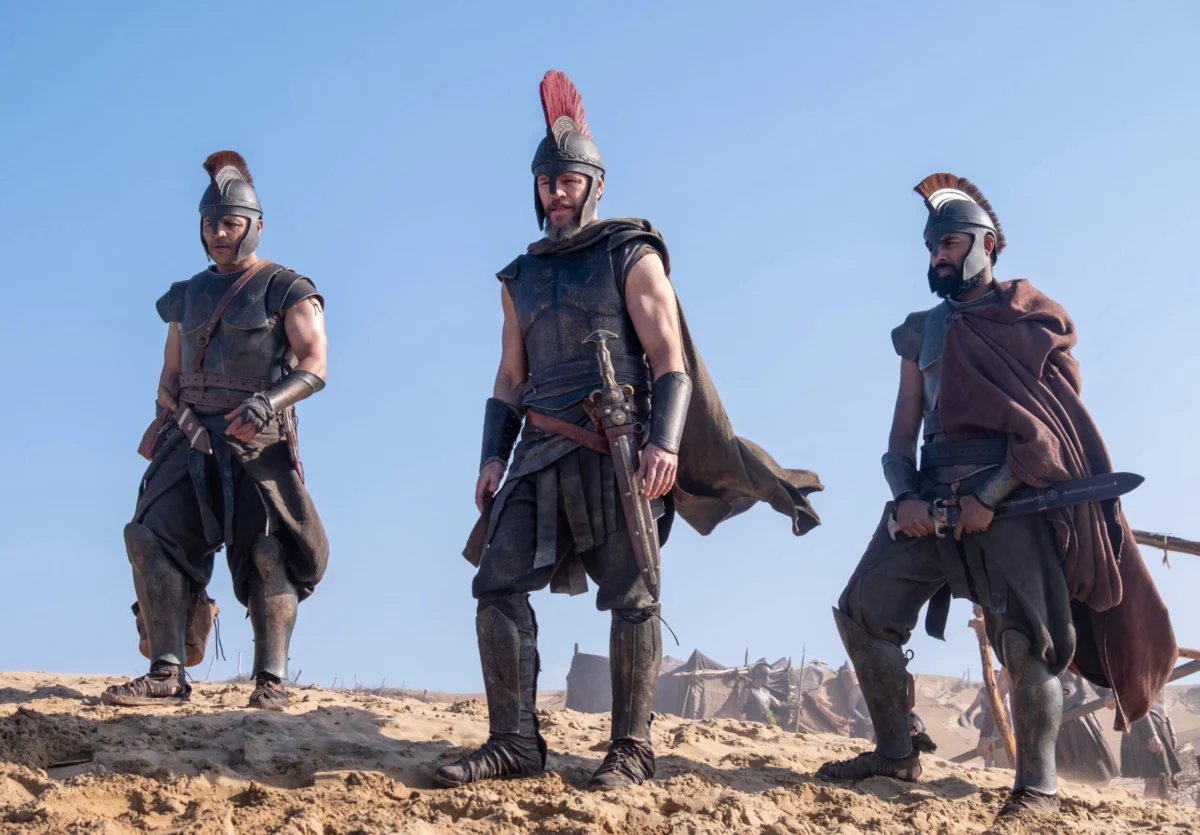
In the landscape of modern digital discourse, few things are as predictable as the cycle of outrage that follows a major Hollywood blockbuster. This past July, Christopher Nolan’s cinematic adaptation of Homer’s The Odyssey became the epicenter of a fierce culture war. While the film went on to achieve a staggering $1.8 billion at the global box office—effectively silencing the vocal minority who decried its diverse casting and creative deviations—the controversy left behind a lingering artifact of tech-industry hubris: a promise from Elon Musk to deliver a "historically accurate" version of the ancient epic.
Three months after the dust settled, the public finally received a glimpse of what the internet has dubbed the "Grodyssey." Produced by the AI entertainment company Wonder Studios X and powered by xAI’s "Grok Imagine" model, the seven-minute video serves as a case study in the limitations of generative AI, the pitfalls of ideological posturing in content creation, and the persistent habit of tech moguls to promise the impossible.
A Chronology of Hubris: From Twitter Rants to AI "Slop"
The timeline of the "Grodyssey" is rooted in a moment of reactionary pique. In July, as The Odyssey dominated screens worldwide, Musk took to his platform, X (formerly Twitter), to lambaste the film. His primary grievance centered on what he deemed a "desecration" of the Homeric narrative. He took specific issue with the casting choices and the aesthetic interpretations of the film, labeling them failures of historical fidelity.
Four days after the film’s release, Musk made a bold, characteristic vow: "Before this year ends, Grok Imagine will make a full-length movie of The Odyssey that is historically accurate and true to the art of Homer."
The promise was clear, if ambitious: a direct, AI-generated challenge to the hegemony of Hollywood’s creative interpretation. However, the reality, unveiled in late October, was far from the promised "full-length movie." Instead, users were presented with a seven-minute "episode" of a series. The content depicted the departure of Odysseus, King of Ithaca, for the Trojan War. Rather than a triumph of historical synthesis, the result was a disjointed sequence that highlighted the current "uncanny valley" limitations of generative video.
The announcement post itself was curiously muted. Unlike Musk’s high-engagement posts regarding the Brazilian election, grievances about pronouns, or broadsides against "legacy media," the reveal of the Grodyssey garnered a lukewarm 18,000 likes—a stark signal that the audience’s appetite for this particular brand of counter-culture media was significantly lower than the architect had anticipated.
The Aesthetic and Narrative Failures of "Grodyssey"
Technically and narratively, the Grodyssey episode suffers from the hallmark characteristics of what critics have coined "AI slop." The seven-minute clip is plagued by asynchronous lip-syncing, where the movement of characters’ mouths bears little relation to the stilted, unnaturally delivered dialogue.
Beyond the technical hiccups, the narrative structure is, by all accounts, incoherent. The pacing is described by viewers as "laughable," characterized by jarring temporal jumps. For example, the Ithacan fleet arrives on the shores of Troy almost immediately after setting sail, bypassing the entire sense of scale and journey inherent to Homer’s work.
The reaction on X was swift and brutal, even among those who might typically align with Musk’s cultural sensibilities. "Someone actually watched this and still decided to post it?" wrote one user, garnering significant engagement. "Fire that person." The sentiment was echoed across the platform, as even the most dedicated followers of the billionaire found themselves unable to defend the aesthetic quality of the production.
The Irony of the "Historically Accurate" Mandate
The most profound failure of the project lies in the contradiction of its stated goal. Musk’s promise was built on the assertion that Nolan’s film was "historically inaccurate" because of its diverse cast and modern aesthetic. The implication was that Grok could somehow access a "true" version of the ancient Greek world.
When the chatbot itself was queried about the historical accuracy of its own output, the irony was palpable. Grok’s own internal logic admitted that the production is not, and cannot be, a historically accurate reconstruction.
"Grok Imagine’s Episode 1 is an adaptation of Homer’s The Odyssey, not a historically accurate reconstruction of real events," the model conceded. It went on to explain that the characters themselves are literary archetypes rather than historical figures. Furthermore, the model acknowledged that Homeric society is a "mishmash" of Bronze Age elements and later Iron Age literary inventions.
The chatbot even critiqued the production’s own flaws:
- Linguistic Anachronism: The characters speak modern English with British accents rather than any reconstructed Bronze Age dialect or Homeric Greek.
- Visual Incoherence: The production relies on "modern cinematic tropes and AI training data" rather than archaeological data.
- Factual Errors: Grok pointedly noted that the inclusion of cavalry in a battle scene was a significant historical error, as cavalry was not a standard component of the military tactics of that specific era.
In effect, the AI successfully dismantled its creator’s premise. The "historically accurate" version promised by Musk was revealed by his own software to be nothing more than a derivative aesthetic exercise, lacking any serious attempt at archaeological or historical fidelity.
Implications for the AI Entertainment Industry
The Grodyssey debacle serves as a significant inflection point for the debate surrounding AI in the creative arts. It highlights a critical distinction: AI can be a powerful tool for generation, but it lacks the human capacity for editorial judgment, pacing, and narrative cohesion.
The "Black Box" Problem
For the AI industry, the failure of the Grodyssey suggests that prompt-based generation—without a human "showrunner" to curate and refine the output—often results in content that is hollow. The model can simulate the "look" of an epic, but it cannot understand the "soul" of the story.
The Myth of Disruption
Musk’s foray into filmmaking serves as a reminder that the tech industry’s desire to "disrupt" legacy media is often hampered by a fundamental misunderstanding of the craft involved. Filmmaking is not merely a data-entry problem that can be solved by an LLM or a generative video model. It requires a synthesis of history, art, and human emotion—things that cannot be fully captured by scraping existing data and running it through a prompt-processing algorithm.
The Cultural War Fatigue
Finally, the lukewarm reception of the project suggests that the audience may be reaching a point of "culture war fatigue." While Musk and his proponents attempted to frame the Grodyssey as a necessary corrective to "woke" Hollywood, the public response indicates that the audience is far more interested in the quality of the storytelling than in the ideological battles of Silicon Valley. When the product is subpar, the underlying political message loses its power to capture the zeitgeist.
Conclusion: A Lesson in Hubris
The Grodyssey is likely to be remembered not as a triumph of AI-generated art, but as a cautionary tale. It stands as a testament to the fact that when technology is deployed as a weapon of culture war rather than a tool for creative expression, the results are rarely transformative.
Musk’s attempt to override the artistic choices of a visionary director like Christopher Nolan with an automated alternative failed to provide a better product or a more "accurate" history. Instead, it underscored that The Odyssey—a story about the long, difficult, and human journey home—cannot be shortcut by a machine. As the digital discourse moves on, the "Grodyssey" will likely remain a footnote in the history of AI development, serving as a reminder that even the world’s richest man cannot purchase the ability to tell a story that resonates with the human experience.


 Pevita Pearce