

 Ammar Sabilarrohman
 Ali Ikhwan
 Dwi Wanna
 Neng Nana
 Siti Muinah
 Laily UPN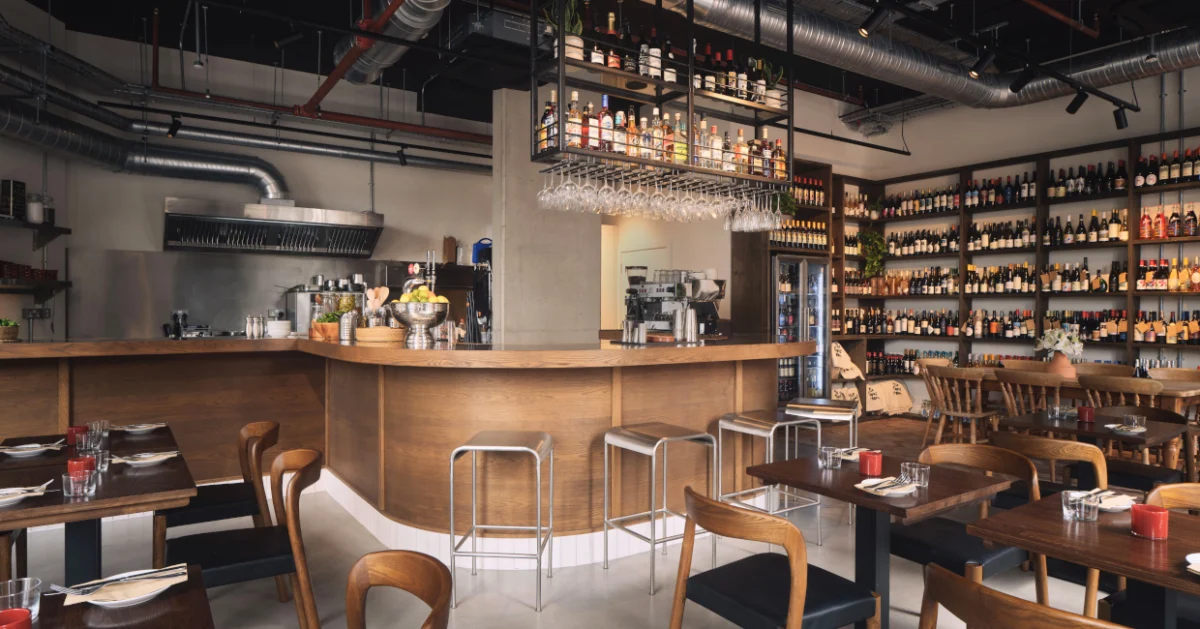
In an era where the convenience of home delivery and the comfort of the sofa threaten to erode the traditional hospitality sector, the physical restaurant must offer an experience that is, quite literally, impossible to replicate at home. This is the central philosophy behind the latest project from design firm Studio InPlace: the newly unveiled Wandsworth site for The Tapas Room. Located at the prestigious New Acres development, this multi-functional space seamlessly integrates a deli, a boutique bottle shop, a vibrant tapas restaurant, and an intimate wine bar into a single, cohesive room.
The Evolution of a Concept: From Tooting to Wandsworth
The story of The Tapas Room is one of organic growth and culinary community-building. Founders Justin Wyatt-Smith and Jodie Houlihan first captured the hearts of local food enthusiasts with a modest, high-energy corner unit in Tooting’s iconic Broadway Market. That initial site acted as a laboratory, proving that a marriage of high-quality Iberian ingredients and an unpretentious, approachable atmosphere could cultivate a fiercely loyal following.
With the launch of their second location in Wandsworth, the duo sought to translate that success into a more permanent and architecturally intentional environment. The brief to Studio InPlace was clear: the new space needed to honor the intimacy of their original venture while elevating the operational flow to accommodate a broader, more sophisticated demographic. The result is a masterclass in spatial choreography, where the architecture itself facilitates a sense of belonging.
Architectural Choreography: The Centrality of the Bar
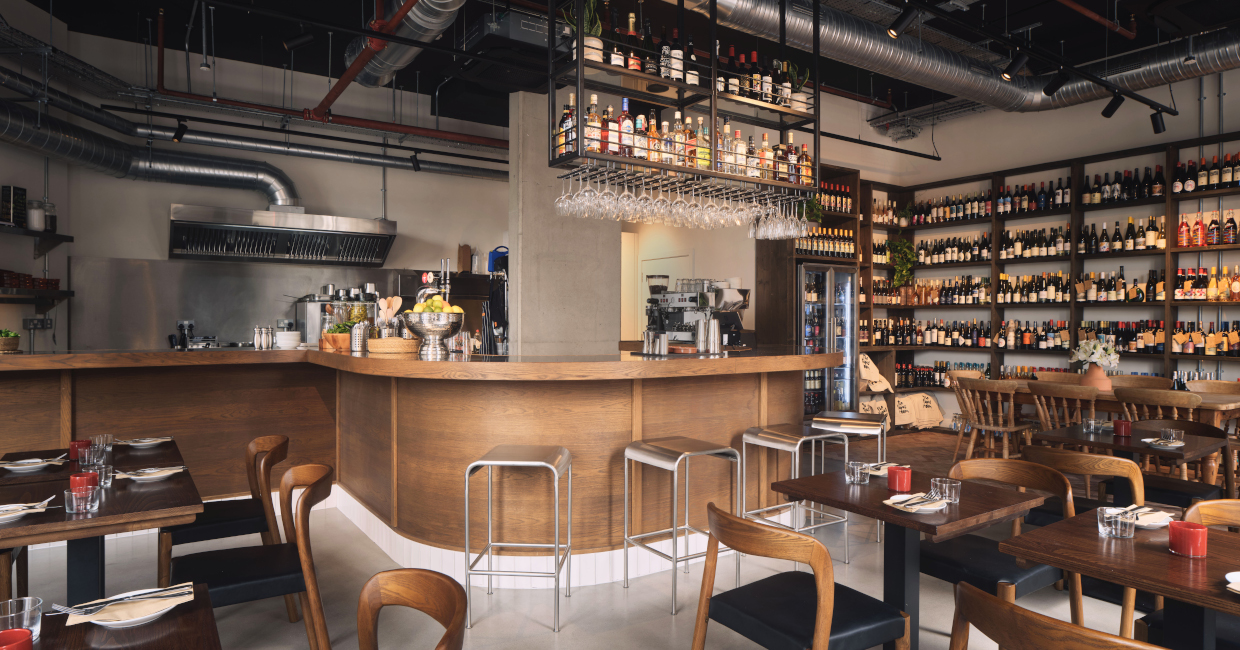
The design of the Wandsworth site revolves around a singular, dominant piece of furniture: a sprawling, sculptural bar. Crafted from stained solid oak and finished with an oak veneer, the bar is topped in brushed stainless steel, providing a tactile, industrial contrast to the warmth of the wood.
The genius of this installation lies in its geometry. Running the entire length of the space, the counter is not static; it possesses a rhythmic fluidity. It pushes forward to create an active, bustling bar area, then gently pulls back to open up the restaurant floor. This curvature serves a dual purpose: it acts as a visual anchor that draws pedestrians in from the street, and it ensures that the dining space is constantly framed as a backdrop to the theater of service.
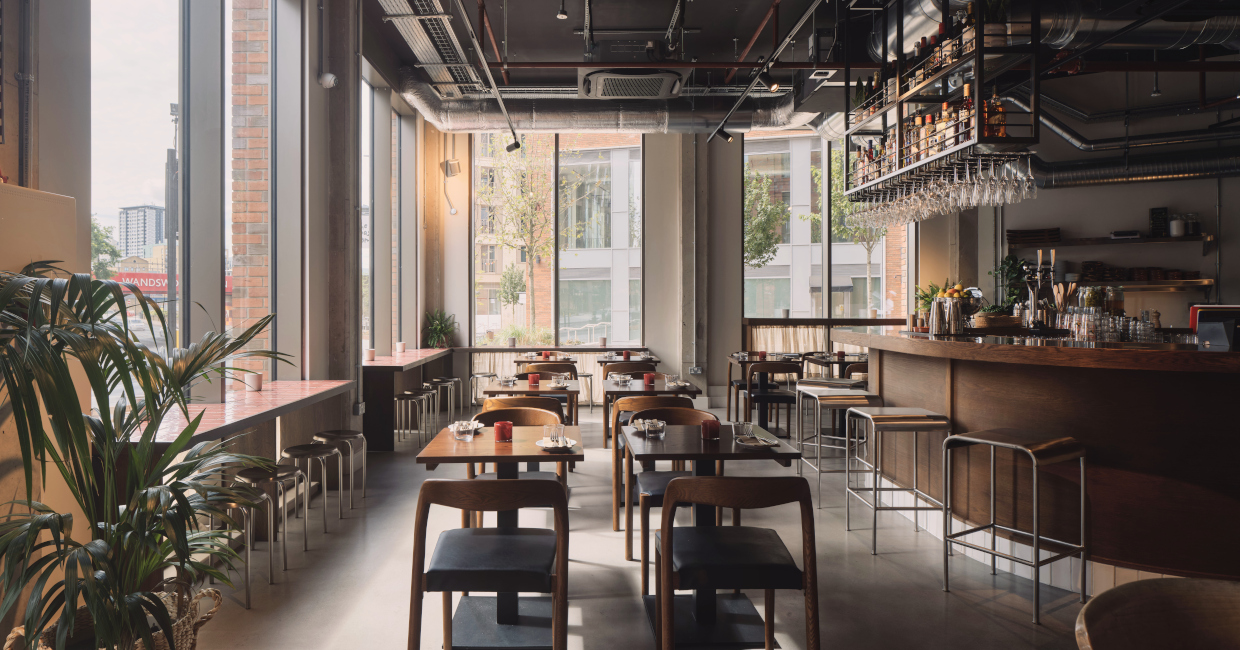
By design, nothing is hidden. The kitchen and the bar station share the same workspace behind the crafted counter. This intentional transparency allows guests to witness the artistry of the trade—from the meticulous slicing of jamón to the precise pouring of vermouth—from virtually any seat in the room. To foster intimacy without the visual clutter of partitions, Studio InPlace utilized varying furniture heights. High stools, low-slung tables, and sleek window counters create “pockets of closeness,” allowing for distinct social clusters within an open-plan layout. Above, a suspended steel gantry serves as both a functional storage unit for glassware and bottles and a striking aesthetic feature that highlights the exposed ceiling services.
A Chronology of Detail: Materiality and Motion
The interior narrative of The Tapas Room is told through its floor, which serves as a subtle transition marker for the daily rhythm of the business. Studio InPlace has implemented a clever interplay of materials to denote the shift from daytime retail to evening hospitality.
The entrance threshold and the deli area feature Klompie brick laid in a classic herringbone pattern, evoking a sense of traditional, earthy groundedness. This area, anchored by a floor-to-ceiling wine wall in matching stained oak and a communal table, sets a bright, welcoming tone for daytime visitors. As the space transitions into the restaurant, the floor shifts to microcement. The intersection of these two materials is a testament to the firm’s attention to detail; rather than a clinical, straight-line meeting point, the brick and cement interlock in a playful, zigzag pattern.
This “honest” palette continues throughout the venue. The window tables are finished in glazed red ceramic tiles, while white tiling runs along the base of the bar. Off-white walls, tan timber chairs, and stainless steel stools round out the aesthetic, which is defined by a lack of preciousness. The design encourages the patina of use, inviting the energy of the crowd to define the room.
The Philosophy of Hospitality: Why "Atmosphere" Matters
Kevin Haley, Founder and Managing Director of Studio InPlace, argues that the design of a space is the silent partner of the operator. “Atmosphere never appears on the receipt, yet it is the reason people come back,” Haley explains.
His perspective addresses the existential crisis currently facing the hospitality industry: the “sofa versus restaurant” dilemma. In a digital age, every restaurant must justify its existence against the ease of ordering in. Haley believes the answer lies in the stagecraft provided by the designer. “Every restaurant and shop is now competing with the same question: can I do this from my sofa? If the answer is yes, people stay home. Atmosphere is made twice, once by the operator in how they run the room, and once by the designer in the stage they are given. Justin and Jodie are already brilliant at the first. Our job was the second, and at The Tapas Room, the bar is that stage. You cannot get this from a sofa.”
Official Responses: A Vision for Connection
For founders Justin Wyatt-Smith and Jodie Houlihan, the Wandsworth site is more than just a business expansion; it is an extension of their social values. "With our second site, we wanted to build on what people already love about The Tapas Room while creating a space where everything is on show and our guests feel part of the action," the pair stated in a joint response.
They emphasized that the goal was never to create an exclusive or intimidating environment, but rather to foster genuine human connection. "We want everyone who walks through the door to feel genuinely welcomed, arriving as guests and leaving feeling like friends."
Implications for the Modern Restaurant Industry
The success of The Tapas Room in Wandsworth carries significant implications for interior designers and restaurateurs alike. The project demonstrates a shift away from the "Instagrammable" trend of hyper-styled, artificial environments, moving instead toward a design language rooted in operational transparency and material honesty.
1. The Death of the Partition
The trend toward open-plan hospitality is reaching a new level of maturity. By utilizing furniture height and floor finishes as subtle boundary markers, designers can create the psychological feeling of a private space without the structural necessity of walls or partitions. This encourages a communal, democratic dining experience.
2. The Return of Tactility
In a world of flat-screen technology and digital menus, there is a renewed craving for texture. The combination of brushed stainless steel, Klompie brick, and microcement provides a sensory experience that cannot be translated through a screen. The "honest" use of materials—where the evidence of use is welcomed rather than hidden—aligns with the modern consumer’s desire for authenticity.
3. Multifunctional Revenue Streams
By blurring the lines between a deli, a bottle shop, and a restaurant, The Tapas Room maximizes its real estate efficiency. The design allows the space to remain relevant across all hours of the day, effectively serving the morning coffee/deli crowd, the afternoon shoppers, and the evening dining rush. This versatility is increasingly essential for businesses looking to navigate the volatile economic climate of the hospitality sector.
Conclusion
The Tapas Room in Wandsworth serves as a compelling case study in how thoughtful, human-centric design can reinforce a brand’s core mission. By prioritizing the "theatre" of service and the comfort of the guest, Studio InPlace has created a space that feels both timeless and perfectly attuned to the needs of the modern diner. It is a reminder that while the industry may be evolving, the fundamental human desire for connection—over a glass of wine, a slice of jamón, and the shared warmth of a well-designed room—remains the heartbeat of the hospitality sector. In this corner of Wandsworth, the stage is set, and the atmosphere is, indeed, something that must be experienced in person.


