 Dwi Wanna
 Nana Wu
 Muslim
 Reynand Wu
 Ammar Sabilarrohman
 Raul Delapena Setiawan
In the modern culinary landscape, the relationship between a restaurant and its customer has been fundamentally rewritten by the smartphone. What began as a convenience—a digital bridge between a hungry diner and a local kitchen—has evolved into a complex, high-stakes infrastructure battle. As third-party delivery platforms like Uber Eats, DoorDash, and Grubhub have become synonymous with off-premise dining, restaurant operators are facing a defining strategic crossroads: surrender the customer experience to third-party giants for the sake of scale, or bear the immense operational burden of building an in-house delivery ecosystem.
The reality, as industry experts and seasoned operators are discovering, is that the path to long-term profitability lies not in an either-or ultimatum, but in a sophisticated hybrid strategy.
The Evolution of Delivery: A Chronology of Disruption
To understand the current tension, one must look at how the delivery landscape shifted from a local convenience to a global digital utility.
- Pre-2010 (The Analog Era): Delivery was largely localized, confined to pizza parlors, Chinese takeout, and specialized catering services. Order management was handled via telephone, and logistics were managed entirely in-house.
- 2010–2015 (The Aggregator Boom): Platforms like Seamless and Grubhub emerged, primarily as digital intermediaries. They provided a menu listing service but left the actual delivery logistics to the restaurants.
- 2015–2019 (The Logistics Revolution): The entry of Uber Eats and DoorDash changed the game by providing "full-stack" logistics. These platforms offered their own fleet of drivers, allowing restaurants that previously lacked delivery infrastructure to reach a broader market overnight.
- 2020–2021 (The Pandemic Catalyst): COVID-19 acted as an accelerant, forcing the entire industry to rely exclusively on off-premise dining. Delivery became a lifeline for survival, but the high commission fees—often ranging from 15% to 30% per order—began to severely erode restaurant margins.
- 2022–Present (The Rebalancing Act): Brands have entered the current phase of "Platform Optimization." Restaurant owners are now utilizing third-party apps for customer acquisition while aggressively incentivizing direct ordering to reclaim data ownership and profit margins.
The Third-Party Paradox: Discovery vs. Margin
The allure of platforms like Uber Eats is undeniable. For an emerging restaurant brand, the platform acts as a digital storefront in a high-traffic district. By teaming up with global giants—such as the massive 2017 partnership between McDonald’s and Uber, which has since facilitated hundreds of millions of orders—smaller chains gain instant access to a vast, active user base.
The Benefits of Scale
Third-party platforms provide three primary value propositions that are difficult for individual operators to replicate:
- Massive Reach: These apps function as discovery engines. Users scrolling for "dinner options" are exposed to brands they might never have found otherwise.
- Operational Simplicity: The platform handles the dispatch, the payment processing, and the delivery logistics, allowing the restaurant to focus entirely on food production.
- Trust Infrastructure: Consumers are more likely to input their credit card information into a trusted, well-known app than a bespoke restaurant website.
The Hidden Costs
However, the "delivery tax" is a growing concern. Beyond the headline commission fees, there is the issue of data sovereignty. When an order is placed through a third-party app, the customer belongs to the platform, not the restaurant. The operator loses the ability to remarket to that customer, analyze their long-term behavior, or build a loyalty program that incentivizes repeat visits outside of the platform’s ecosystem.
The Case for In-House Infrastructure
In response to the limitations of third-party dependence, many legacy brands and high-end independents are reinvesting in their own delivery fleets and proprietary ordering channels.
Owning the "Last Mile"
By bringing the delivery experience in-house, restaurants regain control over the final touchpoint of the customer journey. This includes the quality of packaging, the professional demeanor of the delivery driver, and the speed of transit. When a delivery goes wrong, a restaurant with an in-house fleet can fix it immediately. When a third-party order is mishandled, the restaurant is often left with a frustrated customer and no direct way to resolve the grievance.
Data Ownership and CRM
A robust in-house ordering system—integrated with a Customer Relationship Management (CRM) platform—allows restaurants to track individual preferences, purchase frequency, and lifetime value. This data is the "holy grail" of modern marketing. It enables hyper-personalized offers, such as sending a "We miss you" coupon to a diner who hasn’t ordered in 30 days, or tailoring promotions based on dietary preferences.
Supporting Data: The Profitability Gap
Industry financial analysis suggests that the cost-benefit analysis of delivery is rarely static. According to various hospitality research reports, the "breakeven point" for delivery is highly sensitive to ticket size and distance.
- The Commission Threshold: For many operators, a 20% commission fee effectively wipes out the net profit on a standard entrée. To maintain profitability, restaurants are often forced to implement "menu price inflation" for digital orders, which can alienate price-sensitive customers.
- Conversion Rates: Data shows that while third-party apps generate high volume, direct channels generate higher loyalty. Conversion rates on proprietary websites are often higher for repeat customers, who are increasingly aware of the "support local" movement and the benefits of ordering directly.
- Labor Dynamics: The hidden cost of in-house delivery is the management of a fleet. Recruitment, insurance, vehicle maintenance, and scheduling create a significant operational hurdle that can distract from core culinary excellence.
Official Perspectives: The Industry Consensus
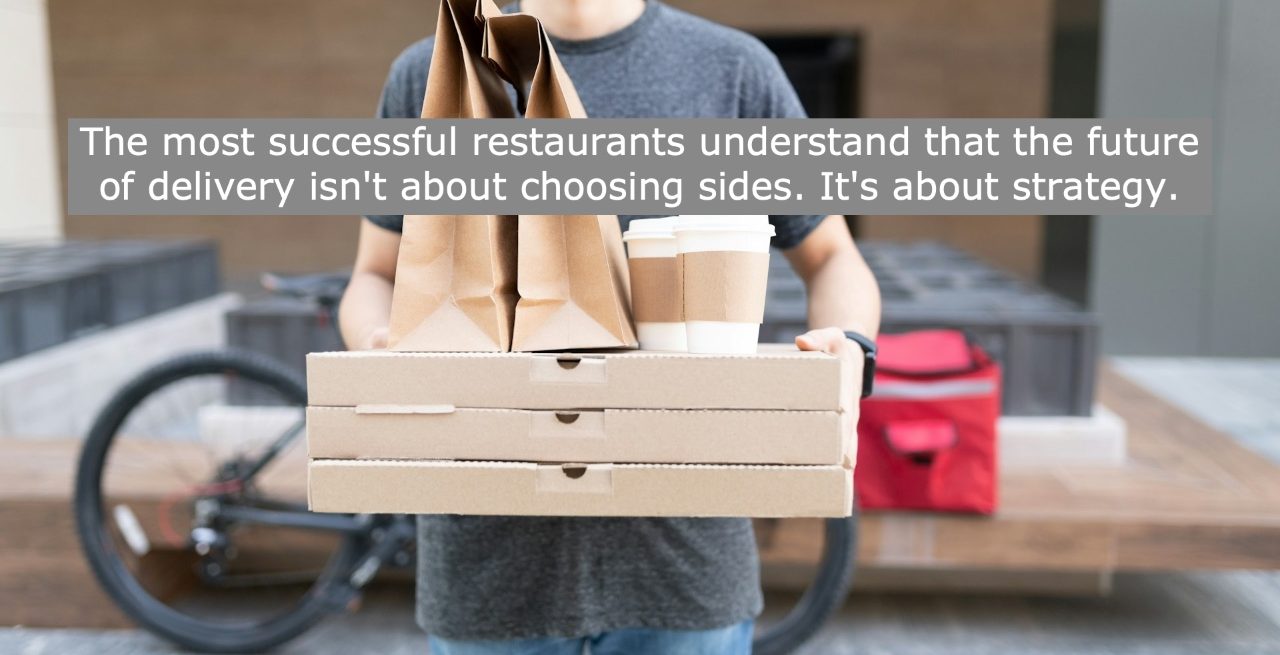
James Cannon, a consultant specializing in hospitality and customer-facing operations, emphasizes that the winning strategy is rarely about choosing sides. Instead, it is about "operational excellence in both realms."
"The most successful brands are treating third-party platforms as a customer acquisition tool—a way to cast a wide net and reach new, untapped audiences," Cannon notes. "Simultaneously, they are treating their own digital channels as customer retention tools. By offering exclusive perks, lower prices, or faster service through their own apps, they migrate their most loyal customers away from the expensive middleman."
Industry leaders, including executives from major quick-service restaurant (QSR) chains, have echoed this sentiment. Many are now experimenting with "hybrid delivery," where they utilize third-party drivers for peak-hour surge volume while maintaining a core staff for consistent, high-margin local delivery.
Implications: The Future of the Hospitality Business Model
The long-term implication of this transition is that the restaurant of the future will be a data company as much as a food company.
1. The Rise of the "Digital Kitchen"
Physical restaurants will increasingly design their floor plans to accommodate two distinct types of guests: the in-person diner and the digital order. This may lead to dedicated pick-up windows, specialized packaging stations, and automated dispatch systems that sync seamlessly with both internal and external fleets.
2. Subscription Models
We are seeing a surge in subscription-based loyalty programs (e.g., "Free delivery for $X/month"). This is a direct attempt to lock in the customer and discourage them from "platform-hopping" to whichever app offers a temporary coupon. By creating a recurring relationship, restaurants can stabilize their delivery demand and reduce reliance on external advertising.
3. The Tech-Stack Integration
The most critical investment for the next decade will be in integrated POS (Point of Sale) systems. A restaurant that has to manually enter third-party orders into their kitchen system is doomed to fail. True efficiency requires real-time, bi-directional communication between the digital order, the kitchen display system (KDS), and the delivery fleet, regardless of whether that fleet is employed by the restaurant or the platform.
Conclusion: Balancing the Scales
The "delivery dilemma" is not a zero-sum game. The ubiquity of third-party platforms has fundamentally raised consumer expectations; the convenience of "delivery at the tap of a button" is now an industry standard that cannot be rolled back.
For restaurant owners, the mandate is clear: maintain the visibility and scale that third-party platforms provide, but fight aggressively to own the relationship with the customer. Whether through building a proprietary app, enhancing the in-house experience, or leveraging customer data for targeted marketing, the goal is to shift the balance of power back to the brand.
As the industry moves forward, the restaurants that will thrive are those that master the art of the hybrid model—using technology to provide seamless convenience without sacrificing the profit margins or the personal connection that define the soul of the hospitality industry. Great people, great systems, and a clear vision for the customer journey remain the pillars of success in an increasingly digital world. If you believe you can win in this new era, the tools to do so are finally within reach.

 Lina Irawan
 Evan Lee Salim