

 Ali Ikhwan

 Iffa Jayyana

 Muslim

 Nana

 Dwi Wanna
 Asep Darmawan
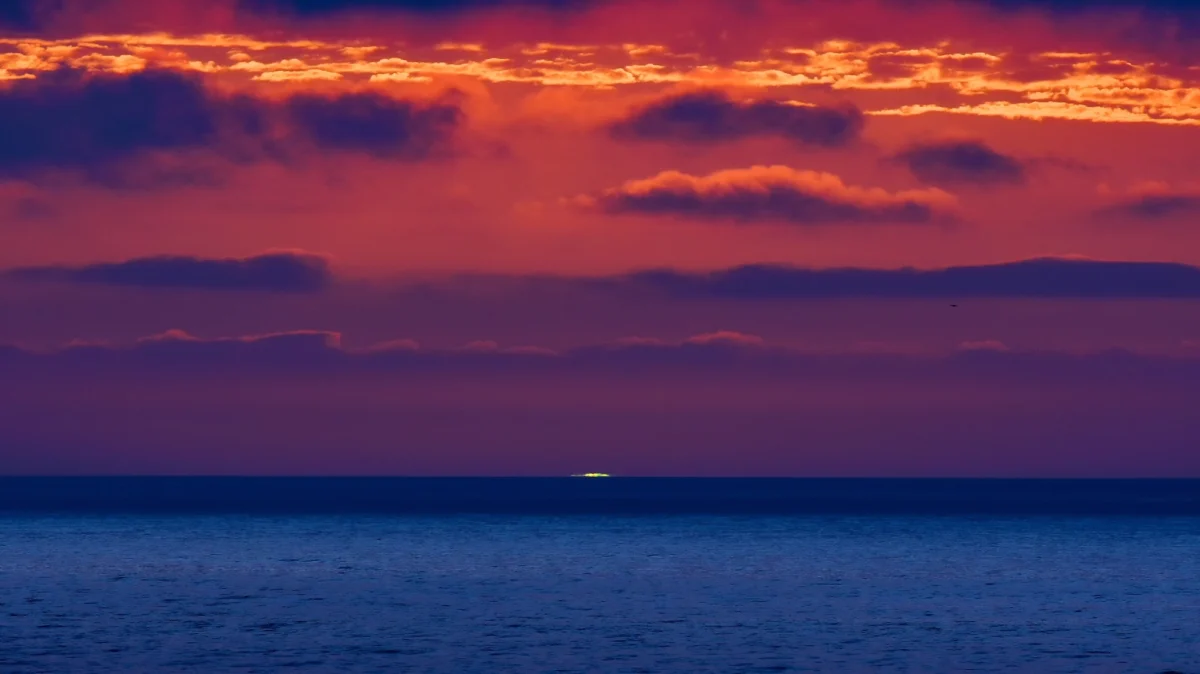
As the world’s oceans absorb the staggering brunt of anthropogenic climate change, they are entering a period of unprecedented volatility. Recent data indicates that a staggering 82 percent of the world’s oceans are currently grappling with marine heat waves—prolonged, intense periods of anomalous warming that are not merely temporary fluctuations, but catalysts for permanent ecological shifts. From the shores of England to the sprawling expanse of the Pacific, these "ocean fevers" are dismantling food webs, driving mass die-offs, and forcing a rapid, often fatal, reorganization of marine life.
The English Channel’s Unexpected Bloom
The most visible sign of this transformation is occurring in the temperate waters off the United Kingdom. Last year, the common octopus—typically a resident of the warmer Mediterranean—found an unlikely foothold in the English Channel. Larvae, hitchhiking across the sea on currents of plankton, settled off the coasts of Devon and Cornwall.
What was once a biological curiosity has morphed into a demographic explosion. This year, the octopus population has surged to levels not seen in 75 years. Experts at the UK’s Marine Biological Association point to a specific culprit: a localized marine heat wave that pushed water temperatures up to 9 degrees Fahrenheit above the seasonal norm.
Unlike previous decades, when cold winter waters would serve as a natural culling mechanism, the current warming trend has allowed these populations to persist and, more importantly, to reproduce. This has created a "shake-up" of the local food chain. While local fishers have seen a 7,700 percent increase in octopus landings, the ecological trade-off has been harsh. Traditional catches like scallops, lobster, and crab have plummeted, while apex predators—seals, conger eels, and bluefin tuna—have flooded the region to exploit the newfound bounty.
A Chronology of Crisis: From "The Blob" to Modern Extremes
To understand the current emergency, one must look back to 2014, when a phenomenon known as "The Blob" reshaped the North Pacific. Beginning in late 2013, a persistent high-pressure ridge suppressed the cool, nutrient-rich winter winds that typically cycle through the eastern Pacific. Without this thermal regulation, the sun baked the surface waters, raising temperatures to 7 degrees Fahrenheit above the average.
The results were catastrophic. By 2015, the marine food web had effectively collapsed in several sectors. Researcher Ric Brodeur, monitoring krill populations—the literal foundation of the Pacific food chain—found his sampling nets empty. "You could fit all the krill from the trip into a little plastic bag," he noted.
The cascading effects of this caloric void were profound:
- 2014–2016: The Blob reaches its peak, leading to the starvation of roughly 7,000 humpback whales—approximately 20 percent of the North Pacific population.
- 2015–2018: Massive die-offs of kelp forests occur from Baja California to British Columbia. In Northern California, 95 percent of kelp cover vanishes, devastating red abalone populations and leading to fishing closures that remain in effect today.
- 2016: Alaska’s common murre population suffers a loss of 4 million birds due to the disruption of forage fish migrations.
- 2023–2025: A global coral bleaching event impacts over 84 percent of the world’s reefs.
- 2026: Scientific consensus confirms that current ocean temperatures are trending "on par" with the 2015 peak, leading experts to label the current event a "new Blob."
Supporting Data: The Science of Overheated Seas
The frequency and intensity of these events are not coincidental. According to the National Oceanic and Atmospheric Administration (NOAA), the world’s oceans have sequestered more than 90 percent of the excess heat generated by human-induced global warming.
A recent study published in the Proceedings of the National Academy of Sciences (PNAS) highlights a grim milestone: since 1940, the number of days per year featuring extreme surface heat has tripled. Climate scientists define a marine heat wave as a period where temperatures exceed the 90th percentile of historical norms for at least five consecutive days. While these events can occur naturally, the baseline for "normal" has been elevated by roughly 2 degrees Fahrenheit in UK waters alone over the last 60 years.
"Ocean warming is a slow, gradual increase that allows some room for species to adapt or migrate," notes Dr. Catherine Gregory of the University of Bern. "Marine heat waves, by contrast, are acute. They are climatic shocks that provide organisms with almost zero time to evolve or relocate."
Official Responses and Ecological Implications
International scientific bodies are sounding the alarm, though the policy response remains fragmented. The Global Coral Reef Monitoring Network recently issued a warning that the "recovery windows"—the time between one heat wave and the next—are shrinking to a point where corals may no longer be able to regenerate.
The implications of this warming go beyond the extinction of species; they threaten the very stability of our global climate systems. Warm water caps the surface, preventing the vital vertical mixing of oxygen and nutrients. This stratification promotes the growth of toxic algal blooms, such as Pseudo-nitzschia, which is currently stretching from Southern California to British Columbia. This alga produces domoic acid, a potent neurotoxin that has been linked to the mass sickness and death of sea lions, porpoises, and whales.
Furthermore, the connection between sea temperatures and extreme weather is becoming undeniable. The current El Niño, projected to be the strongest in recorded history, is expected to exacerbate the heat waves off the California coast, potentially leading to more intense tropical storms and hurricanes that rely on warm surface waters for energy.
A Perilous Prologue
The situation on the ground—or rather, on the water—is increasingly dire. Tammy Russell, a researcher at the Scripps Institution of Oceanography, reports a grim scene on Southern California beaches: "We’re seeing cormorants walk to shore and then just die within the hour. We’re seeing it happening across the whole coast."
As we look toward the future, the scientific community is unified in one grim assessment: the extreme events of the last decade are not outliers; they are a prologue. The "new Blob" currently forming in the Pacific is a harbinger of a transformed ocean. Melissa Carter, a biological oceanographer, emphasizes that these ecosystems have been stable for millions of years, but they possess a "specific temperature threshold." Once that threshold is crossed, the "underwater rainforests" that sustain everything from microscopic krill to apex predators begin to fall apart.
For humanity, the challenge is twofold: we must accelerate efforts to curb carbon emissions to prevent the baseline from rising further, while simultaneously preparing for a world where the ocean—the planet’s greatest heat sink—is no longer a reliable, stable foundation for life. The heat is rising, and the marine world is already paying the price.

 Sagoh
 Layla Zulfa

