
 Jia Lissa

 Raul Delapena Setiawan

 Asro

 Layla Zulfa

 Sagoh
 Pevita Pearce
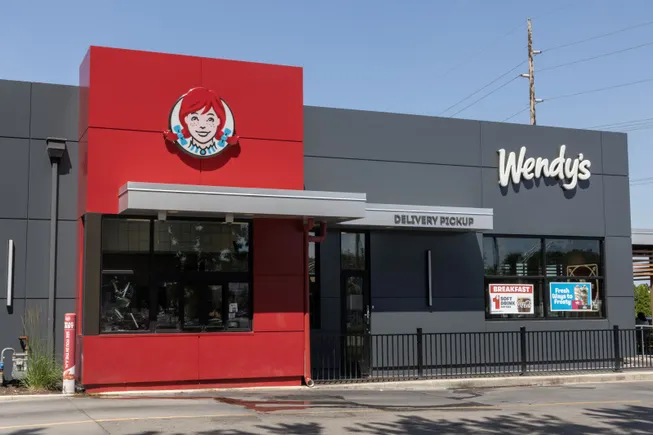
The restaurant industry is currently weathering a systemic correction that is testing the resilience of even the most established operators. The recent Chapter 11 bankruptcy filing of Meritage Hospitality Group—one of the largest Wendy’s franchisees in the United States—has sent shockwaves through the franchise community, serving as a stark warning that the current economic climate is proving unsustainable for many multi-unit operators.
As inflation, labor costs, and elevated interest rates converge, the traditional business model for large-scale franchising is being forced to evolve or collapse. Industry experts suggest that the distress seen at companies like Meritage, Carl’s Jr., and Hardee’s is not merely an isolated incident but a "harbinger" of broader, industry-wide adjustments.
The Three-Headed Monster: Anatomy of a Financial Crisis
The distress signals currently blinking across the restaurant sector are driven by a convergence of macroeconomic pressures. Matt Anuszkiewicz, managing director and head of the institutional coverage group at the real estate advisory firm Surmount, identifies this as a "three-headed monster" that is dismantling the profitability of even high-performing groups.
- Elevated Cost of Goods (COGS): Supply chain volatility and persistent food inflation have eroded the thin margins that characterize the fast-food and quick-service restaurant (QSR) sectors.
- Inflationary Pressures: Beyond raw materials, the rising cost of labor, energy, and maintenance has squeezed operational budgets to the breaking point.
- Debt Service Burdens: In an era of higher interest rates, debt that was manageable under previous financial conditions has become a suffocating weight. Many operators are finding that their current cash flow is insufficient to support the debt structures they relied upon during the era of near-zero interest rates.
"Whatever debt they could have supported in the past is not really supportable in today’s market," Anuszkiewicz noted. "Because cash flow is down and debt service is more expensive, the math simply doesn’t work for many legacy structures."
Chronology of the Decline
The current wave of bankruptcy filings represents the culmination of several years of mounting pressure. While the pandemic provided a temporary shock, the post-pandemic recovery failed to stabilize for many operators.
- Early 2024: The industry began to see an uptick in filings among regional burger chains, including operators for Carl’s Jr. and Hardee’s, signaling that the pressure was not limited to a single brand or geographic region.
- September 2024: Meritage Hospitality Group, a massive player in the Wendy’s ecosystem, filed for Chapter 11 bankruptcy. The move followed a period of intense financial strain and preceded a dramatic legal confrontation with Wendy’s corporate.
- The Pre-Filing Window: Crucially, court filings revealed that Wendy’s had moved to terminate its franchise agreements with Meritage just 24 hours before the bankruptcy filing. This highlighted the high-stakes "race to the courthouse" that occurs when a franchisor and franchisee reach an impasse.
- The Post-Filing Phase: Currently, the industry is watching closely as courts determine the fate of these units, with bankruptcy proceedings acting as a mechanism for asset sales, lease rejections, and organizational restructuring.
Operational Strategies: How Operators Are Responding
For those not yet at the point of insolvency, experts advise a proactive approach to restructuring operations to preserve liquidity.
Prioritizing Critical Liabilities
Legal experts, including Ted Gavin of the law firm Gavin/Solmonese, emphasize that in times of distress, the hierarchy of payments is vital. "You have to pay employees and trust fund taxes first," Gavin advises. Failure to pay payroll taxes can lead to personal liability for owners, effectively piercing the corporate veil and threatening personal assets.
Franchise fees are similarly categorized as a "must-pay" expense. If an operator stops paying the franchisor, they risk losing the very license that allows them to operate. Once the franchise agreement is terminated, the business loses its primary value, making it significantly harder to negotiate a turnaround.
Efficiency and Waste Mitigation
Operators are being urged to return to the fundamentals of the business. This includes:
- Rigorous Food Cost Monitoring: Tracking waste at the unit level to ensure that every dollar spent on inventory contributes to the bottom line.
- Man-Hour Optimization: Carefully balancing staff levels against customer traffic to avoid labor inefficiencies during slow periods.
- Delivery Rethinking: Chad Van Horn, a bankruptcy attorney and founder of the Van Horn Law Group, suggests that third-party delivery services are often a drain on profits. Operators are increasingly looking to redirect customers toward native apps or proprietary ordering systems to capture more revenue and avoid high commission fees paid to tech platforms.
Proactive Engagement with Stakeholders
One of the most significant recommendations for distressed operators is to avoid waiting until the final hour to speak with creditors and landlords.
Anuszkiewicz argues for "upfront and candid" conversations regarding occupancy costs. By renegotiating leases or shedding underperforming units—what industry insiders call "pruning the portfolio"—operators can stop the "bleeding" caused by unprofitable locations. Often, management spends 90% of its time addressing the bottom 10% of their locations; eliminating those locations allows the company to refocus resources on the units that remain profitable.
The Role of Bankruptcy as a Strategic Tool
While bankruptcy is widely viewed as a last resort, it is also a powerful legal instrument for companies that have run out of alternative options. Chapter 11 allows for the restructuring of debt and the termination of unfavorable contracts, such as long-term, high-cost leases that are no longer supported by current market traffic.
The "Composition of Creditors"
Before heading to court, companies can attempt a "composition of creditors." This is a voluntary agreement where lenders agree to accept partial payments or alternative settlements to avoid the uncertainty of a court-mandated process. As Gavin points out, having advocates for a company’s survival among its largest vendors is essential for a successful restructuring.
Legal Advantages in Chapter 11
Once a formal filing occurs, the court provides several tools that are otherwise unavailable:
- Lease Rejection: Debtors can exit expensive leases within 30 to 60 days—a timeline that would take years under normal commercial circumstances.
- Asset Sale: Bankruptcy courts can facilitate the sale of assets to other, more stable franchisees. For example, Meritage’s proposed sale of 42 units for $18 million provides an infusion of capital that can satisfy creditors while ensuring the restaurants continue to operate.
- Termination of Executory Contracts: It allows the business to walk away from agreements that are fundamentally broken, provided the court approves the action.
Implications for the Future of Franchising
The struggle of brands like Wendy’s, Carl’s Jr., and Hardee’s highlights a broader trend: brand recognition alone is no longer a shield against bankruptcy. Even if a chain has a globally recognized name, the franchisee at the local level must still navigate the brutal reality of regional market competition and unit-level economics.
The industry is undergoing a "correction." As consumer preferences shift and the cost of capital remains high, the number of units in a portfolio is becoming less important than the quality and profitability of those units.
"Bankruptcy is the remedy when negotiating the same result simply isn’t an available option," Gavin concluded. As the industry moves into the next fiscal year, the survivors will likely be those who are quick to prune their portfolios, aggressive in renegotiating their overhead, and disciplined in their operational focus. The era of growth at any cost has passed, replaced by an era of defensive management and structural efficiency. Operators who fail to recognize this shift may find themselves in the same position as the growing list of bankrupt franchisees, forced to hand over their keys to the court.

 Nana Muazin