

 Nana Wu

 Dwi Wanna

 Suro Senen

 Evan Lee Salim

 Sagoh
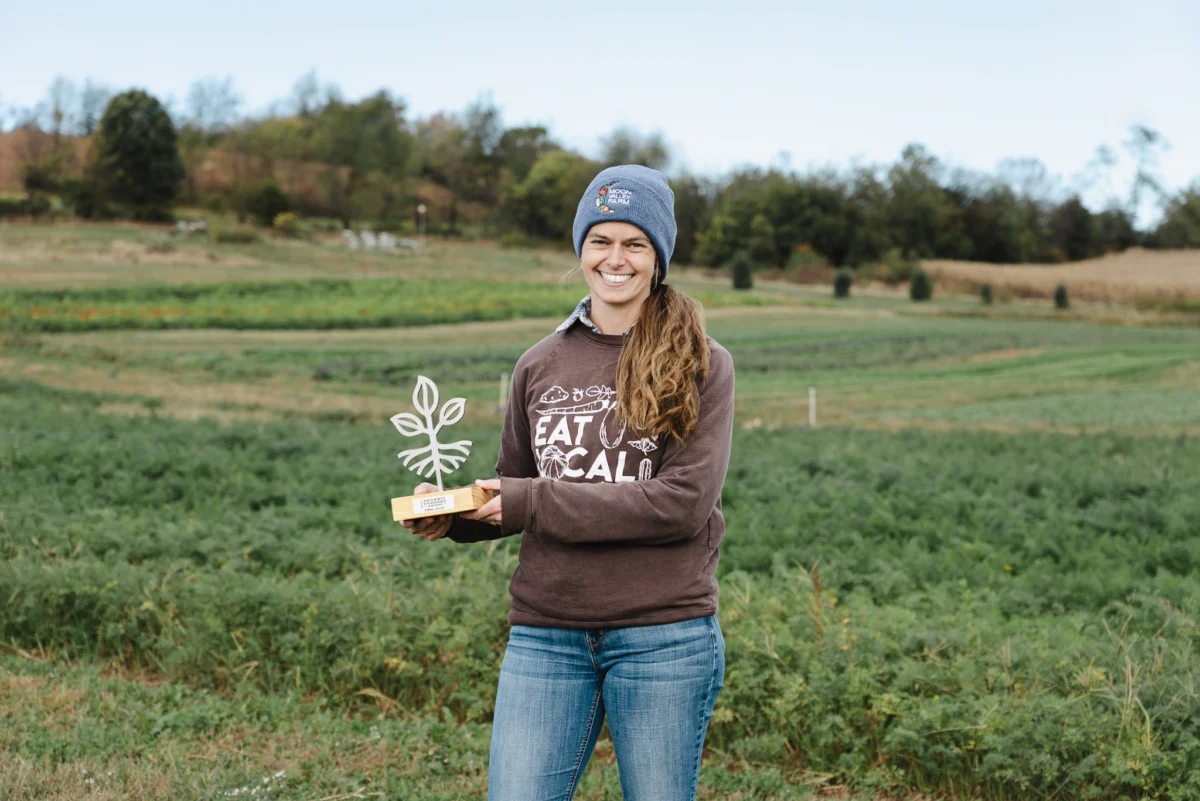
WOODSBORO, MD — In an era defined by climate uncertainty and shifting global food supply chains, the success of localized, regenerative agriculture has become a beacon of hope for both environmentalists and food security advocates. On October 17, 2026, during a vibrant Fall Festival at her farm in Maryland, Emma Jagoz, the founder and owner of Moon Valley Farm, was formally recognized for her transformative contributions to the organic movement. The Rodale Institute, the global authority on regenerative organic agriculture, bestowed upon Jagoz its prestigious 2026 Organic Stewardship Award in the Farming category, marking a milestone in her fifteen-year journey from a self-taught backyard grower to a cornerstone of the Mid-Atlantic food system.
The Evolution of a Vision: From Half an Acre to Regional Impact
The narrative of Moon Valley Farm is one of grit, iterative learning, and a profound commitment to the land. Founded in 2011, the farm’s origins were remarkably humble. Jagoz, then a young mother navigating the complexities of raising two children, began her agricultural journey on less than half an acre of bartered land. With no formal agricultural degree, she relied on hands-on experimentation, deep observation of soil health, and an unwavering belief in the necessity of chemical-free, nutrient-dense food.
Over the past decade and a half, that half-acre has expanded into a sprawling 70-acre operation, all of which is certified organic. Yet, Jagoz’s success is not measured merely in acreage or harvest volume; it is measured by the architecture of the network she has built around her. Recognizing early on that individual farmers are often isolated, Jagoz pivoted toward a collaborative model. Today, Moon Valley Farm operates as a regional food hub, acting as an aggregator and distributor that partners with over 75 local growers.
This infrastructure has allowed small-scale farmers to gain access to markets that would otherwise be logistically impossible to reach. By pooling resources and streamlining distribution, Jagoz has ensured that fresh, local, and organic produce reaches more than 100 regional restaurants, 12 Maryland school districts, and over 1,750 households through the farm’s Community Supported Agriculture (CSA) program.
A Chronology of Growth and Stewardship
To understand the magnitude of the Rodale Institute’s recognition, one must look at the timeline of Jagoz’s career, which mirrors the rise of the modern organic movement in the United States.
- 2011: Jagoz launches Moon Valley Farm on less than 0.5 acres, driven by the desire to provide healthy food for her children and immediate community.
- 2015–2018: The farm moves beyond self-sufficiency, establishing its first formal CSA program and beginning to supply local restaurants, proving that small-scale organic models could be economically viable.
- 2019–2021: Moon Valley Farm scales up, securing larger tracts of land and achieving full organic certification for its current 70-acre footprint. Jagoz begins integrating "Food as Medicine" initiatives, partnering with healthcare providers to supply fresh produce to patients managing chronic illnesses.
- 2022–2024: Jagoz shifts into a leadership role within the broader agricultural community, joining Maryland’s Agriculture Commission and spearheading mentorship programs like the Transition to Organic Partnership Program (TOPP).
- 2026: Rodale Institute honors Jagoz with the Organic Stewardship Award, citing her dual excellence in land management and community advocacy.
The Science of Stewardship: Why Soil Matters
At the heart of the Rodale Institute’s mission is the assertion that soil health is the bedrock of human health. During the award ceremony, Jeff Tkach, CEO of the Rodale Institute, emphasized that Jagoz’s work is a masterclass in this philosophy.
"Emma shows what can happen when a farmer’s vision grows into a community effort," Tkach noted. "She has built a thriving organic farm while helping other growers succeed and bringing fresh, local food to more families. Her work is a powerful example of how organic agriculture can care for the land and strengthen the communities that depend on it."
The "Stewardship" aspect of the award is critical. It refers not just to the absence of synthetic pesticides or fertilizers, but to the proactive improvement of soil biodiversity, carbon sequestration, and water retention. By utilizing regenerative practices—such as cover cropping, no-till techniques, and diverse crop rotation—Jagoz has effectively transformed the soil at Moon Valley Farm into a living, resilient ecosystem. This approach is no longer viewed as a "niche" alternative; it is increasingly recognized as a survival strategy for humanity in the face of erratic weather patterns and topsoil depletion.
Official Responses and the "Food as Medicine" Movement
The impact of Moon Valley Farm extends beyond the dinner table and into the healthcare sector. Jagoz’s involvement with "Food as Medicine" programs has bridged a vital gap between the farm and the hospital. By working with nonprofits and medical facilities, she has helped ensure that fresh, nutrient-dense organic food is available to populations facing food insecurity or those struggling with diet-related illnesses.
In her acceptance speech, Jagoz reflected on the symbiotic relationship between the farmer and the consumer. "I started Moon Valley Farm to grow nourishing, organic food that I could trust for my family and for my community," she stated. "Responsible soil stewardship is inextricably intertwined with the quality of food we’re able to produce, and I’m passionate about sharing what I’ve learned with the incredible community of farmers I’m proud to be a part of. This recognition from Rodale Institute is so meaningful to me and reflects the community who knows we must work together to leave the land healthier for generations to come."
Implications for the Future of American Agriculture
The recognition of Jagoz by the Rodale Institute serves as a bellwether for the future of the American agricultural landscape. The traditional industrial model—defined by consolidation, monoculture, and chemical dependency—is increasingly being challenged by decentralized, community-oriented models.
Strengthening Regional Food Networks
Jagoz’s success proves that small-to-mid-sized farms can scale their impact without sacrificing their core values. By functioning as a regional hub, Moon Valley Farm minimizes the "food miles" associated with modern distribution, lowers the carbon footprint of its products, and keeps capital circulating within the local economy.
Bridging the Knowledge Gap
One of the most significant barriers to entry for new farmers is the lack of institutional knowledge and business training. Through her work with FARMpreneurs, Future Harvest, and the Transition to Organic Partnership Program, Jagoz is effectively "paying it forward." She is creating a pipeline of next-generation farmers who are better equipped to handle the financial and agronomic challenges of the 21st century.
Policy and Advocacy
As a representative on Maryland’s Agriculture Commission, Jagoz occupies a rare space where the reality of the field meets the abstraction of policy. Her presence ensures that the voices of organic, regenerative, and small-scale farmers are heard at the legislative level. This is essential for reforming subsidies, insurance programs, and land-use policies that have historically favored large-scale conventional operations.
Conclusion: A Blueprint for Resilience
The 2026 Organic Stewardship Award is not just a capstone for a successful career; it is a signal to the industry that the model pioneered by Moon Valley Farm is the blueprint for the future. As Rodale Institute continues its mission to grow the regenerative organic agriculture movement, leaders like Emma Jagoz provide the proof of concept that the transition to an organic planet is not only possible—it is already underway.
For those interested in witnessing this movement firsthand, the annual Fall Festival at Moon Valley Farm serves as an invitation to engage with the agricultural process. It remains a testament to the fact that when we reconnect with the sources of our food and the stewards of our soil, we cultivate more than just crops; we cultivate a healthier, more resilient future for everyone.
About Rodale Institute
The Rodale Institute is a 501(c)(3) nonprofit that has spent 78 years at the forefront of the regenerative organic agriculture movement. Through rigorous scientific research, farmer-to-farmer education, and advocacy, the Institute demonstrates that organic farming is the most viable path toward global food security and environmental restoration. Named one of Fast Company’s Most Innovative Companies in 2025, the Institute continues to challenge the status quo, proving that a healthier world begins with the soil. For more information, visit rodaleinstitute.org.

 Nila Kartika Wati
 Layla Zulfa

